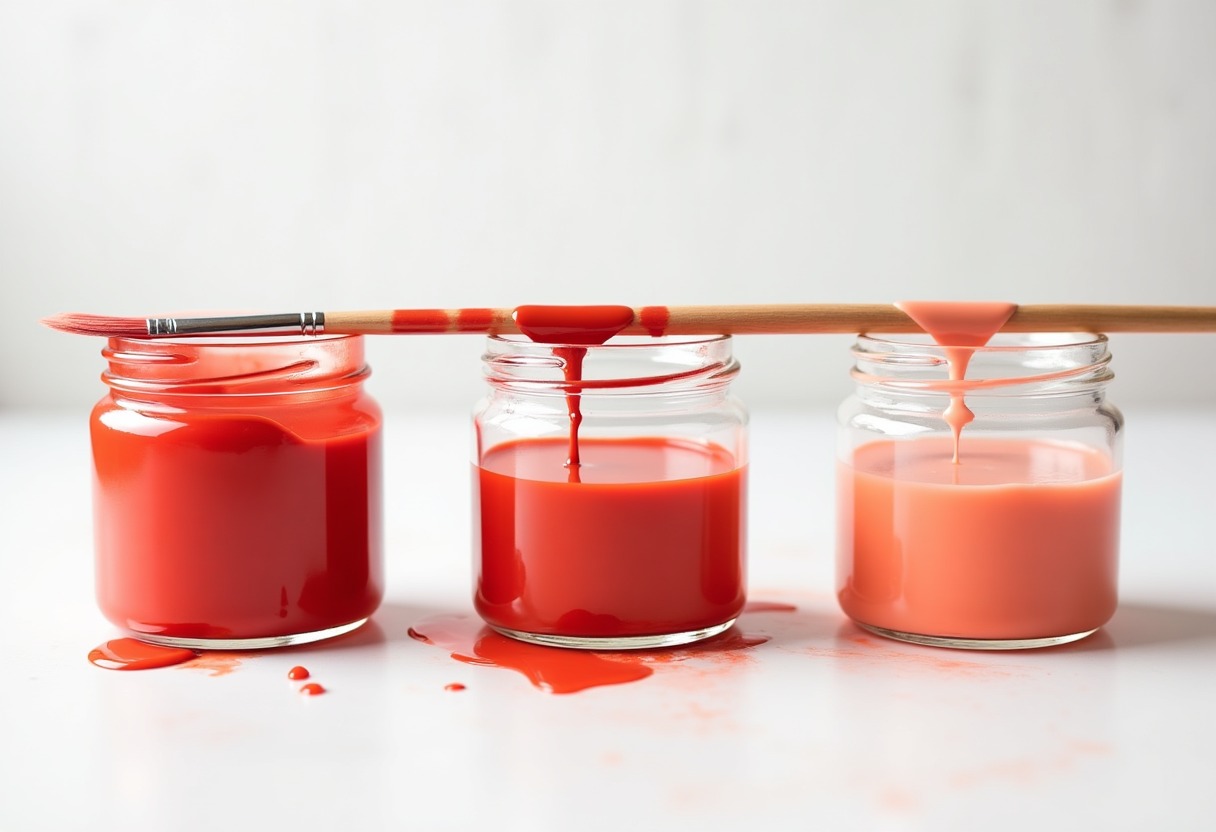
You squeeze paint straight from the tube onto your brush, and it drags across the canvas like peanut butter, leaving visible ridges and brush marks you never wanted. Or you add water to thin it, and suddenly the paint looks chalky, loses its punch, and won't stick properly. Understanding paint viscosity and thinning ratios transforms your control over every medium—acrylics, oils, and watercolors—and the difference between thinning correctly and ruining your work comes down to about five drops.
Why Paint Viscosity Matters More Than Most Painters Realize
Viscosity determines how paint flows, how it holds detail, and whether it maintains its binding properties after application. Straight from the tube, most artist-grade acrylics sit around 10,000-40,000 centipoise (cP)—about the thickness of honey—while oils range from 5,000-20,000 cP depending on pigment load. Golden Artist Colors tests show that acrylic paint needs its polymer binder at specific ratios to maintain adhesion and color saturation.
When you thin paint with just water beyond a 1:1 ratio, you dilute the binder that holds pigment to your surface. The paint may look fine wet, but it can crack, flake, or appear washed-out when dry. Professional conservators document failures in improperly thinned acrylic paintings as young as 20 years old.
Medium preserves the binder-to-pigment ratio while adjusting flow. Water is free and works beautifully within limits. Knowing which to use and when separates deliberate technique from hoping your painting survives.
How to Thin Acrylic Paint: Ratios That Actually Work
Acrylics offer the most flexibility but punish guesswork the hardest. The base rule: never exceed 30% water by volume without adding medium. Beyond that threshold, you compromise the acrylic polymer's ability to form a durable film.
For thin glazes and washes, use a → Shop acrylic glazing medium on Amazon at ratios between 3:1 and 10:1 medium-to-paint. This maintains transparency while keeping the binder intact. Heavy body acrylics need more thinning than fluid acrylics, which already flow at lower viscosities.
For basecoating on miniatures or canvas, a 2:1 water-to-paint ratio gives good coverage without streaking. Add a drop of → Shop paint flow improver on Amazon to break surface tension—this lets paint level smoothly without pooling. Flow improver isn't medium; it's a surfactant that changes how water behaves with pigment.
If you're working with techniques from our Best Miniature Painting Starter Kit guide, you'll want paint consistency like whole milk for base layers and skim milk for highlights. For detail work on eyes (covered thoroughly in How To Paint Eyes), thin to heavy cream consistency—enough flow to avoid dragging but thick enough to stay where you put it.
Test consistency on a → Shop artist palette knife on Amazon or scrap surface. Paint should flow off the knife in a smooth ribbon, not drip like water or cling like frosting. When brushed onto a test surface, properly thinned acrylic should self-level within 5-10 seconds without leaving brush ridges.
When to Thin Oil Paint and What Changes
Oils behave fundamentally differently because they dry through oxidation, not evaporation. You're not working against a clock the same way, but viscosity still controls everything from brushstroke visibility to drying time.
Straight tube oils work beautifully for impasto and heavy texture. For smoother blending and glazing, thin with a painting medium—typically a mixture of linseed oil and solvent. The traditional "fat over lean" rule requires lower oil content in initial layers, higher in subsequent layers to prevent cracking.
A standard thinning ratio for underpainting: 2 parts solvent to 1 part → Shop linseed oil painting medium on Amazon. For middle layers, equal parts work well. Final layers can go 2:1 oil-to-solvent or pure oil with minimal solvent.
Gamblin and Winsor & Newton both produce excellent ready-mixed mediums that handle the ratio calculation for you. Galkyd Lite flows like cream and dries in 24 hours. Stand oil (polymerized linseed oil) produces enamel-smooth surfaces but extends drying time to several days.
Unlike acrylics, oils don't need water-based flow improvers. The oil itself acts as both binder and flow agent. Your main concern is maintaining enough oil in the mixture to ensure proper polymerization. Too much solvent creates a brittle, weak paint film that can crack over years.
Check the Brush Care Maintenance Guide for cleaning brushes used with oils—different solvents affect natural vs synthetic bristles differently, which we cover in depth at Natural Vs Synthetic Brushes Guide.
Paint Thinning Ratios Across Different Mediums
| Paint Type | Technique | Thinning Ratio | Thinning Agent | Drying Time | |------------|-----------|----------------|----------------|-------------| | Acrylic | Basecoat | 2:1 water:paint | Water or medium | 10-20 min | | Acrylic | Glazing | 10:1 medium:paint | Glazing medium | 15-30 min | | Oil | Underpainting | 2:1 solvent:medium | Odorless mineral spirits + linseed oil | 24-48 hrs | | Oil | Final layers | 2:1 oil:solvent | Linseed or stand oil + minimal solvent | 3-7 days | | Watercolor | Washes | 4:1 water:paint | Distilled water | 5-15 min | | Watercolor | Controlled detail | 1:1 water:paint | Distilled water or gum arabic solution | 10-20 min |
The watercolor entries deserve expansion because watercolor is permanently water-soluble—you're always thinning with water, and the medium (gum arabic) is already in the paint. Adding more gum arabic increases gloss and transparency, slows drying slightly, and improves rewetting properties. It doesn't change viscosity the way acrylic medium does.
For techniques like those explored in Contrast Paints Review, manufacturers pre-thin paint with specialized flow agents and medium. Adding water defeats their engineered viscosity—add medium instead if you must adjust.
Choosing Paint Medium vs Water: What Actually Changes
Water is a solvent for acrylics and watercolors. It thins paint but contributes nothing to the final paint film. As water evaporates, you're left with whatever pigment and binder were in the original paint, now spread thinner.
Medium adds volume while maintaining or enhancing binder properties. An acrylic gloss medium contains the same acrylic polymer as your paint, so thinning with it preserves the polymer-to-pigment ratio. Your paint stays flexible, durable, and maintains its adhesive properties regardless of how much you thin it.
The practical difference shows up in washability, color shift, and surface quality. Water-thinned acrylic beyond 30% often dries darker and more matte than expected because you've reduced the polymer content. Medium-thinned paint dries closer to its wet appearance and maintains consistent sheen.
For oils, your "medium" typically combines a drying oil with a solvent. The oil is your binder; the solvent just makes it flow better and evaporates. This is why you can't replace linseed oil with pure mineral spirits—you'd have no binder left.
Some painters use → Shop paint consistency cups on Amazon to measure viscosity precisely, especially when airbrushing. These Ford cups or viscosity cups measure how many seconds it takes paint to flow through a calibrated orifice. For airbrushing acrylics, 18-22 seconds through a #4 Ford cup hits the sweet spot for most applications. Our guide on Best Airbrush Kits Miniature Painting 2026 covers this in detail.
Using the right Paint Palette Types Comparison setup helps control evaporation when working with thinned acrylics. A wet palette keeps paint workable for hours, reducing the need to constantly re-thin as water evaporates. More on why that matters at Why Wet Palette.
Advanced Viscosity Control Most Guides Skip
Temperature changes viscosity significantly. Cold paint flows like toothpaste; warm paint flows like syrup. Studio temperature between 65-75°F keeps acrylics at their designed viscosity. Below 50°F, acrylics can separate or refuse to level properly even when properly thinned.
Retarders slow acrylic drying without thinning paint. Golden's Open Acrylics and retarding mediums extend working time from 20 minutes to several hours. These don't change viscosity—they delay the evaporation that increases viscosity over time on your palette.
Pigment load affects how much thinning different colors need. Earth pigments (raw umber, yellow ochre) have less binding demand than heavy metals (cadmiums, cobalts). Quinacridone and phthalo pigments are so intense you can thin them considerably and still get rich color. This connects directly to Essential Paint Colors Mixing—knowing your pigments means knowing how they'll behave when thinned.
Layering viscosity matters more than single-layer viscosity. Start thin (high water content or lots of medium), build to thicker paint. This applies whether you're working on canvas as discussed in Canvas Size Texture Guide or miniatures covered in Best Beginner Miniature Paints 2026. Thin bottom layers allow thicker top layers to mechanically bond. Reverse that, and top layers can crack or peel.
For metallic paints used in techniques like Nmm Beginners Introduction, thin very carefully. Metallic flakes settle when overthinned, creating uneven coverage. Use medium instead of water, and thin only to the point where paint flows—usually no more than 1:1.
Surface preparation changes thinning needs. Absorbent surfaces like raw canvas or unprimed wood suck moisture from paint, effectively thickening it on contact. Slick surfaces like primed canvas or plastic need slightly thinner paint to adhere properly. The Best Canvas Priming Techniques Acrylic Gesso Vs Oil Ground Vs Commercial Primers guide explains how different grounds affect paint behavior.
FAQ
What happens if I thin acrylic paint with too much water?
Exceeding 30% water by volume breaks down the acrylic polymer binder, compromising adhesion and flexibility. The paint may appear fine when wet but can crack, flake, or appear chalky when dry. Color saturation drops because you're spreading the same amount of pigment over a larger area with less binder to hold it in place. For heavy thinning, always use glazing medium instead of pure water—it maintains the polymer structure while achieving transparency. If you've already overthinned with water, you can't reverse it; the damaged paint film will remain weak even if you paint over it properly.
Can I use the same thinning ratio for all acrylic paint brands?
Not reliably, because manufacturers formulate to different viscosities and polymer loads. Heavy body acrylics from Golden or Liquitex start much thicker than craft acrylics like Apple Barrel or fluid acrylics like High Flow. Student-grade paints often contain more filler and less pigment, requiring different thinning approaches to achieve the same coverage as professional grades. Always test on a scrap surface first. The "milk consistency" guideline works across brands as a sensory reference, but reaching it might take 1:1 thinning for heavy body and just a few drops for fluid acrylics. Pay attention to how paint behaves on the brush and surface rather than following ratios blindly.
When should I thin oil paint and when should I use it straight from the tube?
Use tube-consistency oil for impasto techniques, palette knife work, and any application where you want visible texture and thick paint presence. Thin oils for glazing, underpainting, smooth blending, and when you need faster drying times in initial layers. The "fat over lean" principle requires thinner, leaner paint (more solvent, less oil) in early layers and thicker, fatter paint (more oil, less solvent) in final layers to prevent cracking. For general brushwork, most painters thin oil to about heavy cream consistency, which provides good flow without losing body. Straight-tube oils excel for the final impasto touches that catch light and create surface interest.
Does paint medium vs water affect the final color appearance?
Absolutely. Water-thinned acrylic dries darker and more matte than tube paint because you've reduced the acrylic polymer content that creates sheen and reflectivity. Medium-thinned paint maintains closer color matching to the wet appearance because the polymer content stays proportional. Gloss mediums actually intensify color by increasing surface reflection, while matte mediums can slightly dull colors. For oils, linseed oil tends to yellow slightly over decades (more noticeable in whites and cool colors), while safflower or poppy oil yellows less but dries slower. Stand oil creates the glossiest, most enamel-like surface with the richest color depth. Test your medium-and-paint combination on scrap before committing to a finished piece.
How do I know if my paint consistency is right before I start painting?
The drip test works for most applications: lift your loaded brush and watch how paint falls. For basecoating, paint should drip off in a steady stream, not in separate drops (too thin) or cling to bristles (too thick). For detail work, paint should form a smooth bead on the brush tip without running off. The surface test is more reliable: brush a stroke on scrap material or your palette. Properly thinned paint self-levels within 10 seconds, showing no brush marks but maintaining enough body to stay where you placed it. If it pools and runs, it's overthinned. If it shows every bristle track, it needs more thinning. Temperature and humidity affect this, so recheck consistency every 30-60 minutes during long painting sessions as conditions change.
Master your thinning ratios, and you'll stop fighting your paint and start controlling it.
Some links on this page are affiliate links. We may earn a small commission if you purchase through them, at no extra cost to you.
As an Amazon Associate we earn from qualifying purchases. This article contains affiliate links; if you buy through them we may earn a small commission at no additional cost to you.