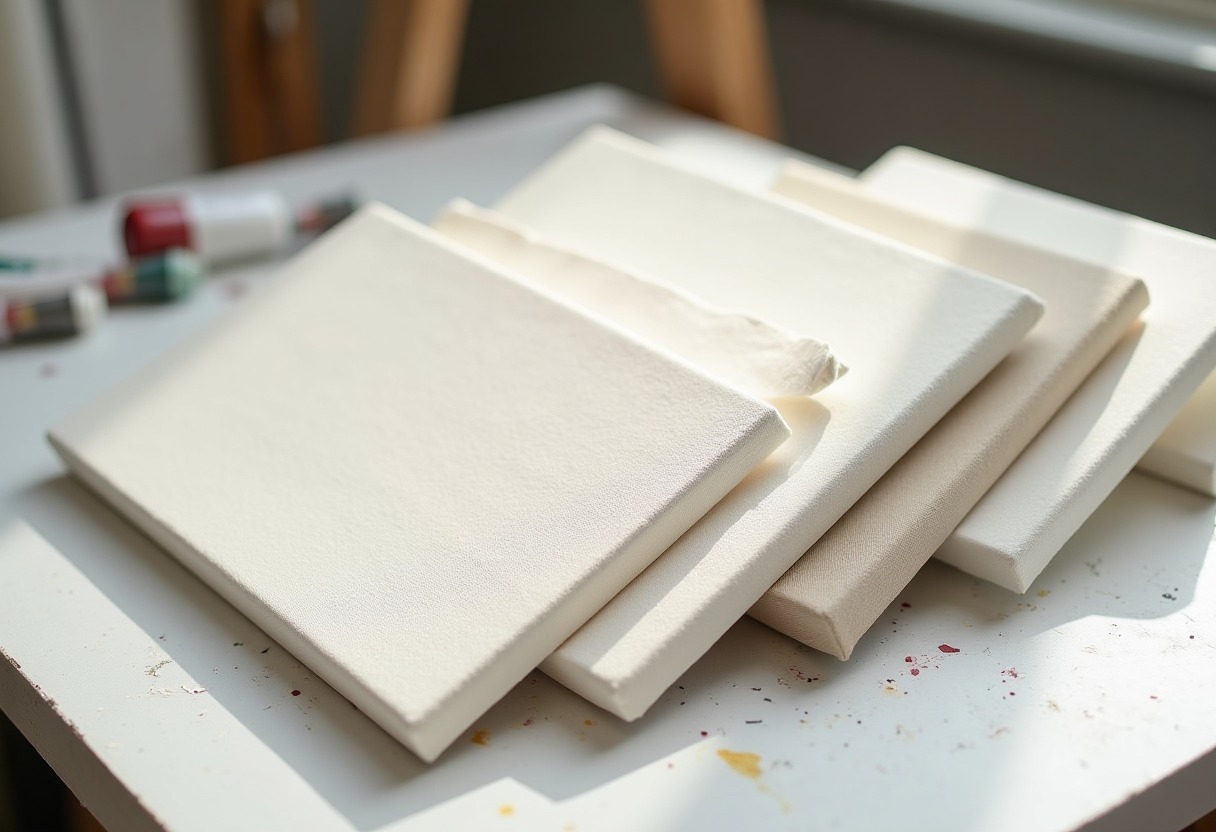
Canvas selection paralysis strikes most painters around their sixth or seventh trip to the art store. You're standing between a wall of white rectangles, wondering whether that 16x20 medium-weave cotton will make your brushwork sing or sabotage three hours of careful color mixing.
Why Canvas Choice Controls Your Painting Success
Your canvas does more than hold paint—it actively participates in every mark you make. A coarse linen grabs and redistributes pigment differently than smooth cotton. Large surfaces demand different compositional approaches than intimate panels. The texture interacts with your brush, medium, and painting speed to either support or fight your intended style.
Canvas weave affects paint opacity, blending capability, and detail potential. According to Winsor & Newton's technical documentation, coarse textures can increase paint consumption by up to 30% compared to smooth surfaces while providing superior paint adhesion for impasto techniques. Size determines composition breathing room, detail scale, and viewing distance—factors that directly impact how viewers experience your finished work.
Canvas Texture: The Foundation That Shapes Every Brushstroke
Canvas texture falls into four main categories, each serving specific painting approaches. Fine weave (smooth) surfaces work best for detailed realism, portrait work, and glazing techniques where brush texture should remain invisible. The tight weave allows precise control and smooth color transitions.
Medium weave represents the sweet spot for most intermediate painters. This texture provides enough tooth to grip paint without overwhelming fine details. Oil painters particularly benefit from medium weave's balance—it holds sufficient paint for coverage while allowing brush control for rendering.
Coarse weave excels at expressive, loose painting styles. The pronounced texture adds visual interest and helps break up large areas of color. Landscape painters often choose coarse surfaces because the texture mimics natural surface variations in rocks, bark, and foliage.
Linen offers the premium canvas experience with its irregular weave creating subtle texture variations that add life to paint application. Cotton provides consistent, predictable texture at a lower cost. Synthetic blends split the difference, offering linen-like irregularity with cotton's affordability.
→ Shop cotton canvas stretched on Amazon
Canvas Size Strategy: Matching Dimensions to Your Vision
Canvas size affects more than wall space—it fundamentally changes how you approach composition, detail, and paint application. Small canvases (8x10 to 11x14) force economy of brushwork and encourage bold, confident strokes. These sizes work perfectly for studies, quick captures, and learning new techniques without material waste.
Medium canvases (16x20 to 18x24) provide enough space for complex compositions while remaining manageable for most easel setups. This range suits portraiture, still life work, and detailed landscapes. The scale allows for both broad passages and fine detail work within the same piece.
Large canvases (24x30 and above) demand different painting approaches. Brush size must increase proportionally—what looks bold on a small canvas appears timid on a large surface. Large works require physical stamina and often benefit from loose, confident brushwork rather than tight detail throughout.
| Canvas Size | Best For | Brush Size Range | Typical Viewing Distance | |-------------|----------|------------------|-------------------------| | 8x10 to 11x14 | Studies, portraits, quick paintings | #2-8 flats and rounds | 2-4 feet | | 16x20 to 18x24 | Complex compositions, gallery work | #6-14 flats, #4-10 rounds | 4-8 feet | | 24x30 to 30x40 | Statement pieces, loose styles | #12-20 flats, #8-16 rounds | 8-12 feet | | 36x48+ | Murals, exhibition work | 1-3 inch flats, large rounds | 12+ feet |
Consider your workspace limitations honestly. A 30x40 canvas requires at least 6 feet of backing-up space to judge proportions accurately. Storage also matters—vertical racks work for smaller pieces, but large canvases need dedicated horizontal storage or immediate hanging space.
→ Shop stretched canvas panels on Amazon
Product Recommendations: Tested Surfaces for Every Style
Canvas boards offer the most economical starting point for texture testing. These cardboard-backed surfaces let you experiment with different weaves without investing in expensive stretched canvases. They're perfect for studies and technique practice, though they lack the spring and tooth response of properly stretched surfaces.
Stretched cotton canvases provide reliable, consistent texture for most painting styles. Pre-primed cotton offers good paint absorption and moderate texture. Look for double-primed surfaces—single primer often allows paint to soak through to the canvas, creating dull, lifeless color.
Linen canvases represent the premium choice for serious work. Belgian linen offers the finest, most consistent weave, while Irish linen provides character through slight irregularities. Linen's superior longevity and paint adhesion justify the cost for exhibition pieces.
→ Shop canvas boards painting on Amazon
Canvas rolls allow custom sizing and often provide better value for large works. Belgian cotton rolls offer professional quality at reasonable cost. Primed rolls save preparation time, while unprimed versions allow custom ground application as detailed in our Best Canvas Priming Techniques Acrylic Gesso Vs Oil Ground Vs Commercial Primers guide.
Texture mediums expand options beyond traditional weaves. Sand additives create coarse, irregular surfaces perfect for experimental techniques. Pumice gel creates controlled texture variation. These products let you customize standard canvases for specific effects.
→ Shop linen canvas rolls on Amazon
Advanced Considerations: Professional Insights Most Guides Skip
Canvas orientation affects composition psychology. Horizontal formats suggest stability, landscape, and rest. Vertical orientations imply growth, portraiture, and movement. Square formats create tension and force centered compositions. Consider these psychological impacts during planning stages.
Moisture absorption varies dramatically between canvas types. Linen absorbs less moisture than cotton, making it superior for humid climates or extended painting sessions. This affects paint flow, drying time, and final surface appearance. Cotton's higher absorption can create uneven drying patterns in thick applications.
Edge treatment matters more than most painters realize. Gallery-wrapped edges (canvas wrapped around frame sides) allow frameless hanging but require paint coverage on sides. Traditional stretching leaves visible staples but simplifies framing. Museum-wrapped edges hide staples on the back for the cleanest appearance.
Archival considerations become crucial for serious work. Acid-free canvases and proper priming prevent yellowing and deterioration. Canvas weight (measured in ounces per square yard) affects longevity—heavier canvases resist sagging and maintain tension longer. Professional-grade canvases typically range from 10-15 oz, while student-grade versions often use 7-9 oz cloth.
→ Shop canvas texture medium on Amazon
Pre-stretching tension affects paint application feel. Properly tensioned canvases provide slight give under brush pressure, helping paint flow. Over-tensioned surfaces feel rigid and can crack painted surfaces during expansion cycles. Under-tensioned canvases create uneven paint application and may sag over time.
FAQ
What canvas texture works best for oil painting beginners? Medium-weave cotton provides the best starting point for oil painting beginners. The texture offers enough tooth to grab and hold paint layers while remaining forgiving for correction attempts. Medium weave accepts both detailed work and broader brushwork, allowing technique experimentation without surface limitations. Avoid very smooth surfaces initially—they can feel slippery and difficult to control for new oil painters.
How do I choose canvas size for my first serious painting? Start with 16x20 for your first serious painting—large enough to develop complex ideas but manageable for completion. This size forces you to work bigger than tight detail allows while remaining physically manageable for most easel setups. Consider your subject's natural proportions: portraits work well in vertical 16x20, landscapes suit horizontal orientation. Factor in your available wall space and framing budget when deciding.
Can I use the same canvas for watercolors and acrylics? Standard canvas works poorly for watercolors due to its absorbent priming and texture, which prevents proper water flow and creates muddy results. Watercolors need paper or specially prepared watercolor canvas with minimal absorbency. Acrylics work excellently on standard primed canvas. If you want to alternate between media, consider watercolor paper blocks for water-based work and separate stretched canvases for acrylics.
What's the difference between single and double-primed canvas? Double-primed canvas has two coats of gesso or primer, creating better paint adhesion and preventing oil seepage into canvas fibers. Single-primed surfaces often allow paint to soak through, creating dull, lifeless color and potential canvas rot with oil paints. Double-primed surfaces feel more solid under the brush and provide better color saturation. The extra primer layer also improves longevity by creating a better barrier between paint and canvas fibers.
Should I buy pre-stretched canvases or stretch my own? Pre-stretched canvases offer convenience and consistent quality, making them ideal for most intermediate painters focused on painting rather than preparation. Stretching your own becomes worthwhile for custom sizes, premium materials, or budget savings on large works. Pre-stretched quality has improved significantly—many professional artists use high-end pre-stretched canvases for exhibition work. Consider stretching your own only if you need specific dimensions, want premium linen at lower cost, or enjoy the preparation process.
The right canvas transforms good paintings into great ones by supporting rather than fighting your natural painting style.
Some links on this page are affiliate links. We may earn a small commission if you purchase through them, at no extra cost to you.
As an Amazon Associate we earn from qualifying purchases. This article contains affiliate links; if you buy through them we may earn a small commission at no additional cost to you.