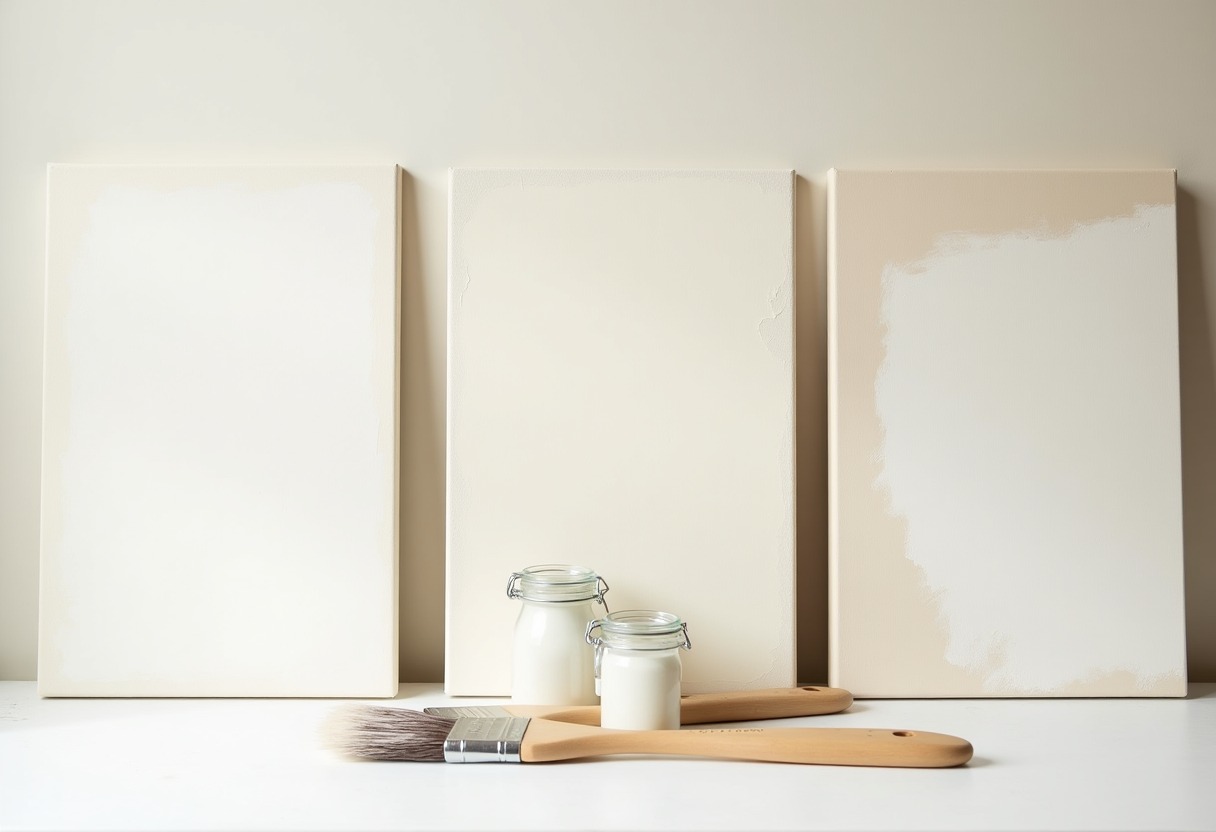
Raw canvas drinks paint like a sponge and leaves you with muddy colors and uneven coverage. The difference between a properly primed surface and bare canvas is the gap between professional-looking work and frustrating amateur results.
Why Canvas Priming Determines Your Painting's Success
Canvas priming creates a barrier between your paint and the fabric fibers, preventing paint absorption while providing optimal adhesion. Without proper preparation, oils can rot canvas fibers over time, while acrylics soak in unevenly, creating patchy color and wasted paint. According to Golden Artist Colors' technical documentation, unprimed canvas can reduce paint opacity by up to 40% as pigments penetrate the fibers instead of staying on the surface.
The three main priming approaches — acrylic gesso, oil ground, and commercial primers — each serve specific painting needs. Acrylic gesso works for both acrylic and oil paints, oil grounds provide traditional oil painting surfaces, and commercial primers offer convenience with consistent results. Your choice affects everything from paint flow to color vibrancy to long-term durability.
Understanding Acrylic Gesso Primer Properties
Acrylic gesso combines titanium dioxide pigment with acrylic polymer medium and chalk or marble dust for tooth. This creates a bright white, absorbent surface that grips paint while preventing canvas rot. Modern gesso formulations dry flexible and won't crack with temperature changes, unlike traditional rabbit skin glue grounds.
→ Shop acrylic gesso primer on Amazon
Two coats minimum work best — thin the first coat with 10% water to ensure deep penetration, then apply the second coat straight for opacity. Sand lightly between coats with 220-grit paper for ultra-smooth surfaces, or leave texture for oils that benefit from tooth. The surface stays workable for water-based mediums while accepting oil paints after 24 hours of curing.
Gesso's versatility makes it the go-to choice for mixed-media work. You can tint it with acrylic paint for colored grounds, add pumice for extra texture, or thin it further for transparent priming that preserves canvas weave visibility. Premium brands like Liquitex and Golden offer different consistencies — heavy body for texture, fluid for smooth application.
Traditional Oil Ground vs Modern Alternatives
Oil ground traditionally uses rabbit skin glue size followed by lead white mixed with linseed oil. Modern versions substitute PVA size and titanium white for safety while maintaining oil painting's preferred working properties. Oil grounds dry harder and less absorbent than gesso, allowing longer working time and easier paint manipulation.
→ Shop oil painting ground on Amazon
The application process requires more patience — size the canvas first, let dry completely, then apply 1-2 thin ground coats with a palette knife or brush. Each layer needs 24-48 hours to cure properly. This extended timeline pays off with superior paint handling for classical techniques like alla prima or glazing.
Alkyd-based grounds offer oil painting benefits with faster drying — 6-8 hours between coats instead of days. Brands like Winsor & Newton's Oil Painting Primer combine alkyd resins with titanium white for bright, non-absorbent surfaces that accept oil paint immediately upon drying.
Commercial Primer Comparison and Applications
| Primer Type | Drying Time | Paint Compatibility | Absorbency | Best For | |-------------|-------------|-------------------|------------|----------| | Acrylic Gesso | 30-60 minutes | Acrylic, Oil, Mixed | Medium | General use, beginners | | Oil Ground | 24-48 hours | Oil only | Low | Classical oil techniques | | Alkyd Primer | 6-8 hours | Oil, Alkyd | Low | Fast oil painting | | Universal Primer | 1-2 hours | All mediums | Medium | Multi-medium work |
Commercial universal primers like Zinsser Bulls Eye 1-2-3 bond to multiple surfaces and accept any paint type. These water-based formulas dry fast and provide good adhesion, though they lack the specialized properties of medium-specific primers. They work well for experimental pieces or when you're unsure which paint type you'll use.
→ Shop canvas primer white on Amazon
Spray primers offer convenience for large canvases or multiple small panels. Krylon and Rust-Oleum make versions specifically for artists, though brush-on primers generally provide better coverage control. For miniature work, consider exploring our Best Primer Miniature Painting 2026 guide for specialized small-scale options.
Advanced Priming Techniques Most Guides Skip
Double-priming with different products creates superior surfaces for demanding work. Prime first with diluted PVA to seal canvas fibers, then apply your chosen primer for optimal paint adhesion. This prevents primer absorption into the canvas, ensuring consistent surface properties across the entire painting area.
Texture manipulation during priming opens creative possibilities. Drag a dry brush across wet gesso for linear texture, stipple with a sea sponge for organic patterns, or press canvas or burlap into wet primer for fabric impressions. These textures become permanent parts of your painting surface, affecting how subsequent paint layers interact.
Temperature and humidity control during priming prevents common failures. Prime in temperatures between 65-75°F with humidity below 50% for optimal curing. High humidity causes primers to dry slowly and potentially develop mold, while excessive heat creates rapid surface drying that traps moisture underneath.
For canvas preparation beyond standard techniques, consider the broader context of setting up your workspace with our Hobby Space On A Budget guide to ensure optimal priming conditions.
→ Shop rabbit skin glue on Amazon
Consider canvas weight when choosing primers — heavy gesso on lightweight canvas creates buckling, while thin primers on heavy canvas don't provide adequate coverage. Match your primer viscosity to canvas weight: fluid primers for light canvases, heavy-body for thick, stable supports.
→ Shop stretched canvas boards on Amazon
Frequently Asked Questions
Can I use acrylic gesso under oil paints safely? Yes, acrylic gesso works perfectly under oil paints and is actually preferred over traditional grounds for most contemporary oil painting. The acrylic polymer creates a stable, non-absorbent barrier that prevents oil penetration while providing excellent paint adhesion. Let gesso cure for at least 24 hours before applying oils, and avoid thinning oils heavily in the first layers to prevent penetration issues.
How many coats of primer should I apply to canvas? Two coats provide optimal coverage for most applications, with the first coat thinned 10-20% with water for deeper penetration and the second applied full-strength for opacity and surface consistency. Very loose-weave canvases may need three coats, while fine linen often works well with just two. Sand lightly between coats for ultra-smooth surfaces, or leave texture for paintings that benefit from canvas tooth.
What's the difference between student-grade and professional gesso? Professional gesso contains higher pigment concentrations, better-quality acrylic polymers, and more durable fillers that resist cracking and yellowing over time. Student grades often use more chalk and less titanium dioxide, resulting in less opaque coverage and potential brittleness. Professional gesso also maintains consistent viscosity between batches and offers better brushability and surface uniformity.
Should I prime both sides of canvas to prevent warping? Priming both sides isn't necessary for pre-stretched canvases but helps prevent moisture-related warping in unstretched canvas and reduces long-term tension issues. If you prime the back, use a thinner coat than the front to avoid over-stiffening the fabric. For canvas boards or panels, back-priming creates better dimensional stability and prevents moisture absorption that can cause delamination.
Can I mix different primers or add materials to gesso? Yes, you can customize gesso by mixing brands or adding materials, but test compatibility first on scraps. Adding sand, pumice, or marble dust increases texture, while mixing in acrylic paint creates colored grounds. Avoid adding more than 25% by volume of foreign materials, as this can compromise adhesion and flexibility. Always mix thoroughly and apply test patches before committing to large canvases.
Master these canvas priming techniques and watch your paintings transform from amateur struggles to professional-quality work that stands the test of time.
Some links on this page are affiliate links. We may earn a small commission if you purchase through them, at no extra cost to you.
As an Amazon Associate we earn from qualifying purchases. This article contains affiliate links; if you buy through them we may earn a small commission at no additional cost to you.