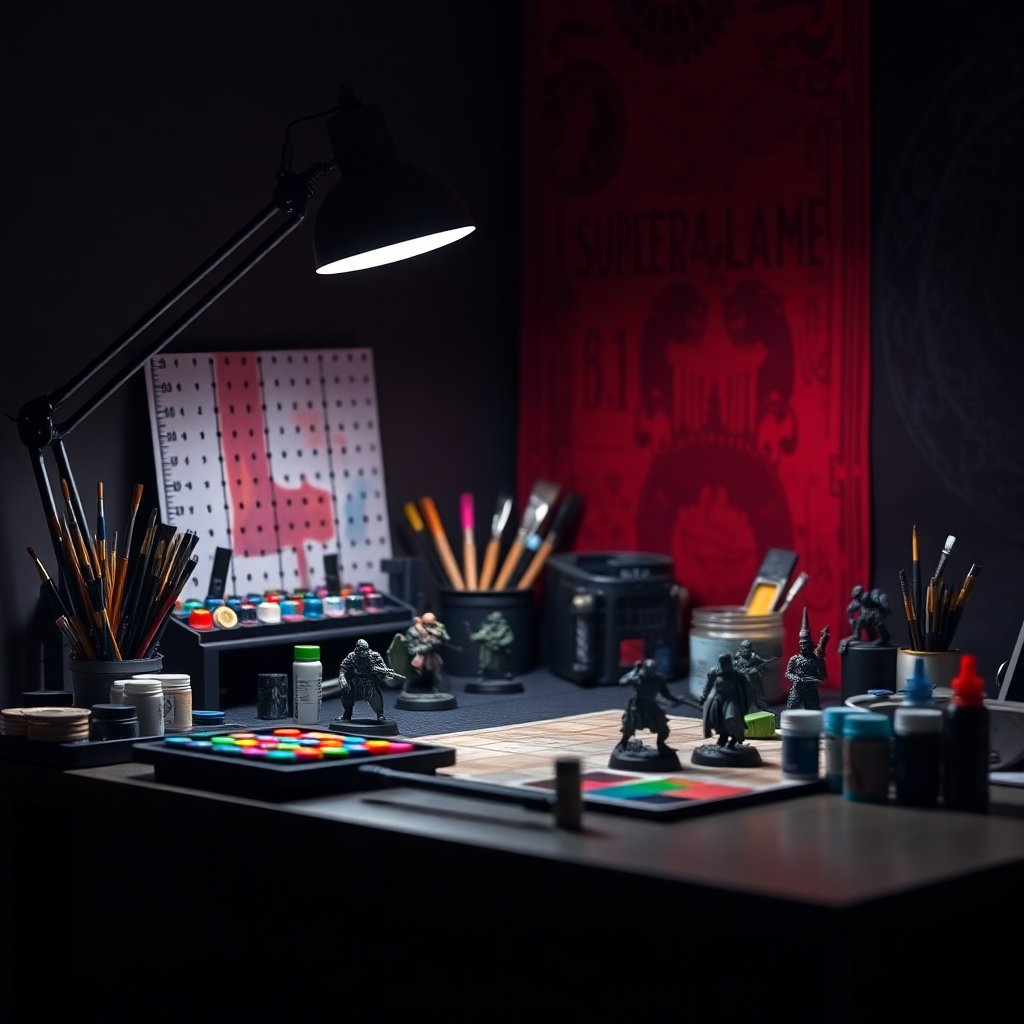
The best hobby setup is the one you'll actually sit down at. A complicated, expensive station you have to assemble before every session doesn't get used. A simple, permanent surface with good lighting and easy access to your tools does.
Here's how to set up something functional without spending more than necessary.
The Non-Negotiables
Lighting is the most important element. Painting under warm household lighting makes it impossible to see what you're actually doing — colours shift, shadows disappear, and you can't see the detail you're painting. A daylight (6500K) LED desk lamp costs $20–$35 and changes your painting more than any paint brand upgrade.
If you buy nothing else on this list, buy a daylight lamp.
→ Shop daylight LED desk lamps for miniature painting on Amazon
A dedicated surface. Even a $25 folding table is better than the kitchen table — because the kitchen table has to be cleared, which creates friction. The hobby table can be left set up. Things stay where you put them. You sit down and start painting immediately instead of spending ten minutes setting up and feeling like you should be doing something else instead.
A self-healing cutting mat. Protects your surface, gives you a clean area to work, and has grid lines for measuring and cutting. The A3 or larger size from any craft shop costs $10–$15.
→ Shop self-healing cutting mats for miniature hobby use on Amazon
The Setup That Works
Table: Any flat surface you can leave permanently set up. A folding table, a secondhand writing desk, a shelf with clearance for a chair. IKEA's MICKE and ALEX desks are popular in the hobby community for being the right depth at a low price.
Lamp: Daylight LED, positioned to your left if you're right-handed (reduces shadow from your brush hand). A lamp with an adjustable arm lets you move it for different tasks — close in for detail work, further out for viewing the full model.
Paint storage: A rotating craft paint organizer keeps paints visible and accessible. Painting is slower when you have to hunt through a box for the right colour. Rotating organisers hold 40–60 pots, spin to any position, and cost $15–$25.
→ Shop rotating craft paint organizers on Amazon
Brush rest: An old piece of foam, a jar of water, a dedicated brush holder. You need somewhere to put the brush that isn't flat on the table. A proper brush holder that stores them horizontally or tip-up (not tip-down in water) extends brush life significantly.
Water pot: Any container. A wide-mouthed jar is better than a narrow cup — you can swirl the brush properly. Change the water when it turns opaque.
Wet palette: The single most impactful tool purchase for any painter at any level. See our full why wet palette guide for why it matters and how to make one for $5.
Magnification: The Underrated Upgrade
Most painters don't think about magnification until they've spent years squinting at faces and wondering why their eyes don't look right.
A good magnifying visor ($20–$60) changes fine detail work. You can see what you're actually painting at scale, make more precise brush movements, and reduce eye fatigue during long sessions.
Budget option: Headband magnifier with LED light. Under $20, does the job for basic detail work.
Mid-range: Clip-on magnifier that attaches to reading glasses or a headband. Better optical quality.
Premium: Optivisor-style visor with interchangeable lens magnifications (1.5x to 3.5x). The standard tool among serious painters.
→ Shop hobby magnifying visors for miniature painting on Amazon
What You Don't Need Immediately
An airbrush. Useful at an intermediate stage for basecoating large models and vehicles. Not necessary for beginning. You can prime and basecoat everything with rattle cans and brushes.
A spray booth. Wait until you know you're airbrushing regularly.
Every paint. You need far fewer colours than you think. A basic set of 20–30 paints covers virtually every scheme. Buy more only when a specific project requires it.
Expensive storage. Repurposed containers, old jars, $3 organisers from IKEA — it all works.
Hobby Space Budget Breakdown
| Item | Budget Option | Mid-Range | Premium | |---|---|---|---| | Desk lamp | $15–20 (basic LED) | $25–35 (adjustable daylight) | $50–80 (Daylight D) | | Cutting mat | $8–12 (A4) | $12–18 (A3) | $20–30 (A2) | | Paint storage | $10 (basic rack) | $20 (rotating organizer) | $40+ (modular system) | | Magnification | $15 (headband) | $35 (quality visor) | $80+ (Optivisor) | | Wet palette | $5 (DIY) | $25 (Masterson Sta-Wet) | $50+ (Redgrass Games) | | Total | ~$55 | ~$115 | $240+ |
The budget tier is completely functional for learning. The mid-range setup handles most serious hobbyists' needs indefinitely.
Organising What You Have
Keep paints sorted by colour family or by use — base paints together, washes together, highlights together. The method matters less than the consistency. You should be able to find any paint in under five seconds.
Brushes deserve care. Don't store them point-down in a jar. Use a horizontal rest or a case that holds them flat. Replacing brushes that bent because of poor storage is an avoidable expense.
Keep your most-used tools within arm's reach. The hobby knife, the mould line remover, the wet palette, your main brushes. The things you reach for constantly shouldn't require you to move from your seat.
Label your storage. Simple sticky labels on storage boxes and bins save significant frustration when you have more than 50 pots. Sort by brand and then by type (base/shade/layer) and you'll find any colour in seconds.
Desk Organization: A System That Works
A functional layout keeps your workflow moving without clutter:
Immediate work zone (directly in front of you): the model you're working on, current wet palette, water pot, paper towel
Left side (or right for left-handers): brushes in holder, working paints pulled out for the current session
Right side: reference image (phone stand works), lamp positioned at 45°
Behind: paint storage, tools, spare pots, primer
Rarely used: store below or on shelves — terrain tools, basing materials, airbrush equipment
FAQ: Hobby Space Setup
How much space do I actually need? A 60cm × 90cm surface is enough for active painting. You need room for the model, a small working palette, brushes, and a water pot. Extra desk space is nice for reference photos and spare tools, but the minimum footprint is small.
Can I set up in a shared room? Yes. A corner desk with a lamp and a few storage boxes is all you need. The key is keeping it set up permanently — even if that means a small, semi-permanent area rather than a large shared space. Many painters use a corner of a bedroom or office.
How do I deal with paint fumes? Acrylic hobby paints have minimal fumes compared to oil paints or lacquers. Normal room ventilation is fine for acrylics. If you're using spray primers, do it outdoors or in a garage. Varnish sprays require ventilation.
What about protecting the furniture? A cutting mat handles 90% of spills and scratches. Put a drop cloth or old tablecloth under the mat if you're painting on a nice surface. Many hobbyists use a cheap folding table specifically so they don't have to worry.
Is a dedicated hobby desk worth buying? The purpose-built hobby desks (Kallax hacks, dedicated hobby tables) are nice but not necessary. An IKEA Micke desk ($70–$100) with a good lamp and some storage containers does everything a specialty desk does for a fraction of the price.
The Honest Total
A functional hobby setup — decent lamp, folding table, cutting mat, paint storage, wet palette — costs $60–$100. Less if you already have a table or can source items secondhand.
The point isn't to spend as little as possible. The point is to remove every piece of friction that stops you sitting down and painting. A good setup does that. An expensive setup doesn't do it better.
Browse our best beginner miniature paints guide for the paints the community actually recommends for new painters.
As an Amazon Associate we earn from qualifying purchases. This article contains affiliate links; if you buy through them we may earn a small commission at no additional cost to you.