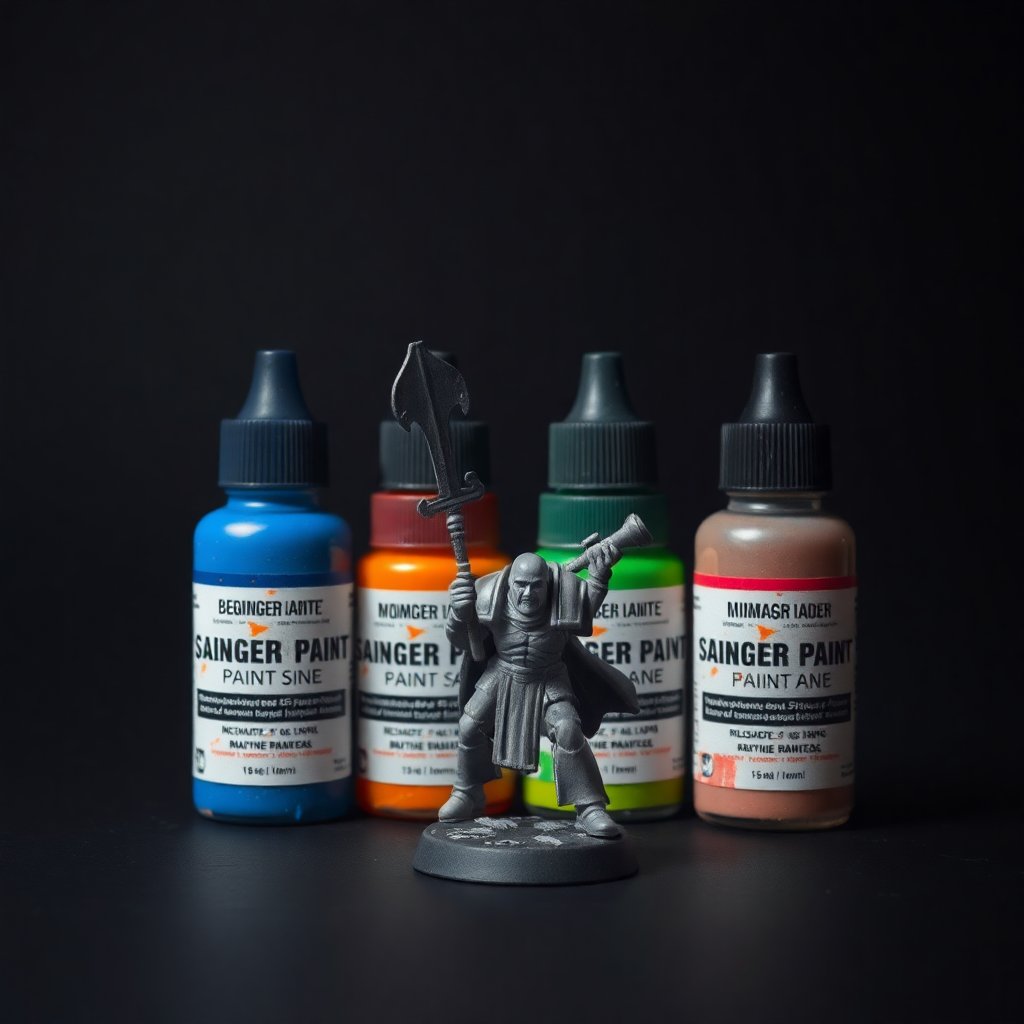
Paint choice is one of the first things new miniature painters stress about — and one of the least important things to get perfect right away. The honest truth: most mainstream hobby paints are good. What matters more is understanding how paints work and building consistent technique.
That said, some ranges are genuinely more beginner-friendly than others. Here's what's worth buying when you're starting out in 2026.
What Beginners Actually Need
Before recommending specific products, it's worth being clear about what a beginner paint kit actually needs to contain:
Base paints: Opaque, high-coverage paints for the initial coat. You need a solid selection of these.
Shades/washes: Pre-thinned, flow-enhanced paints that settle into recesses and add instant depth. Shades are the single biggest skill-multiplier for beginners — one coat of the right shade transforms a flat base coat into something that looks intentional.
A few highlights: Lighter versions of your base colors for edge highlighting or drybrushing.
You do NOT need:
- Contrast/speedpaint-style paints (useful but not essential to start)
- Technical paints (weathering effects, texture bases)
- Air-ready paints
- Endless duplicates of similar colors
Start focused. Expand as you understand what you're missing.
Best Paint Ranges for Beginners
1. Citadel (Games Workshop) — Best Ecosystem
Citadel paints are the industry standard for tabletop miniature painting. They're formulated specifically for miniature scale, widely available, and the entire range is built around a workflow (Base → Shade → Layer → Highlight) that's explicitly beginner-friendly.
Pros:
- Consistent quality across the range
- Excellent shade paints (Nuln Oil, Agrax Earthshade, Reikland Fleshshade)
- Enormous community support — nearly every tutorial uses Citadel paints
- Available in hobby shops and online worldwide
Cons:
- Expensive per pot
- Pots dry out quickly if not sealed properly
- Some colors are less useful than their marketing suggests
→ Shop Citadel Warhammer paints on Amazon
Recommended starter purchase: A Citadel Base paint set + Nuln Oil + Agrax Earthshade shade paints. That's enough to paint almost anything competently.
Must-have Citadel shades: Nuln Oil (black, metallic areas), Agrax Earthshade (brown organics, leather, wood), Reikland Fleshshade (skin tones, warm metals). These three shades alone will carry your early painting journey.
2. The Army Painter — Best Value
Army Painter offers excellent quality at a lower price point than Citadel, with 18ml pots vs. Citadel's 12ml. The Speedpaint 2.0 range has become one of the best contrast-style paint systems available.
Pros:
- Better value per ml than Citadel
- Speedpaint 2.0 is excellent for fast, effective results
- Wide color range
- Dropper bottles available (better for palette control)
Cons:
- Quality varies slightly more across the range
- Less tutorial support compared to Citadel
→ Shop Army Painter paint sets on Amazon
The Army Painter Starter Set is one of the best value entry points in the hobby — you get 10 paints, a brush, and a primer in one box for significantly less than buying equivalent Citadel paints.
3. Vallejo — Best for Technique Development
Vallejo paints come in dropper bottles, which makes them significantly easier to control for thinning and palette use. The Model Color range is the gold standard for fine detail work and smooth blending.
For beginners who want to develop proper technique from the start — thinning on a wet palette, working in thin layers — Vallejo is the best range to learn on.
Pros:
- Dropper bottles prevent waste and aid consistency
- Excellent for blending and layering
- Game Color range is priced comparably to Army Painter
Cons:
- Less intuitive workflow documentation than Citadel
- Requires a wet palette to get the most from them
→ Shop Vallejo miniature paint sets on Amazon
4. Scale75 — Best for Advanced Techniques
Scale75 is the choice of competition painters and those serious about blending and skin tones. Their paints have a finer pigment and a slightly matte finish that's ideal for smooth color transitions.
Pros:
- Outstanding pigment quality for blending and layering
- Matte finish reduces unwanted shine
- Dropper bottles
Cons:
- More expensive than Vallejo
- Requires more technique to use effectively — not the best first paint brand
→ Shop Scale75 miniature paint sets on Amazon
Paint Range Comparison Table
| Brand | Price/Pot | Volume | Best For | Beginner Rating | |---|---|---|---|---| | Citadel | $5–$7 | 12ml | New painters, following tutorials | ⭐⭐⭐⭐⭐ | | Army Painter | $3–$5 | 18ml | Value-focused builders | ⭐⭐⭐⭐½ | | Vallejo Game Color | $4–$5 | 17ml | Technique development | ⭐⭐⭐⭐ | | Vallejo Model Color | $4–$5 | 17ml | Detail work, blending | ⭐⭐⭐½ | | Scale75 | $6–$8 | 17ml | Advanced painters | ⭐⭐⭐ |
The One Thing That Matters More Than Paint Brand
Thin your paints.
Every paint range on this list, used straight from the pot, is too thick for miniature painting. You want a consistency closer to skim milk than house paint. Thin with water or medium, apply in multiple thin layers.
This single habit separates people who improve quickly from people who wonder why their results don't match tutorials.
Tools that help:
- A wet palette (keeps thinned paint workable longer)
- A small water pot for rinsing brushes
- A paper towel for loading and checking your brush
→ Shop wet palettes and painting accessories on Amazon
Brushes: Don't Neglect These
Paints get all the attention, but brushes are equally important. A bad brush makes good paint nearly impossible to control.
For beginners, the Citadel Base and Layer brushes are fine starting points. They're available everywhere, reasonably priced, and perform well for basic work.
Once you're comfortable with technique, move to Winsor & Newton Series 7 or Rosemary & Co brushes — they hold their point far longer and make fine detail work dramatically easier.
→ Shop miniature painting brush sets on Amazon
What to Buy First: A Practical Starter Kit
A practical beginner kit for under $60:
- One base paint set (Citadel or Army Painter)
- Nuln Oil shade (black/dark areas)
- Agrax Earthshade or equivalent (warm brown, works on almost everything)
- One highlight paint in a neutral color
- A wet palette or sealed palette keeper
That's genuinely enough to paint a full army to a solid tabletop standard. Add paints as you identify specific gaps — not before you know what you're missing.
Specialty Paints Worth Adding Early
Once you've got the basics, these specialty paints provide outsized value:
Texture paints (Citadel Astrogranite or Stirland Mud): Transform plain bases into convincing stone or earth in one coat. A tube lasts for hundreds of bases.
Contrast/Speedpaints: One-coat wonders for rank-and-file troops. Army Painter Speedpaint 2.0 and Citadel Contrast are both excellent. Add 4–5 relevant colors once you're ready to speed-paint.
Dry compounds (Citadel Drybrush range): Specially formulated paints for drybrushing. They dry faster than regular paint, which makes drybrushing cleaner and more controllable.
→ Shop Citadel Technical and Texture paints on Amazon
FAQ: Beginner Paint Questions
Can I mix paint brands? Yes, freely. Citadel base paints work perfectly with Army Painter shades and Vallejo highlights. Different brands use compatible acrylic chemistry. The only exception is some oil-based or enamel products — but as a beginner sticking to water-based acrylics, mixing brands is fine.
Do I need a primer? Yes, always prime before painting. Primer gives paint something to grip and dramatically improves adhesion. Citadel Chaos Black, Corax White, or any rattle-can grey primer work well. Apply a thin coat, let it dry, then paint.
How long do paints last? Properly sealed pots last 3–5 years. Dropper bottle paints last longer. Shades/washes can thicken over time — add 1–2 drops of water if they're getting thick. Avoid leaving pots open while you're not actively using them.
What's the difference between base and layer paints? Base paints are more opaque and thicker — designed to cover primer in 1–2 coats. Layer paints are slightly translucent and thinner — designed to build up in multiple coats for smooth color transitions. Start with base paints, then use layers for highlighting.
Should I buy singles or sets? Sets are better value for beginners. You get a curated range of useful colors without having to make individual decisions. Start with a set, then buy individual paints as you identify specific needs.
The Best Paints Are the Ones in Front of You
Start painting. Once you have your paints sorted, two other beginner investments make a big difference: a wet palette (keeps paint workable far longer) and setting up a hobby space on a budget so you can actually sit down and paint consistently.
The best miniature painters in the world started with whatever was available at their local shop. The brand on the pot matters far less than the time you put in.
As an Amazon Associate we earn from qualifying purchases. This article contains affiliate links; if you buy through them we may earn a small commission at no additional cost to you.