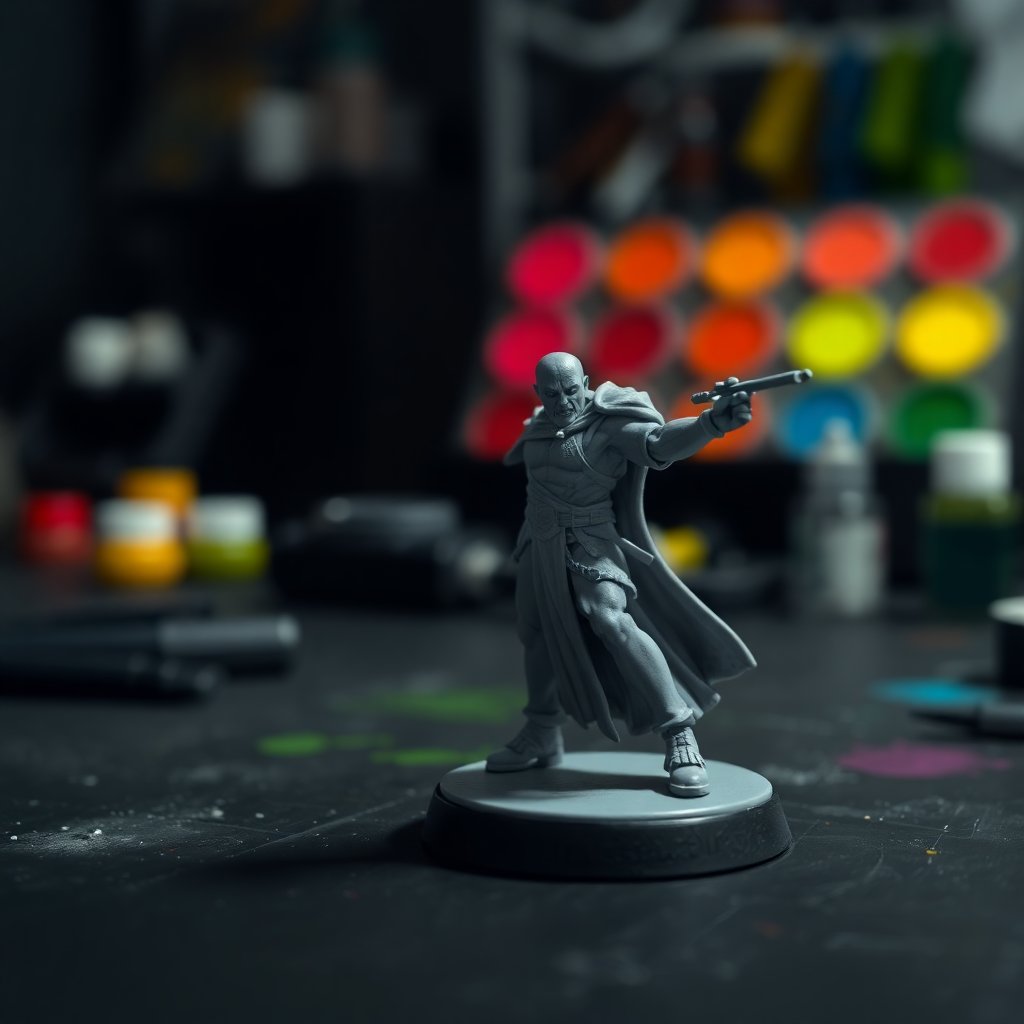
You spent hours cleaning mold lines, gluing pieces together, and carefully basing your miniature — the last thing you want is paint that chips off after the first game night. That's a priming problem, and it's more common than you'd think. The right primer is the single most important layer you'll put on a miniature, and the wrong one can ruin everything that comes after it.
Primer isn't glamorous. Nobody builds a painting setup around it. But ask any experienced miniature painter what they refuse to skimp on and primer is almost always in the top three answers. It creates the mechanical bond between bare plastic (or resin, or metal) and your paint layers — without it, your carefully blended highlights will flake off at the slightest touch.
In this guide we'll break down the best primers for miniature painting in 2026 — covering spray cans, brush-on formulas, and airbrush-ready options — so you can pick the right one for your workflow and your models.
Why Primer Matters More Than You Think
Most hobby paints aren't designed to bond to bare plastic or metal. They're formulated to bond to other paint layers. Primer bridges that gap: it chemically and mechanically bonds to the substrate, then gives your paints a slightly porous, tooth-rich surface to grip.
A good primer also does a few other things:
- Fills micro-scratches left by cleanup tools
- Unifies surface color so your basecoat goes on evenly
- Reveals surface problems — bad mold lines you missed, poor gap fills, rough patches — before you invest hours of paint
Miniature primers differ from wall primer or auto primer. They're formulated to stay thin, preserve fine detail, and dry quickly. Using the wrong primer (like hardware store spray paint) is one of the most common beginner mistakes — it can obscure detail, stay tacky in humidity, or never fully cure.
Best Spray Can Primers for Miniatures
Spray cans are the fastest and most forgiving way to prime. You get even coverage without brushstrokes, and the aerosol applies a consistently thin coat across complex 3D surfaces. These are the go-to for most painters.
Citadel Chaos Black / Corax White
Games Workshop's Citadel primers are the industry default, and for good reason. They're formulated specifically for miniature plastics, dry fast, and produce a consistently thin coat that preserves detail. Chaos Black is the most popular starting point — the grey-black tone makes it easy to see where you're applying basecoat, and it naturally deepens shadow areas. Corax White is the choice if you're doing bright color schemes or zenithal priming.
The downside: Citadel sprays are expensive per can compared to alternatives. They're also humidity-sensitive — don't spray them on a damp day or you'll get the dreaded "frost" or "textured" effect.
→ Shop Citadel Chaos Black Spray on Amazon
Army Painter Colour Primer Sprays
The Army Painter color primer system is one of the hobby's secret weapons. These aren't just grey or white primers — they come in over 20 colors, including browns, reds, greens, and metallics. The idea is that the primer doubles as your basecoat: prime in the main color of your army and you skip an entire painting step.
The formula is solid — good coverage, decent detail preservation — and the price per can is significantly lower than Citadel. The color range makes these especially popular for large armies where batch painting speed matters.
→ Shop Army Painter Colour Primer Sprays on Amazon
Vallejo Surface Primer (Spray Can)
Vallejo's surface primer is available in both aerosol and bottle form, making it one of the most versatile options here. The spray version lays down an extremely fine, even coat with excellent detail preservation — noticeably better than some competitors at revealing sharp edges and fine textures.
Vallejo makes primers in grey, black, white, and a range of modeler-friendly colors like German Grey, Russian Green, and Panzer Grey. If you paint historical miniatures or vehicles, this is the premium choice.
→ Shop Vallejo Surface Primer on Amazon
Best Brush-On Primers for Miniatures
Brush-on primer is the choice when you can't spray — living in an apartment, working in winter, touching up a single model, or priming resin pieces that need more careful handling. They require a bit more technique (thin coats, don't overwork the brush) but they're fully controllable and produce great results.
Citadel Chaos Black (Pot)
The brush-on version of the classic. It's thicker than the spray and requires some thinning for best results — a drop of water or medium goes a long way. Apply in thin coats and let each one fully dry. The formula bonds well to plastic and resin, though it can be a bit stubborn on bare metal without a mechanical etch.
For spot-priming repairs or touch-ups after assembly, the Citadel pot is the easiest option if you're already in the Games Workshop ecosystem.
→ Shop Citadel Chaos Black Brush-On on Amazon
Vallejo Surface Primer (Bottle)
Vallejo's bottled surface primer deserves its own entry because it punches well above the spray format for quality. It's water-based, cleans up with water, and is formulated to self-level beautifully over fine detail. Thin it slightly with water (about 10%) and apply with a flat brush in smooth, even strokes.
It works on plastic, resin, and metal without any special prep (beyond cleaning). The grey tone is particularly popular because it gives you a neutral base that makes color assessment easier than pure black or white.
Stynylrez Airbrush Primer by Badger
Don't let "airbrush" in the name fool you — Stynylrez can absolutely be brushed on, and many painters prefer it that way. It's an acrylic polyurethane formula that bonds aggressively, stays flexible (reducing chip risk), and dries incredibly matte and toothy. It's also one of the most forgiving primers for resin — where some brush-ons bead up, Stynylrez grips.
Available in black, white, grey, and a few colors. Widely considered the best value brush-on primer in the hobby.
→ Shop Stynylrez Primer by Badger on Amazon
Best Airbrush Primers for Miniatures
If you own an airbrush, you can prime faster and more evenly than any spray can or brush, with total control over coat thickness. Airbrush primers need to be thin enough to atomize properly — most need a bit of thinning or come pre-thinned.
Vallejo Surface Primer (Airbrush)
The same Vallejo formula mentioned above, but thinned to about 10–15% water for airbrushing at around 20–25 PSI. It flows beautifully through a standard 0.4mm nozzle without tip-dry, and the range of colors makes zenithal priming and pre-shading extremely accessible.
This is the airbrush primer most commonly recommended on forums like r/minipainting and Dakka Dakka — it's reliable, widely available, and produces consistent results session after session.
Badger Stynylrez (Airbrush)
As a dedicated airbrush primer, Stynylrez needs minimal thinning and delivers outstanding adhesion. Its polyurethane formula makes it one of the most durable primers in the hobby — the cured surface resists handling, chipping, and even accidental drops far better than pure acrylic primers.
For metal and resin miniatures in particular, Stynylrez is the recommendation many advanced painters settle on permanently.
→ Shop Stynylrez Primer Airbrush on Amazon
Mr. Surfacer 1000 / 1500
A crossover from scale modeling, Mr. Surfacer by Gunze Sangyo is a lacquer-based primer that fills micro-scratches and surface imperfections better than any acrylic primer. The 1500 version is finer-grained; the 1000 is better for filling. Both produce a stone-hard surface that is extremely resistant to chipping.
The tradeoff: it's lacquer-based, meaning you need lacquer thinner for cleanup and better ventilation. Many painters reserve Mr. Surfacer for display pieces or competition miniatures where durability is paramount.
→ Shop Mr. Surfacer Miniature Primer on Amazon
Comparison Table
| Primer | Format | Best For | Price Range | Rating | |---|---|---|---|---| | Citadel Chaos Black | Spray / Brush-On | Beginners, plastic miniatures | $15–$20 | ⭐⭐⭐⭐ | | Army Painter Colour Primer | Spray | Batch painting, army painting | $12–$18 | ⭐⭐⭐⭐ | | Vallejo Surface Primer | Spray / Brush / Airbrush | All formats, historical, resin | $8–$16 | ⭐⭐⭐⭐½ | | Badger Stynylrez | Brush-On / Airbrush | Resin, metal, durability | $10–$14 | ⭐⭐⭐⭐½ | | Mr. Surfacer 1000/1500 | Airbrush | Display pieces, gap filling | $10–$18 | ⭐⭐⭐⭐ |
What to Look For When Choosing a Primer
Surface compatibility — Plastic, resin, and metal each have different surface energies. Most miniature-specific primers handle all three, but cheap hardware store primers can bead on plastic and never bond to resin. Stick to primers made for the hobby.
Color — Black primer deepens shadows and makes a good base for dark or gritty color schemes. White primer makes colors more vibrant but every error shows. Grey is the versatile middle ground. Colored primers (Army Painter's range) can cut out a basecoat step entirely.
Climate — Spray primers are sensitive to humidity and temperature. Most manufacturers recommend between 60°F–80°F and under 60% humidity. If you live somewhere damp or cold, brush-on and airbrush options are more reliable year-round.
Detail preservation — Thinner primers preserve more detail. If you're painting finely detailed resin miniatures or display pieces, Vallejo Surface Primer and Stynylrez will treat you better than thick aerosol primers.
Recoat time — Most acrylic primers are touch-dry in 15–30 minutes and ready to paint over in an hour. Lacquer-based primers like Mr. Surfacer need more time to outgas fully — give them 24 hours before applying acrylics on top.
If you're just starting out and want one recommendation: grab Army Painter Colour Primer in Grey or Citadel's Mechanicus Standard Grey spray. Both are forgiving, widely available, and pair with virtually any paint range.
Frequently Asked Questions
Do I really need to prime miniatures before painting?
Yes, almost always. Without primer, acrylic paint has no mechanical bond to bare plastic or metal — it will chip, flake, or peel under normal handling. The only exception is if you're using a paint specifically formulated to bond without primer (some "brush-on primer paint" hybrids exist), but even those benefit from a proper primer underneath.
Can I use hardware store spray paint as primer?
Not recommended. Hardware store primers are formulated for different surfaces and typically go on much thicker, filling in fine detail. They can also stay tacky for a long time, especially in humid conditions. Hobby-specific primers cost more per can but they're formulated to lay thin, dry fully, and preserve the detail you've worked hard to achieve.
What's zenithal priming and do I need it?
Zenithal priming is a technique where you apply a dark primer (black or dark grey) first, then a lighter primer (white or light grey) from above — mimicking how sunlight hits a model from the top. This creates built-in pre-shading that makes subsequent washes and glazes look more natural. It's not required, but it's a great technique for intermediate painters looking to speed up their workflow. Check out our introduction to NMM painting for more on how pre-shading plays into advanced techniques.
Why does my spray primer look grainy or textured?
This is called "frosting" and it happens when you spray in high humidity or low temperatures, when you hold the can too far away, or when you shake the can inadequately before use. Always shake for at least 2 minutes, spray in 15–25°C / 60–75°F temperatures, keep the can moving, and hold it 8–12 inches from the model. If it happens, don't panic — light sanding with 400-grit can sometimes rescue the piece before repainting.
Can I prime miniatures indoors?
Spray primers should be used outdoors or in a well-ventilated space — the aerosol propellant and airborne particles are not safe to inhale indoors. Brush-on primers and airbrush primers are water-based and safe for indoor use with a window open. If you can only paint indoors, invest in brush-on or airbrush primer and save the spray cans for outdoor sessions.
How thick should primer coats be?
Thin. Always thin. You want a coat that covers the surface without filling recesses or obscuring detail. If you're brush-priming, two thin coats are better than one thick coat. When airbrushing, you should just barely be able to see the surface beneath the first pass — build up in 2–3 light layers rather than trying to cover in one. For spray cans, keep the can moving and don't linger — you can always add another coat, but you can't undo thick buildup.
The Bottom Line
The best primer for miniature painting in 2026 is whichever one fits your format and workflow — but if you want a single versatile pick, Vallejo Surface Primer in grey handles every surface type, works in spray, brush, and airbrush form, and produces reliably excellent results. For beginners on a budget, Army Painter Colour Primer delivers outstanding value and the color range makes it a genuine time-saver for army painting.
Whatever you choose, prime every model. That one step is the difference between paint that chips after a single game and a finish that holds up for years. Once you've got a solid primer layer down, you're ready to explore all the techniques that make this hobby so rewarding — like the contrast paints review if you want to speed up your basecoating workflow.
Now get those models primed and on the table.
As an Amazon Associate we earn from qualifying purchases. This article contains affiliate links; if you buy through them we may earn a small commission at no additional cost to you.