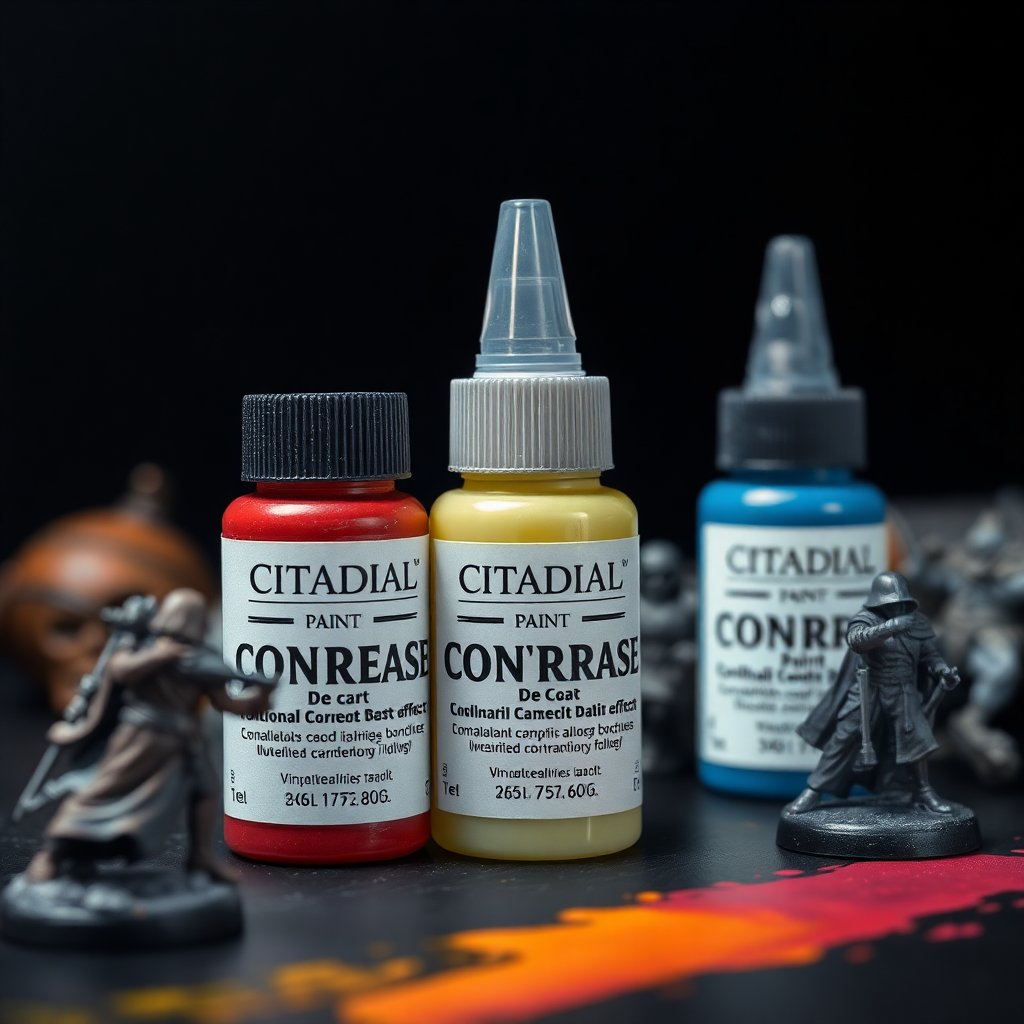
Contrast paints launched in 2019 to a split reaction: half the community called them a revolution, the other half called them a crutch. Five years later, with most serious painters having actually tried them, the verdict is clearer.
They're worth it — with caveats. If you're still figuring out your core paint range, read our best beginner miniature paints guide first — Contrast works best alongside a solid foundation of base and shade paints.
What Contrast Paints Actually Do
Contrast paints are formulated to flow into recesses and create natural-looking shading in a single coat. The pigment is designed to pool in deep areas and leave thinner coverage on raised surfaces, replicating a basecoat-and-shade process in one step.
Over a white or light grey primer, most Contrast paints produce a model that looks genuinely painted — not like a primer coat — in under five minutes of work.
The secret is the medium. Contrast paint contains a flow-improving agent that makes the paint self-shade. The same medium is available separately as "Contrast Medium" (Citadel) or "Speedpaint Medium" (Army Painter), and can be mixed with regular paints to give them a similar flowing behavior.
Contrast vs. Speedpaint 2.0: Which One?
In 2026, the choice isn't just between Contrast and "regular paints" — it's between Citadel Contrast and Army Painter Speedpaint 2.0.
Citadel Contrast has the larger color range and better tutorial support. The 2019 originals had a reactivation problem — new paint over dried Contrast would reactivate and drag the layer below. This was addressed in reformulated versions from 2021 onward.
Army Painter Speedpaint 2.0 fixed the reactivation issue from the original Speedpaints and now competes directly with Contrast on quality while costing less per pot. The range is smaller but covers most common painting needs.
→ Shop Citadel Contrast paints on Amazon
→ Shop Army Painter Speedpaint 2.0 on Amazon
What They're Good For
Army painting. If you need to get fifty Intercessors painted to a tabletop standard and you have a weekend, Contrast is probably the fastest route. Prime grey, brush Contrast, done. Add a quick drybrush on armour if you like. You're finished.
Beginners finding their feet. Contrast removes several technique variables early on. New painters can focus on brush control and model assembly without fighting basic shading. The "good enough" result is genuinely good enough to play with.
Fur, skin, cloth, and organic textures. Contrast paint on textured surfaces like fur or skin creates immediate depth. This is where it performs best — complex surfaces that would take multiple layers to shade traditionally.
Underpainting. Experienced painters use Contrast as a fast underpainting layer before glazing, layering, or highlighting over the top. The quick-shade step is done; the next stage goes faster.
Scale terrain and bases. For large terrain pieces and batch basing, Contrast and Speedpaint are the most efficient tools available. A single coat of Wyldwood over brown spray primer covers a full terrain set in minutes.
What They Don't Do
Smooth armour panels. On flat surfaces — Space Marine pauldrons, tank hulls, smooth robes — Contrast can look patchy and uneven. The paint has nothing to pool into, so it sits inconsistently. You can fix this with a second coat and a wet brush, but it's more effort than the technique promises.
Replace layering for display work. If you want a display-quality model, Contrast is a starting point at best. The one-coat finish lacks the smooth transitions that layering and blending produce. You can paint over it, but you're not done with Contrast alone.
Work well on dark primers. Contrast paints are translucent. Over black or dark grey primer, you lose all the shading effect. They need a light base — at minimum Wraithbone, ideally Corax White or Grey Seer.
Which Primer for Contrast?
Your primer choice dramatically affects Contrast results:
Wraithbone (warm off-white) produces richer, warmer tones — excellent under skin tones, golds, and browns.
Grey Seer (cool light grey) produces cooler, cleaner tones — better under blues, silvers, and purples.
Corax White (pure white) produces the most vivid results but shows application imperfections most clearly. Best for experienced hands.
→ Shop Citadel spray primers on Amazon
Specific Picks Worth Buying
Skeleton Horde — the definitive bone colour. Almost magical over white primer. Works on every bone and ivory surface in the hobby.
Nazdreg Yellow — makes yellow (historically the hardest colour to paint) usable in a single coat.
Blood Angels Red — fast, deep red that reads well on armour with zero effort.
Gryph-charger Grey — the best quick-shade colour for grey armour. Instant Space Wolves and Tau.
Wyldwood — the standard Contrast for wood, leather, and brown organic material.
Leviadon Blue — deep, rich navy that works on everything from Space Marines to robes to water effects.
Striking Scorpion Green — excellent for orks, tyranids, and anything needing a vivid natural green.
Contrast Paint Comparison Table
| Paint | Best Application | Difficulty | Result Quality | |---|---|---|---| | Skeleton Horde | Bone, ivory, teeth | Easy | ⭐⭐⭐⭐⭐ | | Nazdreg Yellow | Yellow armour, cloth | Easy | ⭐⭐⭐⭐½ | | Blood Angels Red | Red armour, cloth | Easy | ⭐⭐⭐⭐ | | Wyldwood | Wood, leather, bark | Easy | ⭐⭐⭐⭐½ | | Gryph-charger Grey | Grey armour, fur | Easy | ⭐⭐⭐⭐ | | Leviadon Blue | Blue armour, water | Easy | ⭐⭐⭐⭐ |
Advanced Techniques with Contrast
Contrast over metallics: Thinned Contrast over metallic paint creates a coloured sheen effect (OSL-style glow, gemstones, magical effects) without blending.
Contrast as glazing medium: Heavily thinned Contrast (3:1 Contrast Medium to paint) acts like a glaze — tinting an area without obscuring detail. This is used by advanced painters to build warm or cool tones over a finished paint job.
Two-coat technique for smooth armour: Apply Contrast thinly, let it dry completely, then apply a second coat only in the deepest recesses. This builds shading depth without the patchy appearance of a single thick coat on flat surfaces.
Edge highlighting over Contrast: Prime, Contrast coat, then edge highlight with the equivalent Layer paint. The whole model is done with three steps and looks genuinely painted. This is the most efficient tabletop-quality workflow available.
FAQ: Contrast Paints
Do I need Contrast Medium separately? Useful but not essential. Contrast Medium lets you thin Contrast paints while maintaining their flow properties (water alone disrupts the self-shading effect at high dilutions). If you're using Contrast straight from the pot, you don't need the medium.
Can Contrast replace my regular paints? Not entirely. You still need base paints for opaque coverage corrections and re-priming, shade paints for deepening recesses, and highlight paints for edge highlighting. Contrast supplements a core paint range — it doesn't replace it.
Will Contrast work on resin and metal models? Yes, with proper preparation. Resin and metal need a thorough cleaning, light sanding, and primer coat before painting. The Contrast paint itself doesn't care what the surface is made from — what matters is the primer underneath.
How do I fix a patchy Contrast application? Let it dry completely, then apply a second thin coat only where you want more depth. Alternatively, apply a light drybrush of the base color over the surface to knock back the patchiness before reapplying. For stubborn areas, base coat over and start again.
Are there non-Citadel alternatives? Yes. Army Painter Speedpaint 2.0 is the closest competitor and is excellent. Vallejo Xpress Color and Turbo Dork Colorshift are other options. Each has slightly different behavior — try a few and find what works for your style.
The Verdict
Contrast paints are not a shortcut to display-quality painting. They are, however, a legitimate tool — one that experienced painters reach for regularly because they're genuinely efficient for certain jobs.
Buy four or five colours relevant to your army before buying the whole range. Use them for what they're good at. Don't expect them to replace blending and layering on anything you want to look exceptional.
The community has had five years to try them. The unanimous conclusion: they're worth having on your desk, not at the expense of learning fundamentals.
See our full paint range comparisons for Citadel vs Vallejo vs Army Painter.
As an Amazon Associate we earn from qualifying purchases. This article contains affiliate links; if you buy through them we may earn a small commission at no additional cost to you.