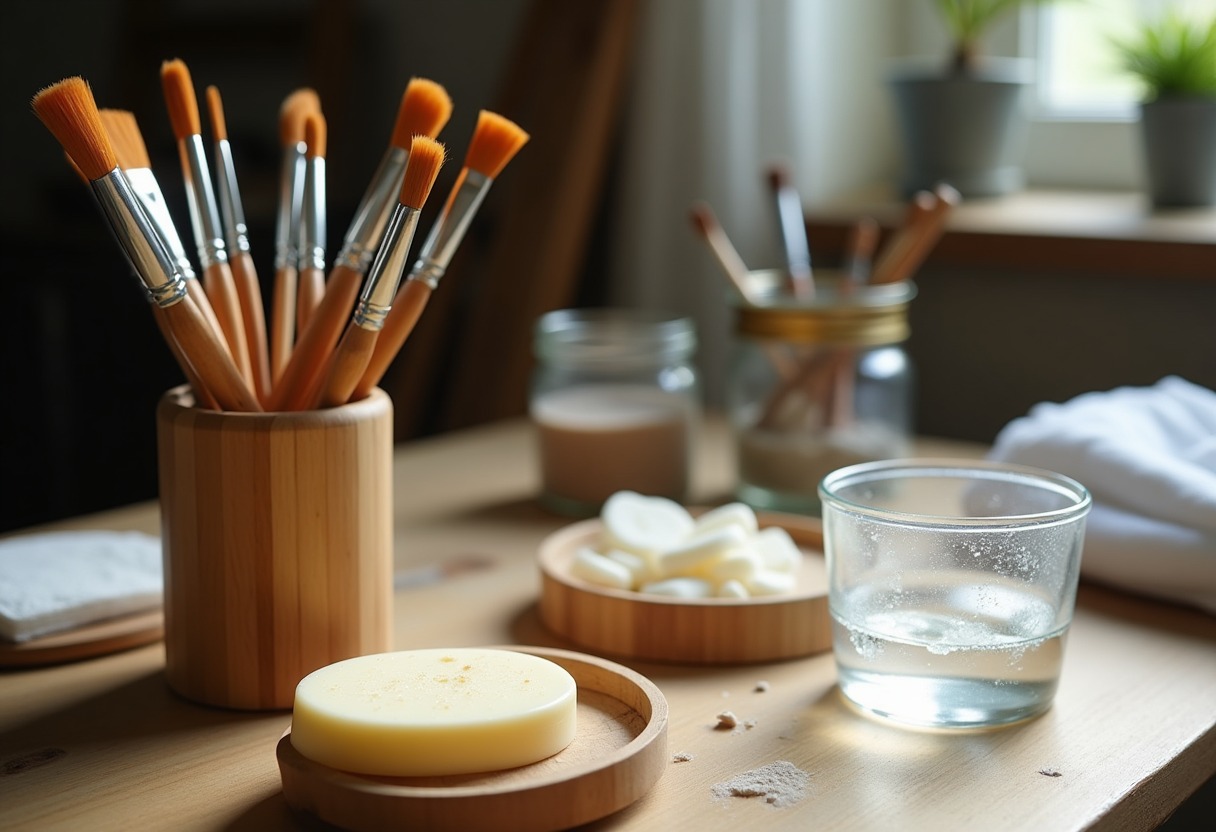
Your best kolinsky sable brush doesn't have to become a $40 casualty of dried acrylic paint. Most painters lose their brushes to neglect, not wear — but proper brush care maintenance can keep even your finest brushes performing like new for years.
Why Brush Care Maintenance Makes or Breaks Your Investment
Quality brushes represent serious money. A single Winsor & Newton Series 7 size 2 costs around $35, while a good synthetic round can run $15-20. But here's what most painters don't realize: brush construction affects lifespan more than price. The ferrule crimp, hair conditioning, and handle attachment all determine whether your brush survives 50 painting sessions or 500.
Paint residue acts like cement in brush fibers. Acrylic polymers cross-link as they dry, creating molecular chains that bind to natural and synthetic hairs. Oil paint oxidizes and hardens into a resin-like film. Watercolor, while gentler, still contains binders that stiffen fibers when left to dry. This buildup doesn't just affect paint flow — it splits ferrules, breaks bristles at the crimp line, and destroys the brush's ability to hold a point.
The difference between a well-maintained brush and a neglected one becomes obvious after just a few painting sessions. Maintained brushes hold more paint, release it smoothly, and maintain their shape. Neglected brushes become stiff, splayed, and useless for detail work.
Essential Brush Cleaning Methods by Paint Type
Different paints demand different cleaning approaches. The wrong method can damage expensive natural hair brushes or leave residue that ruins your next painting session.
Watercolor Brush Cleaning Watercolor cleanup seems straightforward, but pigment particles lodge deep in brush fibers. Rinse thoroughly in clean water, then work a small amount of → Shop brush soap cleaners on Amazon into the ferrule area. Ultramarine blue and cadmium colors stain persistently — these need extra attention with specialized brush cleaners.
Acrylic Paint Removal Acrylic's quick-drying nature makes immediate cleaning critical. Never let acrylic sit in brushes for more than 20 minutes. Use warm water and work from ferrule to tip. For dried acrylic, soak brushes in brush restorer for 24 hours, then work out softened paint with your fingers. Ammonia-based cleaners dissolve acrylic polymers but can damage natural hair over time.
Oil Paint Cleanup Process Oil paint cleanup requires solvents, but the order matters. First, remove excess paint on newsprint or paper towels. Rinse in odorless mineral spirits, not turpentine — turpentine strips natural oils from animal hair. Follow with dish soap to remove oil residue, then condition natural hair brushes with a drop of hair conditioner.
Brush Storage Solutions That Actually Work
Poor storage ruins more brushes than bad cleaning. Storing brushes tip-down in water glasses seems logical but destroys ferrule adhesive and bends delicate tips.
| Storage Method | Best For | Pros | Cons | |---|---|---|---| | Horizontal brush boxes | Travel, long-term storage | Protects tips, compact | Limited capacity | | Vertical holders (tip up) | Daily studio use | Easy access, air circulation | Takes desk space | | Roll-up brush cases | Field painting | Portable, organized | Can crush wet brushes | | Magnetic strips | Wall mounting | Space-saving, visible | Metal ferrules only |
The best daily storage keeps brushes tip-up in containers that allow air circulation. → Shop brush holders storage on Amazon for options that protect tips while keeping brushes accessible. Avoid closed containers for damp brushes — trapped moisture encourages ferrule rust and handle swelling.
For long-term storage, wrap clean, completely dry brushes individually in tissue paper. Store flat in boxes with tight-fitting lids to prevent pest damage. Moths specifically target natural hair brushes, and brush damage from insects costs painters hundreds of dollars annually.
Professional-Grade Brush Restoration Techniques
Even neglected brushes often respond to proper restoration. The key lies in understanding what can be fixed versus what's permanent damage.
Dried Paint Removal Hardened acrylic responds to 24-48 hour soaks in brush restorer solutions. Work softened paint out with gentle pressure, starting from the ferrule. Never pull on individual bristles — this breaks the hair at weak points and creates permanent splaying.
Reshaping Splayed Brushes Brushes that have lost their point can often be restored through careful reshaping. Clean thoroughly, then work brush soap into the wet brush to form the desired shape. Allow to dry completely in the shaped position. Natural hair brushes respond better to this treatment than synthetic ones.
Ferrule Repair Options Loose ferrules usually result from water damage to the adhesive. Carefully remove the brush from the handle, clean both surfaces, and reattach with two-part epoxy rated for metal-to-wood bonds. This repair works for brushes worth $15 or more — cheaper brushes aren't worth the effort.
When to Replace vs. Restore Replace brushes when the hair is broken off more than 25% from the original length, when ferrules have cracked, or when synthetic bristles have developed permanent curves. These issues can't be fixed and will affect paint application quality.
Essential Brush Care Products and Tools
Effective brush care requires specific products designed for art materials. Kitchen dish soap works in emergencies, but specialized cleaners preserve brush life much better.
→ Shop brush restoration products on Amazon for heavy-duty cleaning of damaged brushes. The Masters Brush Cleaner works exceptionally well on natural hair, while synthetic brushes respond better to ammonia-based cleaners.
Brush soaps serve double duty as cleaners and conditioners. They remove paint residue while adding protective oils to natural hair. Pink soap bars last longer than liquid cleaners and don't spill in storage.
→ Shop palette knife scrapers on Amazon for removing excess paint before cleaning. Proper paint removal reduces cleaning time and extends brush life significantly.
→ Shop brush cleaning jars on Amazon with compartments for different cleaning stages. Multi-chamber jars keep clean solvent separate from dirty solvent, making cleanup more efficient.
Quality brushes deserve protection investment. Spending $30 on cleaning supplies saves hundreds in brush replacement costs over a year of regular painting.
Advanced Brush Care Techniques Most Painters Miss
Professional illustrators and fine artists use techniques that extend brush life far beyond typical hobbyist expectations. These methods require extra time but pay off in brush longevity and performance.
Brush Rotation Systems Never use the same brush for an entire painting session. Rotate between 2-3 similar brushes, cleaning each immediately after use. This prevents paint buildup and gives brushes time to dry properly between uses. Professional watercolorists often keep 6-8 brushes of each essential size for this reason.
Periodic Deep Conditioning Natural hair brushes benefit from monthly deep conditioning treatments. After thorough cleaning, work a small amount of hair conditioner into the brush, reshape, and let sit overnight. Rinse thoroughly before use. This treatment keeps kolinsky and other natural hairs supple and extends their working life significantly.
Humidity Control in Storage Brush storage areas should maintain 40-60% relative humidity. Excessive dryness cracks wooden handles and makes natural hair brittle. High humidity encourages mold growth and ferrule corrosion. A simple humidity gauge helps monitor storage conditions, especially for expensive brush collections.
Handle Maintenance Wooden brush handles need occasional treatment to prevent cracking and water damage. Light sanding with 400-grit paper followed by a coat of clear finish protects the wood and makes cleaning easier. Avoid getting finish on the ferrule area where it could interfere with hair positioning.
FAQ
How often should I deep clean my art brushes? Deep clean brushes after every 4-5 painting sessions or whenever paint starts building up near the ferrule. For daily use brushes, a weekly deep clean prevents permanent paint buildup. Expensive natural hair brushes need deep cleaning more frequently because dried paint damages delicate hair structure faster than synthetic bristles. Signs that deep cleaning is overdue include difficulty forming sharp points, paint that doesn't flow smoothly, and visible paint residue near the ferrule even after normal cleaning.
Can I restore a brush that's been left with dried paint for months? Most brushes can be restored even after months of neglect, but success depends on paint type and brush quality. Soak the brush in brush restorer for 48-72 hours, changing the solution daily. Work out softened paint gently with your fingers, never pulling individual bristles. Acrylic paint responds better to restoration than oil paint, which forms harder films. Natural hair brushes often survive this treatment better than synthetic ones. Success rates are about 80% for quality brushes that haven't been physically damaged.
What's the best way to store brushes between painting sessions? Store clean, damp brushes tip-up in containers that allow air circulation for sessions within 24 hours. For longer storage, brushes must be completely clean and dry. Never store brushes tip-down in water or solvent — this damages ferrules and bends tips permanently. Horizontal storage works well for travel and long-term storage when brushes are wrapped individually to protect tips. The storage method matters more than the container type.
Should I use different cleaning methods for natural vs synthetic brushes? Yes, natural and synthetic brushes need different care approaches. Natural hair brushes require gentler cleaning with pH-balanced soaps and benefit from conditioning treatments to maintain flexibility. Synthetic brushes handle stronger cleaners better and don't need conditioning, but they're more prone to permanent shape changes from heat and rough handling. Use lukewarm water for natural hair, room temperature for synthetic. Natural brushes also need protection from moths and other insects that target animal hair.
How do I know when a brush is beyond restoration and needs replacement? Replace brushes when the working hair length is reduced by more than 25% from breakage, when ferrules are cracked or loose beyond repair, or when synthetic bristles have developed permanent curves that affect paint application. Natural hair brushes that have lost their spring and won't form points even after deep cleaning and conditioning are also candidates for replacement. Cost factors into this decision — brushes under $10 often aren't worth extensive restoration efforts, while expensive kolinsky brushes justify significant restoration attempts.
Proper brush care maintenance transforms your painting experience from constantly fighting worn tools to working with brushes that respond predictably session after session.
Some links on this page are affiliate links. We may earn a small commission if you purchase through them, at no extra cost to you.
As an Amazon Associate we earn from qualifying purchases. This article contains affiliate links; if you buy through them we may earn a small commission at no additional cost to you.