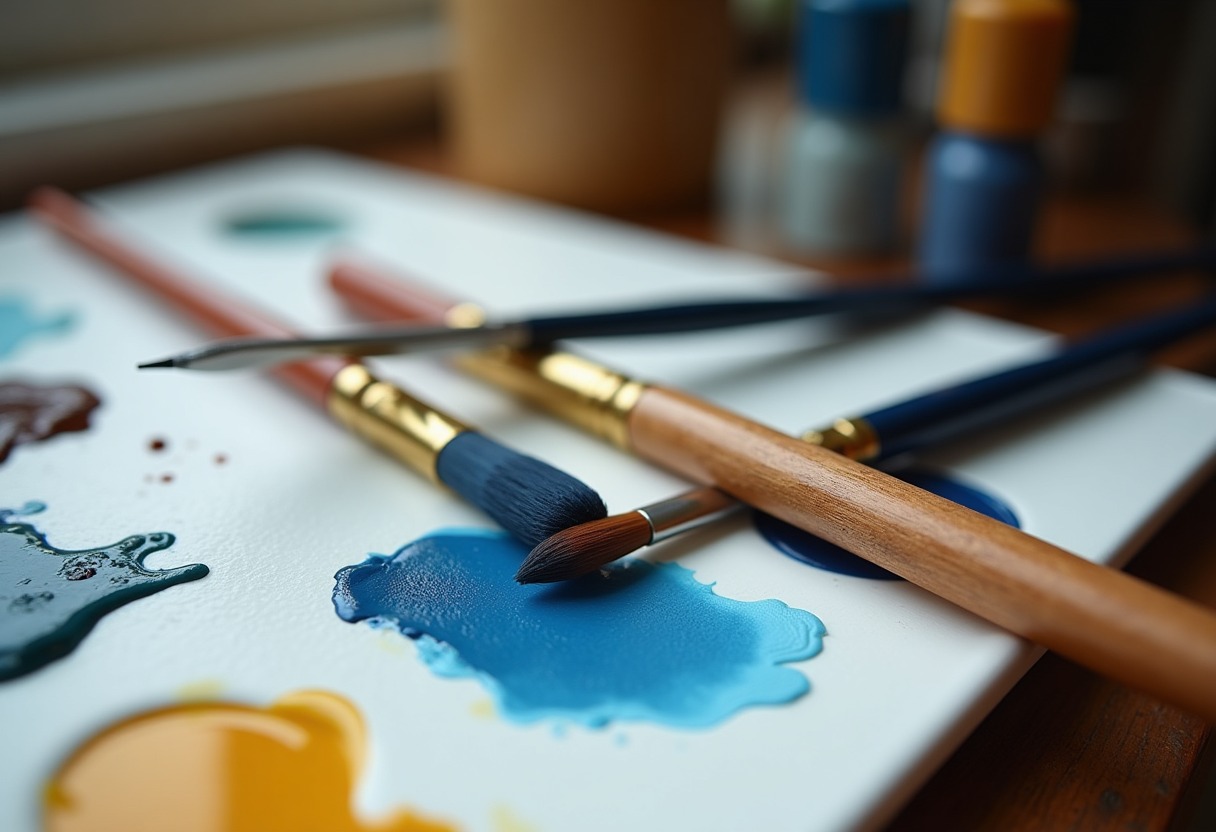
The brush you choose shapes every mark you make, yet most painters grab whatever's handy without understanding how bristle composition affects paint behavior. Natural and synthetic brushes perform fundamentally differently with each medium, and choosing wrong can sabotage your technique before you even load paint.
Why Bristle Type Matters More Than Brand Names
Brush performance depends entirely on how individual hairs interact with paint and canvas. Natural hair has microscopic scales and varying thickness along each strand, creating texture that grips pigment particles. Synthetic filaments, manufactured to precise specifications, offer consistent diameter and smooth surfaces that release paint more readily.
The protein structure in animal hair also absorbs and releases moisture differently than nylon or polyester fibers. This affects paint consistency, especially with water-based mediums where moisture content determines flow and blending behavior. Winsor & Newton's technical documentation confirms that natural sable holds approximately three times more paint than equivalent synthetic fibers due to this absorption capacity.
Paint manufacturers design their formulations around expected brush behavior. Watercolor relies on controlled water release from the brush tip, while oils need brushes that maintain paint consistency without adding moisture. Understanding these interactions prevents technique frustration and wasted paint.
Natural Hair Brushes: The Traditional Standards
Kolinsky Sable: The Watercolor Champion
Kolinsky sable comes from the tail hair of Siberian weasels, not actual sables. These hairs taper naturally from thick root to fine tip, creating unmatched paint-holding capacity and point formation. A quality kolinsky round holds enough watercolor for extended washes while maintaining sharp detail work.
The microscopic structure includes overlapping scales that trap pigment particles, allowing gradual paint release during brush strokes. This makes kolinsky ideal for wet-on-wet techniques and color gradations that require sustained paint flow. → Shop kolinsky sable brushes on Amazon
Price reflects scarcity—genuine kolinsky costs $50-200 per brush for artist-quality options. Counterfeit kolinsky floods the market, so buy from established brush makers like Winsor & Newton Series 7 or Escoda Versatil.
Hog Bristle: Built for Oil Paint
Natural hog bristle features split ends that hold thick oil paint while maintaining stiffness for impasto techniques. The coarse texture creates visible brush marks that many oil painters prefer over smooth synthetic alternatives. Chinese hog bristle dominates the market, with white bristles commanding higher prices than darker varieties.
Hog bristle brushes excel at paint manipulation—moving, scraping, and blending thick applications that would destroy softer natural hairs. The natural curve in hog bristles helps maintain brush shape during aggressive painting techniques. → Shop hog bristle brushes on Amazon
Proper hog bristle feels firm but not brittle. Cheap versions use machine-cut bristles that lack the natural taper, resulting in harsh marks and poor paint control.
Synthetic Brushes: Modern Engineering Meets Art
Synthetic brush technology has advanced dramatically since early nylon offerings. Premium synthetics now combine multiple fiber types in single brush heads, mimicking natural hair characteristics while adding durability benefits.
Polyester-Nylon Blends
Modern synthetic blends use different fiber diameters within single brush heads. Thicker core fibers provide structure while fine outer fibers create smooth paint application. This construction method allows manufacturers to customize brush behavior for specific mediums.
Top-tier synthetic brushes like Princeton Velvetouch or Silver Black Velvet cost significantly less than equivalent natural hair while offering superior durability. Synthetic bristles don't shed, maintain points through hundreds of painting sessions, and clean easily without special conditioning treatments.
Acrylic-Specific Synthetics
Acrylic paint's quick-drying properties and alkaline pH destroy natural hair brushes rapidly. Synthetic bristles resist chemical damage and clean completely without paint buildup. Golden Taklon and similar acrylic-specific synthetics offer excellent paint release and point retention. → Shop synthetic paint brushes on Amazon
Many professional acrylic painters now prefer high-end synthetics over natural alternatives for both performance and longevity reasons.
Performance Comparison by Medium
| Medium | Natural Hair Performance | Synthetic Performance | Best Choice | |--------|-------------------------|----------------------|-------------| | Watercolor | Excellent water control, superior paint capacity, natural point formation | Good durability, consistent performance, limited paint holding | Natural (Kolinsky) for detail, synthetic for large washes | | Oil Paint | Traditional texture, excellent paint manipulation, absorbs medium naturally | Easy cleanup, no shedding, consistent stiffness | Natural (hog) for impasto, synthetic for detail | | Acrylic | Rapid deterioration, difficult cleaning, expensive replacement | Superior durability, easy maintenance, consistent performance | Synthetic dominates | | Gouache | Good paint control, natural texture, moderate durability | Excellent cleaning, consistent flow, long-lasting | Either works well, preference-dependent |
Recommended Brush Types for Each Application
For Watercolor Painting
Kolinsky sable rounds (sizes 6, 10, 14) provide the foundation for most watercolor techniques. Add synthetic flats for large washes and background work where paint capacity matters less than coverage speed. Escoda Versatil offers excellent kolinsky options, while Cheap Joe's Golden Fleece provides quality synthetic alternatives.
Consider mixed sets that include both natural and synthetic options. This approach maximizes technique flexibility while managing costs effectively. → Shop watercolor brush sets on Amazon
For Oil Painting
Start with hog bristle flats in sizes 4, 8, and 12 for paint application and blending. Add kolinsky or synthetic rounds for detail work and line drawing. Rosemary & Co and Escoda produce excellent hog bristle brushes that maintain shape through heavy use.
Avoid cheap hog bristle sets with machine-cut bristles—they create harsh marks and lose bristles constantly. Quality hog bristle feels substantial but flexible, never brittle or loose in the ferrule. → Shop oil painting brushes on Amazon
For Acrylic Painting
Synthetic brushes dominate acrylic applications. Golden Taklon, Princeton Select, and Silver Black Velvet offer different price points with consistent quality. Focus on durability over tradition—acrylic's chemical properties favor synthetic construction.
Mixed-media painters working with acrylics should invest in dedicated synthetic brushes rather than compromising natural hair brushes with alkaline paint chemistry.
Advanced Brush Selection Strategies
Most intermediate painters limit themselves by choosing brushes based on immediate technique needs rather than building systematic brush wardrobes. Consider paint viscosity, surface texture, and cleaning requirements when expanding brush collections.
Brush Rotation Systems
Professional painters maintain multiple brush sets to avoid cleaning interruptions during painting sessions. This approach works especially well with acrylics, where dried paint destroys brushes permanently. Keep wet brushes in appropriate mediums between color changes rather than cleaning constantly.
Watercolor painters benefit from dedicating specific brushes to particular pigments, especially staining colors like phthalo blue or alizarin crimson that permanently tint natural hair.
Specialty Applications
Miniature painting requires different brush characteristics than canvas work, as covered in our guide to the Best Brushes Miniature Painting 2026. Fine detail work demands shorter bristles for paint control, while larger surfaces benefit from longer hair for paint capacity.
Surface preparation also affects brush choice. Properly primed canvases allow delicate brushes to perform optimally, while rough surfaces require more robust bristles. Check our Best Canvas Priming Techniques guide for surface preparation strategies.
FAQ
Which brush type holds more paint—natural or synthetic? Natural hair brushes, particularly kolinsky sable, hold significantly more paint than synthetics due to their porous structure and microscopic scales. A kolinsky watercolor brush can hold three to four times more paint than an equivalent synthetic, making them ideal for large washes or extended detail work. However, synthetic brushes release paint more consistently, which some painters prefer for controlled applications.
Do expensive natural hair brushes justify their cost for hobby painters? The answer depends on your medium and painting frequency. For watercolor, a single quality kolinsky sable brush lasting several years often costs less per painting session than repeatedly replacing cheap synthetics. For acrylics, expensive natural brushes make little sense since the medium's alkaline chemistry destroys natural hair regardless of quality. Oil painters fall somewhere between—good hog bristle brushes last years with proper care, but premium synthetics perform comparably at lower cost.
Why do some synthetic brushes work better with certain paint brands? Paint manufacturers formulate their products with specific viscosity and flow characteristics that interact differently with brush materials. Some acrylic formulations contain surfactants that affect how paint releases from synthetic bristles, while others include flow additives that work better with natural hair's absorbent properties. This is why professional painters often test brush-paint combinations systematically rather than assuming universal compatibility.
How can you tell genuine kolinsky sable from fake brushes? Authentic kolinsky sable has visible color variation within individual hairs, transitioning from darker roots to lighter tips with natural irregularities. The hairs feel substantial but not stiff, and genuine kolinsky points naturally without forcing. Fake kolinsky often uses dyed ox hair or other substitutes that lack the natural taper and spring-back of real Siberian weasel hair. Price alone isn't definitive, but genuine kolinsky rarely costs under $30 for artist-quality brushes.
Should beginners start with natural or synthetic brushes? Beginners should match brush type to their chosen medium rather than following general rules. Watercolor students benefit from at least one quality natural hair brush to understand proper paint behavior, while acrylic beginners should use exclusively synthetic brushes to avoid frustration with damaged natural hair. Oil painting beginners can succeed with either type, making cost and durability preferences the deciding factors. The key is understanding why each type behaves differently rather than treating all brushes as interchangeable tools.
Choose your brushes based on paint chemistry and technique requirements, not tradition or marketing claims—your artwork will reflect the difference in every stroke.
Some links on this page are affiliate links. We may earn a small commission if you purchase through them, at no extra cost to you.
As an Amazon Associate we earn from qualifying purchases. This article contains affiliate links; if you buy through them we may earn a small commission at no additional cost to you.