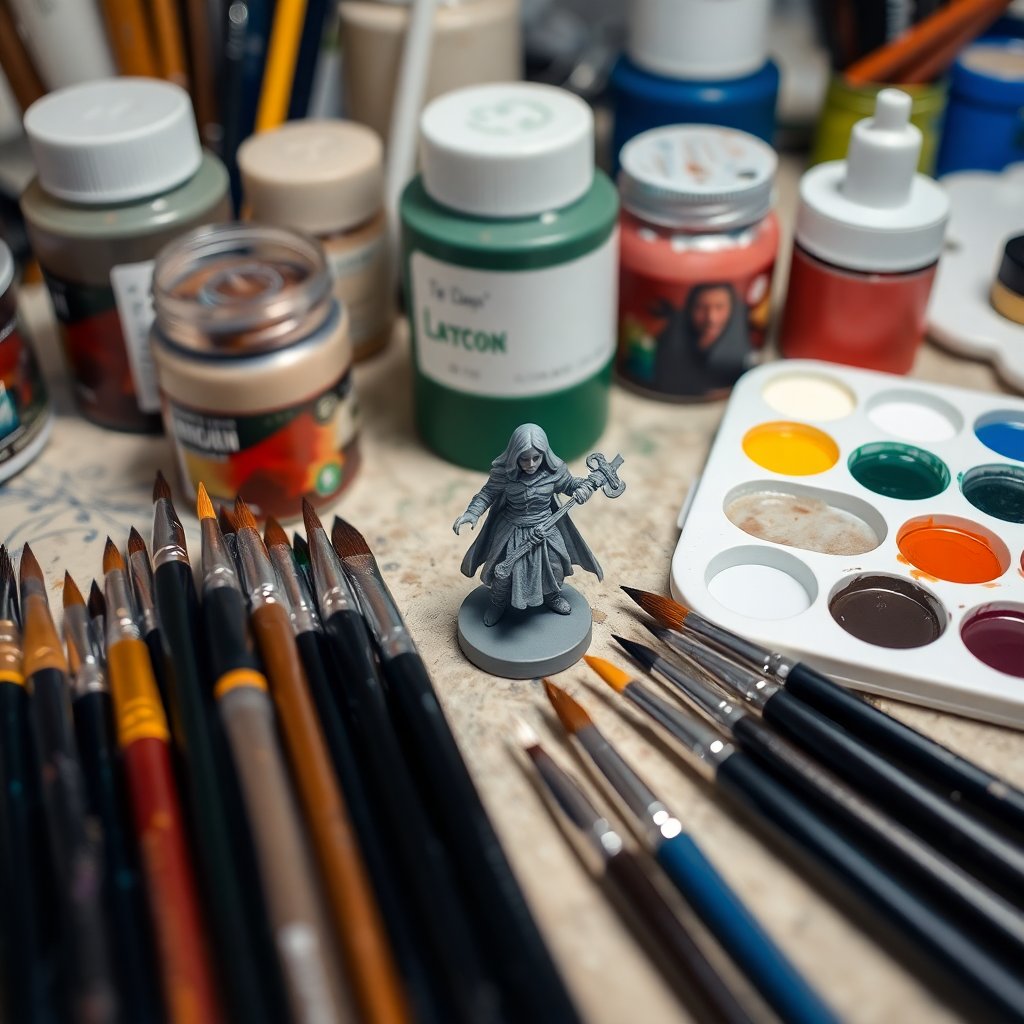
Your brush is the single most important tool sitting on your hobby desk. A great miniature can survive mediocre paint, but it cannot survive a brush that splits, sheds, or loses its point after three models. If you have been fighting tip curl or struggling to get clean edge highlights, the problem is almost certainly your brush — not your technique.
Choosing the right brush matters more than most hobbyists realize. The difference between a cheap craft store brush and a quality kolinsky sable is night and day — smoother paint flow, better belly capacity, and a fine tip that actually holds its shape session after session. Whether you are just starting out with your first box of Space Marines or you are pushing competition-level freehand, investing in the right brushes will level up your painting faster than almost any other upgrade.
In this guide, I have tested and ranked the best miniature painting brushes available in 2026 across every category — detail work, basecoating, dry brushing, and all-purpose workhorse brushes. Every recommendation here is based on real hobby use, not marketing copy.
What to Look for in a Miniature Painting Brush
Before diving into specific picks, here is what actually matters when choosing a brush for miniatures:
Tip retention is everything. A brush that snaps back to a fine point after each stroke lets you paint clean lines consistently. Kolinsky sable excels here because the natural hair tapers to a point and has microscopic scales that hold paint in the belly.
Belly capacity determines how much paint your brush carries. A brush with good belly lets you pull longer, smoother strokes without reloading. This is especially important for basecoating and glazing.
Bristle material breaks down into two camps: natural hair (kolinsky sable, red sable) and synthetic. Kolinsky sable remains the gold standard for detail and general work. High-quality synthetics have improved dramatically and are now excellent for dry brushing, stippling, and heavy-use tasks where you do not want to destroy an expensive sable.
Size trips up beginners constantly. A size 0 or 00 is not automatically better for detail work. A quality size 1 or size 2 with a sharp tip gives you better paint flow and more control than a tiny size 000 that dries out every two seconds.
Best Overall: Winsor & Newton Series 7
The Winsor & Newton Series 7 remains the benchmark against which every other miniature brush is measured. These kolinsky sable brushes offer exceptional tip retention, a generous belly that holds paint beautifully, and a snap-back that stays consistent for months of regular use.
The Series 7 in sizes 0, 1, and 2 covers about ninety percent of what most painters need. The size 1 is arguably the single best all-purpose miniature brush you can buy — detailed enough for eyes and fine highlights, but with enough belly capacity for smooth basecoats on infantry-sized models.
The downside is price. These are premium brushes and you will feel it when you accidentally leave one sitting tip-down in your water pot. But per hour of quality painting time, they remain the best value in the hobby.
→ Shop Winsor & Newton Series 7 on Amazon
Best Budget Kolinsky: Rosemary & Co Series 33
If the Series 7 price tag makes you wince, Rosemary & Co Series 33 brushes deliver roughly eighty percent of the performance at half the cost. These are genuine kolinsky sable with excellent points and solid belly capacity. They are hand-made in the UK and the quality control is remarkably consistent.
The tips are slightly less refined than a Series 7 out of the box, but after a few sessions of breaking in they perform beautifully. Many competition painters use these as their daily drivers and save the Series 7 for final detail passes. The size 1 and size 0 are the sweet spot here.
→ Shop Rosemary and Co Series 33 on Amazon
Best for Fine Detail: Raphael 8404
When you need to paint pupils inside 28mm eyes, freehand chapter symbols, or impossibly thin edge highlights, the Raphael 8404 is the brush to reach for. This French-made kolinsky sable has the finest, most precise tip of any brush I have used. The size 0 comes to a point that feels almost surgical.
The trade-off is belly capacity — the 8404 has a slimmer profile than the Series 7, so it carries less paint and requires more frequent reloading. For extended basecoating this gets tedious, but for precision detail work it is unmatched. If you are working on display-quality single miniatures or competition pieces, this brush earns its place in your lineup.
→ Shop Raphael 8404 Kolinsky Brush on Amazon
Best Synthetic All-Rounder: Artis Opus Series S
Not everyone wants to use natural hair brushes, and the Artis Opus Series S proves that synthetics have come a long way. These brushes use a triangular filament blend that mimics the snap and flow characteristics of kolinsky sable surprisingly well.
They hold a fine point, carry a reasonable paint load, and — critically — they are far more forgiving of the abuse that comes with metallic paints, technical paints, and aggressive washes that would chew through a sable brush. If you paint a lot of Warhammer and go through contrast paints and shades regularly, having a set of quality synthetics like these saves your sable brushes for the work that actually demands them.
→ Shop Artis Opus Series S Brushes on Amazon
Best for Dry Brushing: Citadel Dry Brushes
Dry brushing is a technique where you want to destroy your brush — or at least use one you do not mind destroying. The Games Workshop Citadel dry brush set is purpose-built for this. The flat, splayed bristle shape distributes pigment across raised surfaces evenly, and the stiff synthetic fibers hold up to the scrubbing motion that dry brushing demands.
The medium size handles most infantry and vehicle work. The small size is perfect for targeted dry brushing on faces and smaller details. These are inexpensive enough that you can replace them every few months without guilt, which is exactly the mindset you want for dry brush tools.
→ Shop Citadel Dry Brush Set on Amazon
Best Starter Set: Army Painter Wargamer Brush Set
If you are just getting into the hobby and want one purchase that covers all your bases, the Army Painter Wargamer brush set is hard to beat. You get a detail brush, a regiment brush for basecoating, a character brush for all-purpose work, and a dry brush — everything you need to paint your first army to tabletop standard.
These are not going to compete with a Winsor & Newton or Raphael for fine detail work, but they are solid performers that will last a new painter through several months of learning. The regiment brush in particular is an excellent basecoating tool with good capacity. Once your skills progress, you can upgrade individual brushes as needed while keeping the Army Painter set for utility tasks.
If you are just starting out, pair these with a good starter paint set and you are ready to go.
→ Shop Army Painter Wargamer Brush Set on Amazon
Best for Basecoating: Da Vinci Maestro Series 10
When you need to lay down smooth, even basecoats across an entire unit of models, the Da Vinci Maestro Series 10 in size 2 is a workhorse. This kolinsky sable brush has an oversized belly that carries a huge paint load, letting you coat full panels and large surfaces with minimal reloading.
The tip is good but not exceptional — this is not the brush for painting eyebrows. What it does brilliantly is flow control. Paint releases from the belly in a smooth, controlled stream that minimizes brush strokes and pooling. For batch painting squads and armies, this brush saves significant time.
→ Shop Da Vinci Maestro Series 10 on Amazon
Brush Care: Making Your Investment Last
A fifty-dollar kolinsky sable brush that you maintain properly will outlast a dozen cheap brushes. Here is the minimum brush care routine every painter should follow:
Never let paint dry in the bristles. If you take a break, rinse your brush. Acrylic paint that dries near the ferrule slowly spreads the bristles apart and kills the tip permanently.
Use brush soap after every session. Masters Brush Cleaner is the hobby standard — work it into the bristles gently, reshape the tip, and let the brush dry horizontally or tip-down. A good wet palette also helps keep your paint from drying out too quickly on the brush.
Never dip past the ferrule. Paint that gets into the metal collar is almost impossible to remove and will splay the bristles over time.
→ Shop Masters Brush Cleaner on Amazon
Comparison Table
| Brush | Best For | Price Range | Rating | |---|---|---|---| | Winsor & Newton Series 7 | Overall best / all-purpose | $12–$18 each | ⭐⭐⭐⭐⭐ | | Rosemary & Co Series 33 | Budget kolinsky sable | $6–$10 each | ⭐⭐⭐⭐½ | | Raphael 8404 | Fine detail / competition | $10–$16 each | ⭐⭐⭐⭐⭐ | | Artis Opus Series S | Synthetic all-rounder | $8–$14 each | ⭐⭐⭐⭐ | | Citadel Dry Brushes | Dry brushing | $8–$12 per set | ⭐⭐⭐⭐ | | Army Painter Wargamer Set | Beginner starter set | $18–$25 per set | ⭐⭐⭐⭐ | | Da Vinci Maestro Series 10 | Basecoating large areas | $14–$20 each | ⭐⭐⭐⭐½ |
Frequently Asked Questions
What size brush should I use for painting miniatures?
A size 1 kolinsky sable is the most versatile brush size for miniature painting. Despite the instinct to reach for tiny sizes, a quality size 1 has a sharp enough tip for detail work while carrying enough paint in the belly for smooth, controlled strokes. Most experienced painters use a size 1 for eighty percent of their work and only switch to a size 0 or 00 for extreme detail like eyes and tiny freehand designs.
How often should I replace my miniature painting brushes?
With proper care — cleaning after every session with brush soap, never letting paint dry in the bristles, and storing them properly — a quality kolinsky sable brush can last six months to over a year of regular use. Synthetic brushes and dry brushes wear out faster, typically every two to four months with heavy use. Replace any brush once it consistently fails to hold a point, as no amount of reshaping will fix permanently splayed bristles.
Are expensive kolinsky sable brushes worth it for beginners?
Not necessarily for your very first brushes. When you are still learning brush control and will inevitably make mistakes like leaving paint to dry in the ferrule, a mid-range set like the Army Painter Wargamer brushes is the smarter investment. Once you have basic technique down and understand brush care fundamentals, upgrading to a single good kolinsky sable like the Winsor & Newton Series 7 size 1 will be a revelation. Most painters make this upgrade within their first three to six months.
Can I use the same brushes for acrylic and oil-based miniature paints?
You can, but it is not ideal. Acrylic paints are harder on natural bristles because they dry quickly and can build up near the ferrule. Oil paints require solvents for cleaning that can strip natural oils from kolinsky sable over time. The best practice is to dedicate separate brushes to each medium. Use your premium kolinsky sable for acrylics where tip precision matters most, and keep a separate set of good-quality synthetics or older sable brushes for oils and enamels.
What is the difference between kolinsky sable and red sable brushes?
Kolinsky sable comes from the tail hair of the Siberian kolinsky, a species of weasel, and is prized for its exceptional spring, fine taper, and paint-holding capacity. Red sable is a broader category that includes hair from various weasel and marten species — it is softer, has less snap-back, and does not hold a point as well. For miniature painting, kolinsky sable is significantly better for detail work. Red sable can work for basecoating and washes where tip precision is less critical, but the price difference is small enough that kolinsky is worth the upgrade.
Final Thoughts
If I had to build a brush collection from scratch with a reasonable budget, here is exactly what I would buy: a Winsor & Newton Series 7 in size 1 as my primary brush, a Raphael 8404 in size 0 for fine detail, an Army Painter or Citadel dry brush, and a tub of Masters Brush Cleaner. That four-item kit covers everything from batch painting a full army to painting competition-level display pieces. Start there, and add specialized brushes as your technique and needs grow.
The right brush will not paint your miniatures for you, but it will stop fighting you every step of the way. Invest in quality, take care of your tools, and you will see the difference on every model that leaves your desk.
→ Shop Miniature Painting Brush Sets on Amazon
As an Amazon Associate we earn from qualifying purchases. This article contains affiliate links; if you buy through them we may earn a small commission at no additional cost to you.