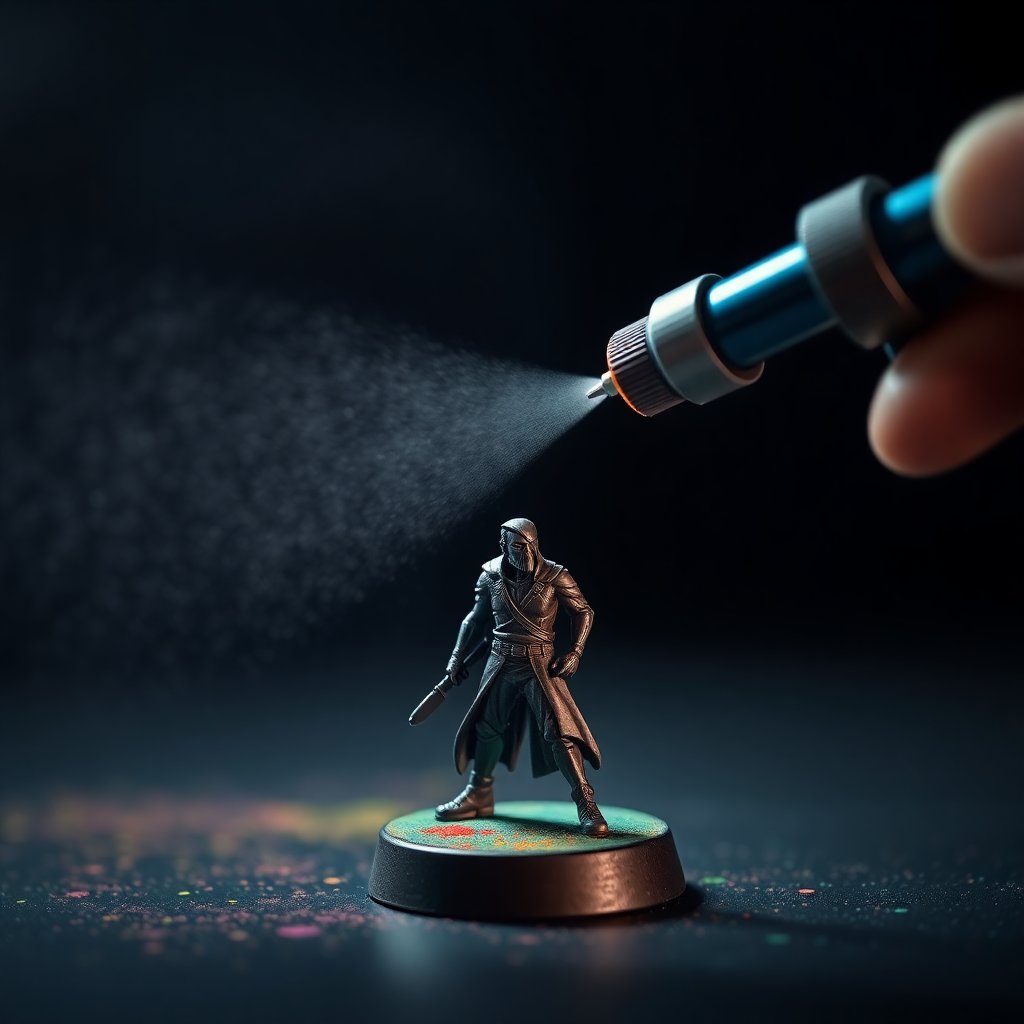
You've hit the ceiling with a brush. Your blends are okay, your basecoats are solid, but you're watching other painters drop smooth OSL effects and perfectly gradated skin tones and you know exactly what's holding you back. It's time to get an airbrush. The problem is that the market is genuinely confusing — double-action, gravity-feed, siphon-feed, PSI ratings, needle sizes — and most guides either recommend a $300 kit to beginners or point you toward a cheap toy that'll frustrate you into quitting.
This guide cuts through it. We've focused specifically on miniature painting use cases: fine detail work, smooth zenithal priming, blending large vehicles, and fast base-coating entire armies. The needs are different from cake decorating or automotive work, and the kit recommendations reflect that.
What Actually Matters for Mini Painting
Before getting into the picks, let's establish what you actually need in an airbrush for miniature work.
Needle size: 0.2mm to 0.35mm covers virtually every miniature painting task. A 0.2mm gives you fine detail lines and thin coats; a 0.3mm or 0.35mm is more forgiving for beginners and handles basecoating without clogging every five minutes. Avoid anything above 0.5mm for detail work — it's too coarse.
Double-action vs single-action: Get double-action. Single-action controls airflow with your finger but requires turning a dial to adjust paint flow, which breaks your rhythm constantly. Double-action (push down for air, pull back for paint) feels awkward for about a week and then becomes second nature. Every professional miniature painter uses double-action.
Gravity-feed vs siphon-feed: Gravity-feed (cup on top) wins for miniature painting. You use less paint, you can thin and mix directly in the cup, and cleanup is faster. Siphon-feed (jar underneath) is better for large volumes — fine for priming entire armies, but awkward for the small batches you'll mix constantly when painting individual models.
Compressor: The airbrush gets most of the attention, but a bad compressor will ruin the experience. You want at least 0.5L of tank storage to reduce pulsing, a moisture trap (essential — water in your paint line causes spitting), and a PSI range of 15–30 for miniature work. Oil-free compressors are much lower maintenance and better for indoor hobby use.
If you're just getting started, our guide to the best beginner miniature paints covers which paint ranges thin best for airbrushing — that'll matter once you've got your setup dialed in.
Best Airbrush Kits for Miniature Painting 2026
1. Badger Patriot 105 — Best for Beginners
The Badger Patriot 105 is the airbrush I'd put in the hands of every beginner, full stop. It's an American-made double-action gravity-feed brush with a 0.5mm needle (slightly larger than ideal for detail work, but incredibly forgiving for learning technique), and it is nearly indestructible. Badger's customer service will repair it for free if you ever damage it. That alone is worth something when you're still learning to disassemble and clean an airbrush.
The Patriot handles thicker paint well, which means you can get away with less-than-perfect thinning ratios while you're still developing your feel for the medium. It's not the most precise tool in the world, but it teaches you airbrush fundamentals without punishing every small mistake. For zenithal priming and basecoating squads of infantry, nothing at this price point comes close.
→ Shop the Badger Patriot 105 on Amazon
2. Iwata-Medea Eclipse HP-CS — Best All-Around for Serious Hobbyists
The Iwata Eclipse HP-CS is the gold standard recommendation in every serious miniature painting community, and for good reason. It's a gravity-feed double-action with a 0.35mm needle, medium-sized cup, and exceptional precision. The needle-in-nozzle design makes fine detail work feel accessible even for intermediate painters, and the tool tolerates a wide range of paint viscosities.
This is the airbrush that lives on the desk permanently. It handles base-coating, smooth gradient blending, zenithal highlights, and detail lines all without switching tools. The learning curve is steeper than the Badger Patriot, but the ceiling is much higher. If you're painting anything from Warhammer 40K infantry to display-level busts, this is the brush to grow into.
The HP-CS runs around $100–130 on its own. It's worth every cent as a long-term investment.
→ Shop the Iwata Eclipse HP-CS on Amazon
3. Master Airbrush G22 Kit with Compressor — Best Budget Complete Kit
If you want to spend $60–80 and see whether airbrushing clicks for you before committing to a premium setup, the Master Airbrush G22 kit with compressor is the entry point. The brush itself is a workable double-action gravity-feed with a 0.3mm needle, and the included TC-20 compressor is small but functional for miniature work.
Managed expectations: this is not a premium tool. The fit and finish aren't comparable to Iwata or Badger, and you'll likely upgrade within a year if you stick with airbrushing. But it paints models. It thins paint. It does zenithal primes. For someone unsure whether airbrushing is their hobby or not, it's the right test.
→ Shop the Master Airbrush G22 Kit on Amazon
4. Harder & Steenbeck Infinity CR Plus — Best for Advanced Painters
The Harder & Steenbeck Infinity CR Plus is what you buy when you're serious about display-level miniature painting and you want the best German engineering available. It features a 0.15mm needle as its fine option and a precision-machined needle that produces lines thin enough to paint individual scales on a dragon or freehand script on a banner.
The trigger feel on the H&S Infinity is unlike anything else in this price bracket — smooth, precise, and responsive. The self-centering needle system makes disassembly and reassembly faster and reduces the risk of bending the needle during cleaning. Paint cups are interchangeable, and the brush handles thinned Citadel, Vallejo, AK Interactive, and Scale75 paints equally well.
This is a $200+ investment and not recommended for beginners. But if you're already airbrushing and want the tool you'll keep for a decade, this is it.
→ Shop the Harder & Steenbeck Infinity on Amazon
5. Paasche TG-3F Set — Best for Vehicle and Large Model Painting
The Paasche TG-3F comes with three nozzle sizes (0.25mm, 0.38mm, and 0.66mm), making it unusually versatile for painters who work across different scales. The larger nozzle is perfect for efficiently priming tanks, war machines, and terrain. The fine nozzle brings it back to infantry-scale work.
It's gravity-feed double-action and made in the USA. Paasche has been building airbrushes since 1904 and the quality shows. The TG-3F isn't as widely discussed in miniature communities as the Iwata or Badger options, but it's particularly strong for Warhammer hobbyists painting large kits like Knights, Titans, and Daemon Engines where coverage speed matters.
→ Shop the Paasche TG-3F Airbrush Set on Amazon
Compressors Worth Knowing About
Your airbrush is only as good as the air supply feeding it. Here are two compressors worth pairing with any of the brushes above:
California Air Tools 2010A — A quiet, oil-free compressor with a 1-gallon tank and moisture trap. It runs at 60 dB (roughly conversation level), which matters a lot if you paint in an apartment or shared space late at night. Consistent pressure output with minimal pulsing. Excellent for miniature work.
→ Shop the California Air Tools 2010A on Amazon
Iwata Smart Jet Pro — Purpose-built for airbrush artists. Compact, extremely quiet, includes a pressure regulator and moisture trap. The pressure output is lower than the California Air Tools, but perfectly calibrated for the 10–25 PSI range you'll use for minis. Reliable and nearly silent. Premium price, premium experience.
→ Shop the Iwata Smart Jet Pro Compressor on Amazon
Airbrush Kit Comparison Table
| Product | Best For | Price Range | Rating | |---|---|---|---| | Badger Patriot 105 | Beginners, zenithal priming | $60–$80 | ⭐⭐⭐⭐ | | Iwata Eclipse HP-CS | Intermediate to advanced all-around | $100–$130 | ⭐⭐⭐⭐⭐ | | Master Airbrush G22 Kit | Budget complete starter kit | $55–$75 | ⭐⭐⭐½ | | Harder & Steenbeck Infinity CR Plus | Advanced display painting | $200–$250 | ⭐⭐⭐⭐⭐ | | Paasche TG-3F Set | Large models, vehicles, terrain | $80–$110 | ⭐⭐⭐⭐ | | California Air Tools 2010A | Quiet compressor, any airbrush | $80–$110 | ⭐⭐⭐⭐½ |
What to Look For When Buying Your First Airbrush Kit
Buy the airbrush and compressor separately if your budget allows. Bundled kits with compressors are convenient but the compressors are often low quality. The exception is the Master Airbrush G22 kit, where the bundled compressor is genuinely functional for the price. If you're spending more than $100, buy separately.
Don't skip the moisture trap. Humidity gets into your air line, hits hot paint, and causes spitting and uneven coverage. A basic inline moisture trap costs $10–15 and solves this entirely. Most decent compressors include one, but verify before you buy.
Budget for cleaning supplies. Airbrush cleaner, pipe cleaners, and a cleaning pot (a jar with a lid that catches spray while you flush the brush) are essential. Add $15–20 to your total cost estimate for these consumables.
Learn to disassemble and clean your brush after every session. Dried paint in the needle nozzle is the number one cause of airbrush problems. Five minutes of cleaning extends the life of your brush indefinitely. Check out how contrast and speed paints work in an airbrush — they're thinner than standard acrylics and clean up more easily, making them great for learning the workflow.
Frequently Asked Questions
What PSI should I use for miniature painting with an airbrush?
Most miniature painters work between 12–25 PSI depending on the task. Thinned paints and fine detail work runs at 12–15 PSI to reduce overspray and keep control tight. Basecoating and priming can push up to 20–25 PSI for better coverage. Start low and increase until the paint flows smoothly without spidering or drying on the nozzle before it hits the model.
Do I need to thin my paints for airbrushing?
Yes — virtually every acrylic miniature paint needs thinning for airbrush use. The standard test is "skim milk consistency": thinned enough to flow freely but still carrying pigment. Citadel paints typically need a 1:1 ratio of paint to airbrush medium or water. Vallejo Air and Vallejo Model Air are pre-thinned for airbrushing and work without adjustment. Heavy-bodied paints like some Scale75 colors need more thinning.
Can I use Citadel Contrast or Speedpaints in an airbrush?
Yes, with some caveats. Contrast paints are designed for brush application and flow-through effects, but they can be airbrushed as a tinted varnish layer over a zenithal prime with excellent results — many painters do this for speed painting armies. They should be thinned slightly with Contrast Medium or Lahmian Medium for airbrushing. Speedpaints by Army Painter behave similarly. Avoid applying them over a completely black primer, as they won't catch the highlights the zenithal technique is designed to produce.
How hard is it to learn airbrushing for miniatures?
The honest answer: expect two to four weeks before the tool feels natural, and two to three months before you're producing results better than hand-brushing. The learning curve involves thinning ratios, trigger control, distance management, and cleaning habits — all at once. The fastest way to improve is to use cheap spray models or test pieces for your first sessions. Don't learn airbrushing on a centerpiece miniature. Start with a squad of infantry or a horde unit where mistakes are recoverable.
Is a dual-action airbrush harder to learn than single-action?
Initially, yes — but not significantly. Most hobbyists report that within a week of regular use, double-action trigger control becomes intuitive. The long-term advantage of double-action (being able to adjust paint flow mid-stroke without stopping) makes it the universally recommended option for miniature painting. Single-action is only worth considering if you have limited hand mobility or dexterity challenges.
The Bottom Line
For most miniature painters making their first airbrush purchase, the choice is simple: if you want to try before committing, start with the Master Airbrush G22 kit. If you're ready to invest in a tool you'll keep long-term, buy the Iwata Eclipse HP-CS with a California Air Tools 2010A compressor separately.
The Badger Patriot 105 is the best single airbrush for pure beginners who want forgiving performance with a strong warranty. The Harder & Steenbeck Infinity CR Plus is the endgame brush for painters who care about display-level output. And the Paasche TG-3F punches above its weight for large model and vehicle work.
Whichever you choose, the biggest returns come from practice and clean habits — not the tool itself. Pick a brush in your budget, learn the fundamentals, and the quality of your painted models will surprise you within a month.
As an Amazon Associate we earn from qualifying purchases. This article contains affiliate links; if you buy through them we may earn a small commission at no additional cost to you.