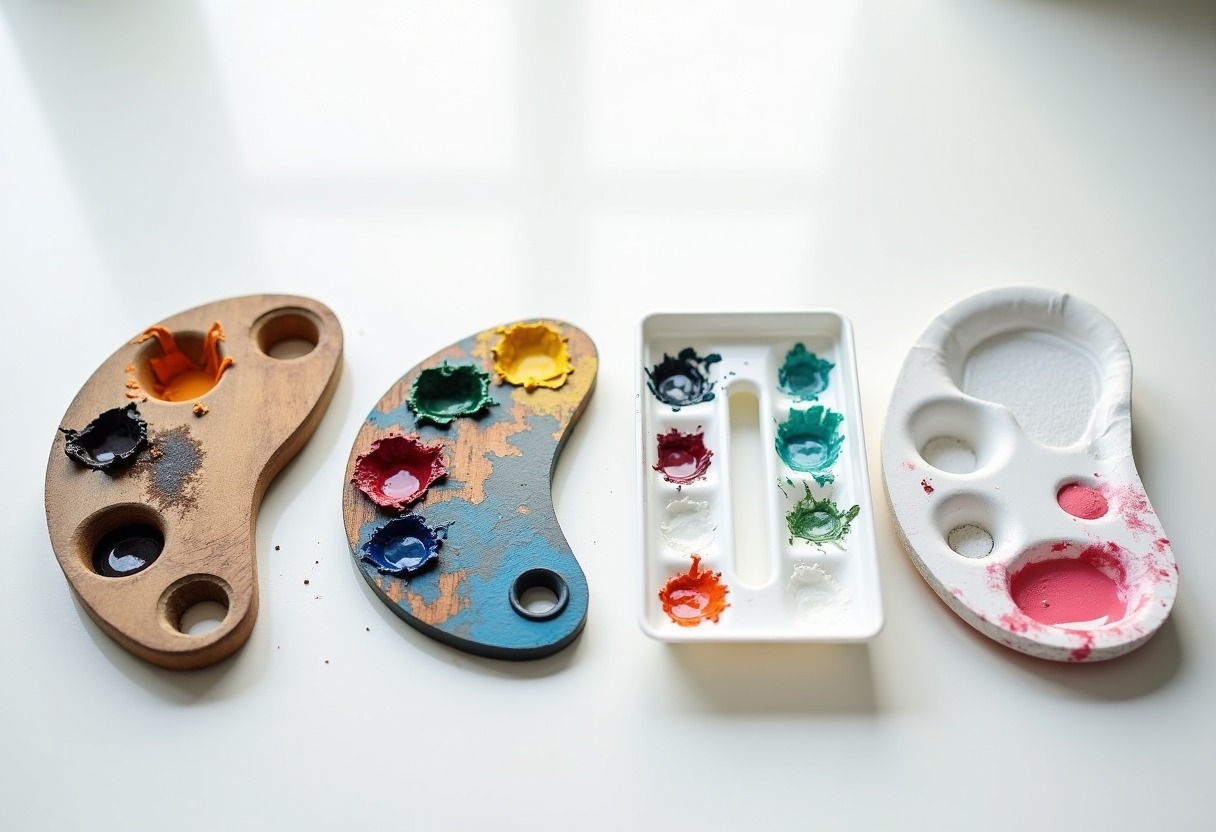
Your palette material affects everything from color mixing accuracy to how much paint you waste. Wood stains and warps, glass stays inert but breaks, plastic scratches and stains, and stay-wet systems keep acrylics workable for days. Each material serves specific mediums and painting styles better than others, and picking wrong costs you time scraping dried paint or constantly remixing colors.
Why Your Palette Material Actually Matters
The surface you mix on directly impacts your paint's behavior. Wood absorbs moisture from watercolors and can leach oils that contaminate fresh mixes. Glass provides a neutral, non-porous surface that lets you see true color values against white backing paper. Plastic varies wildly in quality—cheap versions develop microscopic scratches that trap pigment and distort subsequent mixes. Stay-wet palettes solve acrylic's quick-drying problem but require maintenance that oil painters find pointless.
According to Golden Artist Colors' technical documentation, acrylic paint begins skinning over in 20-30 minutes at room temperature. That timeline makes traditional palettes frustrating for anyone working longer than half an hour. Oil painters face the opposite challenge—paint stays wet so long that palette material matters less for workability and more for cleaning ease.
Material weight and portability matter for plein air work. A 12x16-inch glass palette weighs roughly three pounds before you add paint. Wood palettes of the same size weigh about half that. Disposable paper palettes weigh ounces but feel flimsy in wind. Stay-wet palettes require carrying extra water and sponge sheets.
Material Performance By Paint Medium
Acrylic painting demands moisture control above everything else. Traditional wooden or glass palettes work for quick studies where you mix and apply color within 15 minutes. Anything longer and you're scraping dried paint or constantly remixing. Stay-wet palettes extend working time to 2-3 days with proper maintenance. The membrane paper sits on a soaked sponge, creating humidity that keeps acrylics fluid without diluting them. → Shop acrylic stay-wet palette on Amazon
For techniques covered in Essential Paint Colors Mixing, you need consistent color relationships that don't shift as paint dries. Stay-wet palettes maintain those relationships. The downside? They require cleaning every 3-4 days to prevent mold, and the membrane paper needs replacing every few weeks.
Oil painting works with any non-absorbent surface. Wood palettes treated with linseed oil develop a beautiful patina that many traditionalists prefer. The wood absorbs some excess oil from paint, creating a slightly drier consistency that some painters find ideal for controlled brushwork. Glass palettes stay clinically clean and show true color values, which matters when matching skin tones or mixing precise color temperatures.
Plastic disposable pads make cleanup instant—just peel off the used sheet. That convenience comes at a cost: the slick surface causes paint to slide around, and some painters report the white paper underneath reflects harsh highlights under studio lights.
Watercolor painting requires porcelain, ceramic, or high-grade plastic with deep wells. The material must not absorb water or stain from pigments. Cheap plastic palettes develop a residue that contaminates clean water washes. Porcelain stays neutral forever and wipes completely clean, which matters for transparent layering techniques. → Shop porcelain mixing wells on Amazon
Surface Characteristics Comparison
| Material | Cleaning Difficulty | Color Accuracy | Durability | Best For | |----------|-------------------|---------------|------------|----------| | Wood | Moderate (oil stains, requires scraping) | Fair (darkens over time) | High if sealed | Oil painting, plein air work | | Glass | Easy (scrapes clean with razor) | Excellent (neutral, non-staining) | Fragile to impact | Studio oil and acrylic mixing | | Plastic (disposable) | None (peel and discard) | Good (if quality paper) | Single-use | Quick studies, travel, workshops | | Stay-Wet | High (needs disassembly, sanitizing) | Good (membrane can yellow) | Moderate (sponge deteriorates) | Extended acrylic sessions |
Wood palettes require seasoning with linseed oil before first use. This seals the grain and prevents excessive absorption. The wood still darkens over months of use, which makes judging color values harder. But many oil painters appreciate the traditional feel and thumb-hole design that balances weight during long sessions.
Glass palettes show true color values because they're inert and don't yellow or stain. You can tape white paper underneath to simulate canvas color or use gray paper to judge values more accurately. The drawback: dropped glass shatters, and sharp edges require safety awareness. → Shop glass paint mixing palette on Amazon
Plastic disposable pads eliminate cleaning entirely. Peel off the top sheet when done, and you have a fresh surface. The quality varies dramatically—cheap pads use porous paper that lets paint seep through, while quality versions like Sta-Wet Palette Paper Refills use coated stock that holds up to heavy mixing. The main limitation: you can't save leftover paint between sessions.
What Professional Material Testing Reveals
Testing identical titanium white oil paint across all four palette types shows measurable differences. On untreated wood, the paint absorbed enough oil in 30 minutes to noticeably stiffen. On sealed wood, absorption was minimal but color appeared warmer against the amber wood tone. Glass showed zero absorption and true color temperature. Plastic disposable paper held paint well for the first hour, then the paper began rippling from moisture.
Stay-wet palette testing with heavy body acrylics from Best Beginner Miniature Paints 2026 kept paint workable for 72 hours when properly maintained. After five days, the sponge developed visible mold despite daily water changes. The membrane paper yellowed slightly, affecting color perception of light values.
Weight and hand fatigue matter for extended painting sessions. Holding a thumb-hole wooden palette for three hours causes noticeable strain. Glass palettes require table placement—they're too heavy and fragile for handheld use. Stay-wet palettes work only on flat surfaces due to the water reservoir. Disposable paper pads weigh almost nothing but provide no structural support for heavy mixing.
Matching Palette Type to Your Painting Style
Miniature painters working with techniques from How To Paint Eyes need minimal paint quantities and extended working time. A small stay-wet palette with 6-10 wells provides enough workspace without overwhelming desk space. The ability to leave mixed colors overnight matters more than traditional aesthetics.
Plein air painters prioritize weight and durability. A sealed wooden palette with thumb hole distributes weight across your hand and survives being dropped on rocks or grass. Paper disposable pads work but blow away in wind—you need spring clips or tape to secure them. Glass belongs in the studio only.
Large canvas work requires substantial mixing space. An 18x24-inch glass palette on your work table provides room for multiple color strings and wet-into-wet blending. The size makes handheld use impossible, but you gain enough surface area to mix background washes, midtone transitions, and highlight colors simultaneously without crowding.
Production work and teaching benefit from disposable paper pads. When demonstrating color mixing to students or cranking out similar pieces in series, the ability to peel off used sheets and start fresh eliminates cleaning time. → Shop disposable paper palette pads on Amazon
For the priming techniques covered in Best Canvas Priming Techniques Acrylic Gesso Vs Oil Ground Vs Commercial Primers, you want a palette that matches your ground color. Testing mixed colors against a similar-valued surface prevents surprises when paint hits canvas.
Advanced Palette Setup Strategies
Multi-palette systems solve more problems than single-material solutions. Keep a small glass palette for color accuracy checks, a stay-wet palette for extended acrylic work, and disposable pads for quick studies. The setup cost is $40-60 total, less than replacing wasted paint from improper storage.
Custom stay-wet palettes built from shallow plastic containers and kitchen sponges cost $5 versus $20-30 for commercial versions. Cut a sponge to fit the container bottom, saturate it with water, then lay palette paper on top. The DIY approach lets you build exactly the size and well arrangement you need.
Temperature control extends paint life on any palette. Setting your palette on a marble slab or Chill Pledge keeps paint cooler than room temperature, slowing solvent evaporation in oils and water evaporation in acrylics. This matters most in hot studios or when working under bright lights during Best Miniature Painting Lamps Lighting 2026 setups.
Palette paper color affects color perception more than most painters realize. White paper makes mixed colors appear darker than they'll look on white canvas. Mid-tone gray paper (18% gray) shows truer color relationships. Test this yourself: mix a color on white paper, then on gray paper, then apply both to white canvas. The gray-mixed color typically matches canvas appearance better.
Barrier creams rubbed on wooden palettes before each session make cleanup easier. Products designed for mechanics' hands create a temporary barrier that prevents oil paint from saturating wood grain. This works for traditional thumb-hole palettes you want to keep portable but cleanable.
FAQ
What's the best palette for acrylic painting if I paint for 2-3 hours at a time?
A stay-wet palette is non-negotiable for acrylic sessions longer than 30 minutes. The membrane paper and sponge system keeps paint workable throughout your session and for days afterward with proper maintenance. Alternative solutions like misting bottles or retarder additives require constant reapplication and dilute your paint, changing both color and texture. The only situation where traditional palettes work for extended acrylic painting is if you're deliberately working with quickly-drying layers, but even then you're remixing colors repeatedly.
Do I need to seal a wooden palette before using it for oil painting?
Yes, untreated wood absorbs oil from paint, leaving dry pigment that's difficult to work with and impossible to clean properly. Apply 3-4 thin coats of boiled linseed oil, letting each coat dry completely before adding the next. The wood will darken to a warm amber tone, which some painters find distracting for color mixing, but the sealed surface will last decades and develop a character that many traditionalists value over clinical glass surfaces.
Can I use the same palette for watercolor and acrylic painting?
Only if it's porcelain, ceramic, or high-quality plastic with deep wells. The key requirement is a non-porous, non-staining surface that won't contaminate transparent watercolor washes with residual acrylic polymer. Never use a stay-wet palette for watercolors—the constant moisture and sponge create the wrong working conditions. Many painters keep separate palettes because acrylic residue is nearly impossible to remove completely and will muddy watercolor transparency.
How do I prevent mold in a stay-wet palette?
Change the water daily, use distilled water instead of tap water to reduce bacteria, and add two drops of vinegar or one drop of bleach per cup of water as a natural antimicrobial. Replace the sponge every 2-3 months regardless of visible mold. Store the palette in a cool location away from direct sunlight. If mold appears, discard the sponge immediately, clean the container with bleach solution, and sanitize the membrane paper or replace it if contaminated.
What palette material shows the most accurate color for matching paint to canvas?
Glass with appropriately colored paper underneath matches canvas color and texture perception better than any other option. Use white paper under glass when painting on white-primed canvas, mid-tone gray paper for toned grounds, and warm or cool gray paper to match your canvas temperature. The neutral glass surface doesn't shift color temperature the way wood does, and it doesn't develop the scratches and stains that throw off color perception in plastic palettes.
The Material Match That Actually Works
Wood for traditional oil painting with character, glass for color accuracy in the studio, stay-wet for acrylic sessions longer than 20 minutes, disposable paper for convenience and teaching—each material serves specific painting conditions better than universal compromise options.
Some links on this page are affiliate links. We may earn a small commission if you purchase through them, at no extra cost to you.
As an Amazon Associate we earn from qualifying purchases. This article contains affiliate links; if you buy through them we may earn a small commission at no additional cost to you.