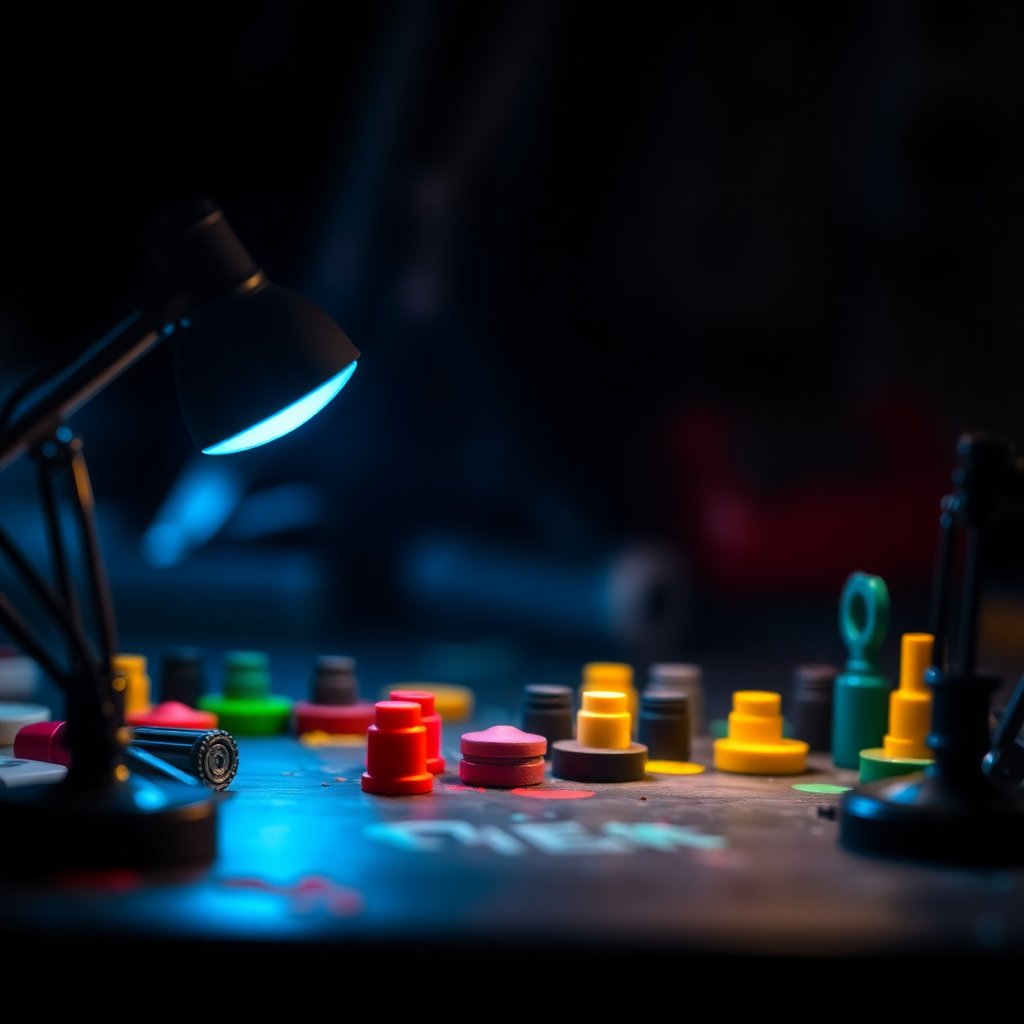
Painting miniatures under bad lighting is a recipe for frustration—colors look wrong, details disappear, and your eyes are wrecked after an hour. The right lamp changes everything: you see every highlight, every shadow, every tiny mold line that needs cleaning. After years of squinting at 28mm infantry under a yellow desk lamp, I finally built a proper setup, and I'll never go back.
This guide covers the best lamps for miniature painters in 2026, whether you're just starting out or upgrading a serious hobby space.
Why Lighting Matters More Than You Think
Most household lamps emit warm-toned (2700K–3000K) light. That's fine for reading, but it shifts every color you apply—blues look green, reds look orange, and your highlights look muddy. For miniature painting, you want daylight-balanced lighting in the 5000K–6500K range. At that color temperature, what you see on the model is what you'll see under any neutral light—show lights, tournament tables, display cabinets.
The second factor is brightness and CRI (Color Rendering Index). A CRI of 90+ means the lamp reproduces colors with 90% accuracy compared to natural sunlight. Below 80 and you're guessing.
The third thing most guides skip: positioning. One overhead lamp creates harsh shadows in recesses. A second fill light from the side eliminates that problem. Budget setups can get away with one good lamp. Serious painters run two.
→ Shop Daylight Painting Lamps on Amazon
The Best Lamps for Miniature Painters in 2026
1. Daylight Company Slimline LED Table Lamp — Best Overall
The Daylight Company is the gold standard in the hobby space, and the Slimline earns that reputation. It runs at 6000K with a CRI of 95+, which is effectively photography-grade color accuracy for a desk lamp. The arm extends and pivots freely, so you can position it exactly where you need it without fighting a stiff joint. It's not cheap, but it's the lamp that professional painters and competition winners consistently reach for.
What sets it apart from cheaper alternatives is consistency—the color temperature doesn't shift as the LED warms up. What you see when you first turn it on is what you'll see two hours later. For color-critical work like blending skin tones or mixing custom colors from scratch, that stability is worth the price.
→ Shop Daylight Company Slimline on Amazon
2. BenQ e-Reading LED Desk Lamp — Best for Eye Strain
If you paint for long sessions—three, four hours at a stretch—eye fatigue becomes a real issue. The BenQ e-Reading lamp was designed specifically to eliminate flicker and glare, which are the two main culprits for eye strain under artificial light. It has a wide, curved panel that floods your entire desk with even light instead of a narrow hot spot.
It's adjustable from 2700K to 6000K, so you can dial in exactly the temperature you want, and it has an auto-dimming mode that responds to ambient light. At the top of its range it gives you solid daylight-balanced coverage. The smart controls feel a little gimmicky at first but the touch dimmer is genuinely useful when you're holding a model in one hand.
→ Shop BenQ e-Reading Desk Lamp on Amazon
3. TaoTronics LED Desk Lamp — Best Budget Option
For painters who want a meaningful upgrade from a yellow household lamp without spending a lot, the TaoTronics LED range delivers solid value. The 5000K setting (it has five color modes) gives you close to true-daylight rendering, and the CRI clocks in around 85—not perfect but a massive improvement over standard bulbs. The metal arm holds position well and the USB charging port on the base is a nice practical touch.
The main limitation is the beam width—it's narrower than the Daylight Company or BenQ, so it lights your painting area well but doesn't flood the desk. Position it about 18–24 inches away and angled down at roughly 45 degrees for best coverage. For sub-$40, it's one of the most-recommended starter lamps in the hobby community.
→ Shop TaoTronics LED Desk Lamp on Amazon
4. OttLite LED Desk Lamp — Best for Natural Color Rendering
OttLite has been making specialty lamps for crafters and detail artists since the 1980s, and their LED range builds on decades of refinement. Their "Natural Daylight" LED technology consistently scores high in independent CRI testing—typically 93–96—and the 5000K output is warm enough to not feel clinical while still being accurate enough for serious color work.
The craft-specific design means the shade is wider and more diffuse than a standard desk lamp, which helps eliminate harsh shadows when you're painting recessed areas or fine details. It's a favourite among painters who do realistic non-metallic metal (NMM) work, where accurate tonal reading is everything. It pairs particularly well with the hobby setup tips in our hobby space on a budget guide.
→ Shop OttLite LED Desk Lamp on Amazon
5. Neatfi XL 2,200 Lumens LED Desk Lamp — Best for Bright Workspaces
Some painters work in basements or windowless rooms where ambient light is essentially zero. In that situation, you need serious output. The Neatfi XL pushes 2,200 lumens—roughly double most desk lamps—with a 6000K color temperature and a CRI of 95. The wide-panel design casts even light across a large workspace, making it excellent for painters who use multiple palettes spread across a big desk or who work on large centerpiece models.
It also has a built-in magnifying glass option in the higher-spec models, which is useful for painters who don't want a separate magnifier taking up desk space. Not the most stylish lamp, but raw performance-per-dollar it's hard to beat at this brightness level.
→ Shop Neatfi XL 2200 Lumens LED Lamp on Amazon
6. Ring Light for Miniature Photography — Bonus Pick
Once you've painted something you're proud of, you want to photograph it. A small ring light (6–8 inch, 5500K) positioned above and behind your phone gives you clean, shadow-free shots that actually show off your work. Not a painting lamp per se, but one of the most useful additions to a hobby desk. Several painters I know mounted one to a clamp arm right next to their main lamp.
→ Shop Ring Lights for Miniature Photography on Amazon
Comparison Table
| Lamp | Color Temp | CRI | Best For | Price Range | |---|---|---|---|---| | Daylight Company Slimline | 6000K | 95+ | Overall best, color accuracy | $80–$120 | | BenQ e-Reading | 2700K–6000K | 90+ | Long sessions, eye strain | $90–$140 | | TaoTronics LED | 5000K | ~85 | Budget upgrade | $30–$45 | | OttLite LED | 5000K | 93–96 | Natural color rendering | $50–$80 | | Neatfi XL 2200 | 6000K | 95 | Bright/basement setups | $55–$80 | | Small Ring Light | 5500K | 85–90 | Miniature photography | $15–$30 |
What to Look For When Buying a Painting Lamp
Color temperature (Kelvin): Target 5000K–6500K. Below 4000K skews warm and shifts paint colors. Above 6500K starts to look harsh and blue.
CRI (Color Rendering Index): 90+ is excellent. 85–90 is acceptable. Avoid anything below 80 for painting.
Adjustability: A lamp you can't reposition is a lamp you'll fight. Look for a flexible arm, tilt adjustment, and brightness control at minimum.
Eye flicker: Cheap LEDs flicker at 50/60Hz—you may not notice consciously, but it contributes to eye fatigue. Reputable brands (Daylight, BenQ, OttLite) all run flicker-free drivers.
Lumen output: 800–1200 lumens is enough for most painters. If your room is dark or you work on a large desk, go to 1500+.
Frequently Asked Questions
What color temperature is best for miniature painting?
5000K–6500K is the ideal range for miniature painting. This "daylight" range renders colors accurately—you see blues as blues, reds as reds—so what you paint under the lamp matches what you'll see under neutral or natural light. Warm bulbs (under 3500K) shift everything yellow-orange and make it nearly impossible to judge your color mixing accurately.
Do I need an expensive lamp or will a cheap one work?
You don't need to spend $100+, but you should spend at least $30–$40 on a quality LED with a CRI of 85 or better. The cheapest desk lamps use low-quality LEDs with poor color rendering and often flicker. The TaoTronics range is a solid budget starting point. If you paint frequently or competitively, the Daylight Company or OttLite are worth the investment.
Is one lamp enough or do I need two?
One good daylight lamp is sufficient for most painters. If you want to eliminate all shadow in deep recesses—useful for competition-level work or photographing models—a second fill light positioned at a different angle helps significantly. Many painters use a main lamp overhead and a secondary lamp or ring light at a low angle from the side.
Can I use LED strip lights for miniature painting?
You can, as a supplement. Some painters run 6000K LED strips under a shelf above their desk to add even fill light. On their own, strip lights usually don't provide focused, bright enough illumination for detail work. They're best used to raise the ambient light level in a dedicated hobby space rather than as your primary painting light.
Does my lamp affect how I see metallic paints?
Yes, significantly. Metallic and non-metallic metal (NMM) work especially is affected by light angle and color temperature. Metallics look different under warm vs. daylight light—what looks like a crisp highlight under a 6000K lamp can look washed out under a 3000K one. Always paint and evaluate metallics under the same lighting you'll use to display the model, or use a neutral daylight reference. Our NMM beginner's guide covers this in more detail.
Conclusion
The Daylight Company Slimline is the best all-around lamp for miniature painters in 2026—it's what I'd recommend first if budget allows. If you paint long sessions, the BenQ's eye-strain tech is worth the slight premium. On a tighter budget, the TaoTronics gives you 80% of the performance for a fraction of the price. Whatever you choose, prioritize 5000K+ color temperature and a CRI of 85 or better. Your models—and your eyes—will thank you.
As an Amazon Associate we earn from qualifying purchases. This article contains affiliate links; if you buy through them we may earn a small commission at no additional cost to you.