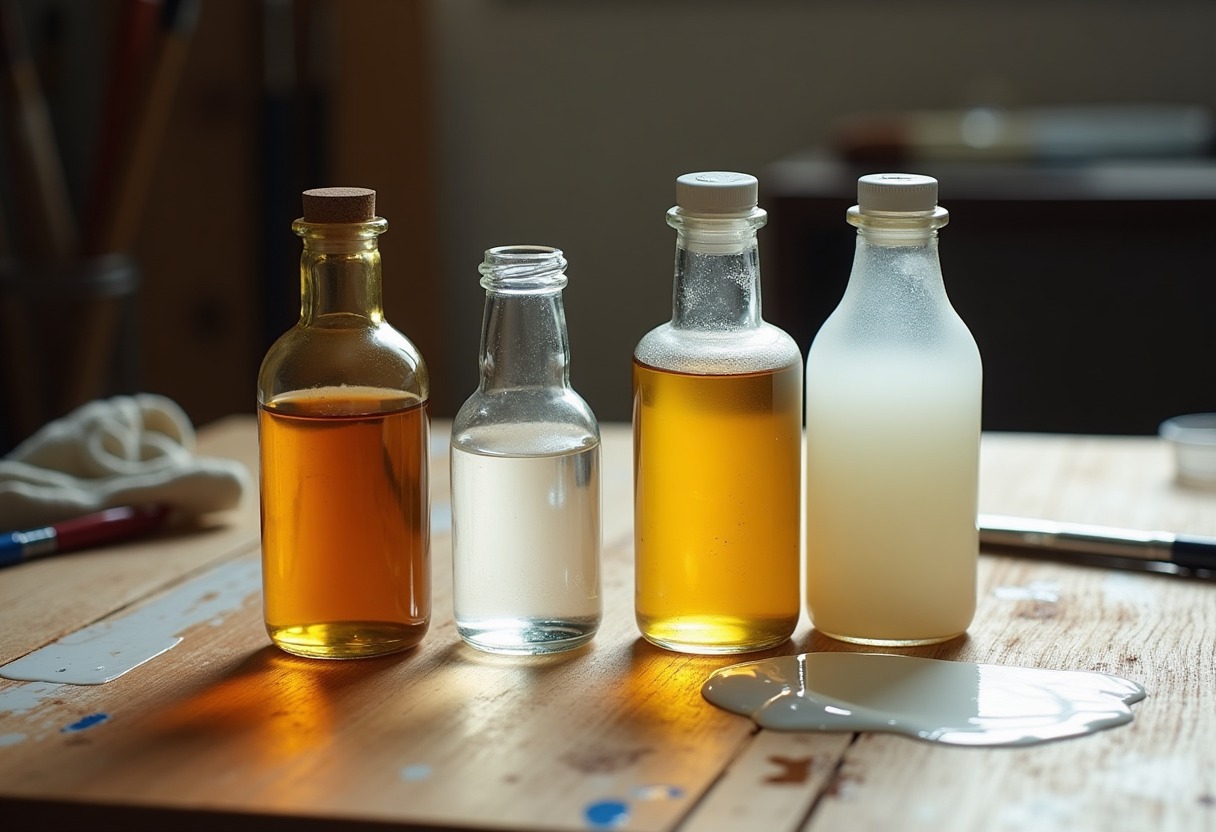
Your paint straight from the tube works, but it doesn't always work the way you need it to. Too thick for smooth blending, too opaque for luminous layers, dries too fast or not fast enough—mediums solve these problems by modifying how paint behaves without changing its color.
What Painting Mediums Actually Do
Mediums aren't magic potions—they're mixtures that alter paint viscosity, drying time, transparency, and surface finish. Oil painters have used linseed oil as a binder and medium since the 15th century, while modern alkyd mediums like Liquin appeared in the 1960s to speed drying times. Acrylic painters work with polymer-based mediums that maintain the water-soluble nature of their paints while extending working time or improving flow.
The medium you choose depends on three factors: your paint type (oil or acrylic), your technique (glazing, impasto, wet-on-wet blending), and your timeline (same-day layers versus traditional fat-over-lean progression). Each medium category serves distinct purposes, and using the wrong one creates technical problems like cracking, poor adhesion, or muddy colors.
Understanding medium chemistry matters. Oil mediums thin paint by adding more of the same oil binder already in tube paints, maintaining paint integrity. Acrylic mediums use acrylic polymer emulsions, which behave differently from oil-based products. This fundamental difference explains why you can't substitute one for the other.
Oil Painting Mediums: Linseed Oil vs Liquin vs Stand Oil
Raw linseed oil remains the standard oil painting medium for good reason—it's literally what manufacturers use to bind pigments in tube paints. Adding more increases transparency and flow while maintaining proper drying. Refined linseed oil dries faster than raw (3-5 days versus 5-7 days for touch-dry), with cold-pressed versions offering the purest quality at higher cost.
→ Shop linseed oil painting medium on Amazon
Stand oil changes everything about linseed oil's behavior. Manufacturers heat raw linseed oil without oxygen, polymerizing it into a thicker, honey-like consistency that creates enamel-smooth finishes without visible brushstrokes. It dries slower than raw linseed (7-10 days) but yellows less and resists cracking better. Mix it with solvent at 1:3 ratio for a flowing medium perfect for glazing.
→ Shop stand oil painting on Amazon
Liquin Original, Winsor & Newton's alkyd resin medium, cuts oil paint drying time to 1-6 hours for thin layers while improving flow. It produces a satin finish and works exceptionally well for glazing techniques where you need quick successive layers. The tradeoff: less working time for wet blending compared to traditional oil mediums, and some painters dislike the slightly plastic feel compared to natural oils. I use Liquin when teaching workshops specifically because students can apply multiple layers in a single session—something impossible with straight linseed oil.
→ Shop liquin original medium on Amazon
Walnut oil offers a non-yellowing alternative to linseed oil with similar working properties and slightly slower drying (6-8 days). It works particularly well for whites and pale colors where linseed's yellowing affects final appearance.
Acrylic Mediums: Glazing Medium vs Flow Improver
Acrylic glazing medium extends paint transparency without over-thinning. Mix it at 4:1 (medium to paint) for traditional glazes, or 2:1 for semi-transparent layers. Golden's Acrylic Glazing Liquid maintains paint film integrity better than water alone while adding 15-20 minutes of working time. The polymer concentration keeps paint adhesion strong—pure water dilution beyond 30% risks poor bonding to previous layers.
→ Shop acrylic glazing medium on Amazon
Flow improver (also called wetting agent or flow aid) reduces surface tension, letting paint spread smoothly without adding volume or extending drying time. It's brilliant for fine detail work, smooth gradients, and miniature painting where you need paint to flow into recesses without pooling. Add 2-3 drops per teaspoon of paint—more creates foaming and weakens paint film. Liquitex Professional Flow Aid works at concentrations as low as 1:500 (medium to water) for airbrush work, or 1:10 mixed directly with paint for brush application. This makes it more economical than glazing medium for painters focused on miniature work.
→ Shop flow improver acrylic on Amazon
Retarder mediums extend acrylic drying time by 25-50%, useful for blending and wet-on-wet techniques. Mix at 15% maximum—higher concentrations prevent proper curing. I keep both flow improver and retarder on hand but rarely mix them together, as each serves different technical needs.
Medium Comparison: Which One for Your Technique
| Medium Type | Best For | Drying Time | Transparency | Key Limitation | |-------------|----------|-------------|--------------|----------------| | Refined Linseed Oil | Traditional oil techniques, fat-over-lean layers | 3-5 days | Increases moderately | Yellows slightly over time | | Stand Oil | Enamel finishes, self-leveling glazes | 7-10 days | High transparency | Very slow drying, needs solvent thinning | | Liquin Original | Fast oil glazing, quick layering | 1-6 hours | Excellent | Reduces wet blending time, synthetic feel | | Acrylic Glazing Medium | Transparent acrylic layers, extending working time | +15-20 min | Very high | Can't revive dried paint | | Flow Improver | Detail work, smooth application, miniatures | No change | Slight increase | Over-use weakens paint film |
Your painting method determines medium choice more than paint type alone. Alla prima (wet-into-wet) oil painters need slower-drying mediums like raw linseed or walnut oil for extended blending time. Glazing techniques demand transparency—stand oil for oils, glazing medium for acrylics. Speed matters for production work or teaching scenarios where Liquin's fast drying enables multiple demonstration layers.
Match medium viscosity to your application tool. Thin mediums (flow improver, diluted Liquin) work with fine detail brushes and maintain control. Thicker mediums (stand oil, heavy body glazing medium) suit larger brushes and palette knife work. For consistent results, measure medium ratios by volume using medicine droppers or small measuring cups rather than eyeballing.
Mixing Your Own Medium Formulas
Traditional oil painting mediums combine multiple ingredients for specific effects. A standard glazing medium mixes 1 part stand oil, 1 part dammar varnish, and 5 parts odorless mineral spirits (OMS). This creates flowing consistency for transparent layers while maintaining archival quality. Store in glass bottles—plastic containers leach chemicals into oil-based mediums over time.
The "fat-over-lean" rule requires increasing oil content in successive layers. Start with lean mixture (1 part linseed oil to 3 parts OMS), middle layers at 1:2, and final layers at 1:1 or neat oil. This prevents top layers drying faster than bottom layers, which causes cracking. Breaking this rule creates conservation headaches years later.
Acrylic painters benefit from custom mixes too. Combine 3 parts glazing medium with 1 part flow improver and 1 part water for an all-purpose medium that increases transparency, improves flow, and extends working time moderately. This eliminates juggling multiple bottles for standard painting sessions.
Test medium effects on scrap canvas before applying to finished work. Paint three identical color swatches—one neat from tube, one with proposed medium mixture, one with double the medium amount. Let dry completely and compare transparency, finish, and color shift. This 10-minute test prevents ruining hours of work with untested medium ratios.
Advanced Medium Techniques Most Posts Skip
Impasto mediums add body to paint without affecting drying time or color strength. Mix cold wax medium (for oils) or molding paste (for acrylics) to create heavy texture that holds palette knife marks. Apply in layers up to 1/8 inch thick—beyond that, you risk cracking. This works brilliantly for expressionist techniques or adding dimensional interest to otherwise flat surfaces.
Solvent-free oil painting uses linseed or walnut oil as the only medium, eliminating turpentine and mineral spirits entirely. This approach prevents solvent fumes and works well for painters with respiratory sensitivity. The tradeoff: slower drying times and need for careful brush cleaning with oil followed by soap. I've painted solvent-free for three years with zero issues once I adjusted my layering schedule.
Iridescent and interference mediums add subtle color shifts without affecting transparency. Mix them at 10-20% with regular paint for pearlescent effects or apply as a final glaze over dried paint. Golden's Interference Medium changes color based on viewing angle—incredible for depicting metallic surfaces or creating visual interest in abstract work.
Medium salvages dried palette paint. For acrylics, spray dried paint with water and add flow improver to reactivate. Oil paint never fully hardens—scrape dried surface paint and mix with linseed oil to restore workability. This recovers expensive pigments rather than scraping them into the trash.
FAQ
Can I mix oil and acrylic mediums together? No. Oil and acrylic mediums use incompatible binders that won't form stable mixtures. Oil repels water-based acrylic polymers, creating separated, unusable globs. Use acrylic mediums only with acrylics, oil mediums only with oils.
Why does my linseed oil turn yellow in the bottle? Yellowing occurs from light exposure and age. Store linseed oil in dark glass bottles away from sunlight to minimize yellowing. Yellowing reverses partially when painted layers receive indirect light—paintings yellow in storage but clear up on display.
How much medium can I add before paint becomes too weak? For oils, a 1:1 paint-to-medium ratio maintains strength; higher ratios create underbound paint prone to issues. Acrylics tolerate up to 4:1 medium-to-paint for glazes but require 30% minimum paint for proper film formation and adhesion.
Does Liquin work with water-mixable oils? Yes, but it reduces the water-mixability. Liquin is solvent-based, so adding it means you'll need solvent for cleanup rather than water. Use water-mixable mediums (like Artisan Water Mixable Painting Medium) to maintain water-cleanup convenience.
Can flow improver replace thinning paint with water? Partially. Flow improver reduces surface tension so paint spreads easier without adding volume, while water increases volume and reduces concentration. For detail work, use flow improver; for washes and large coverage, use water with glazing medium to maintain paint film strength.
The right medium transforms your paint from acceptable to exactly what you need—buy a bottle of what matches your most frequent technique and you'll wonder how you painted without it.
Some links on this page are affiliate links. We may earn a small commission if you purchase through them, at no extra cost to you.
As an Amazon Associate we earn from qualifying purchases. This article contains affiliate links; if you buy through them we may earn a small commission at no additional cost to you.