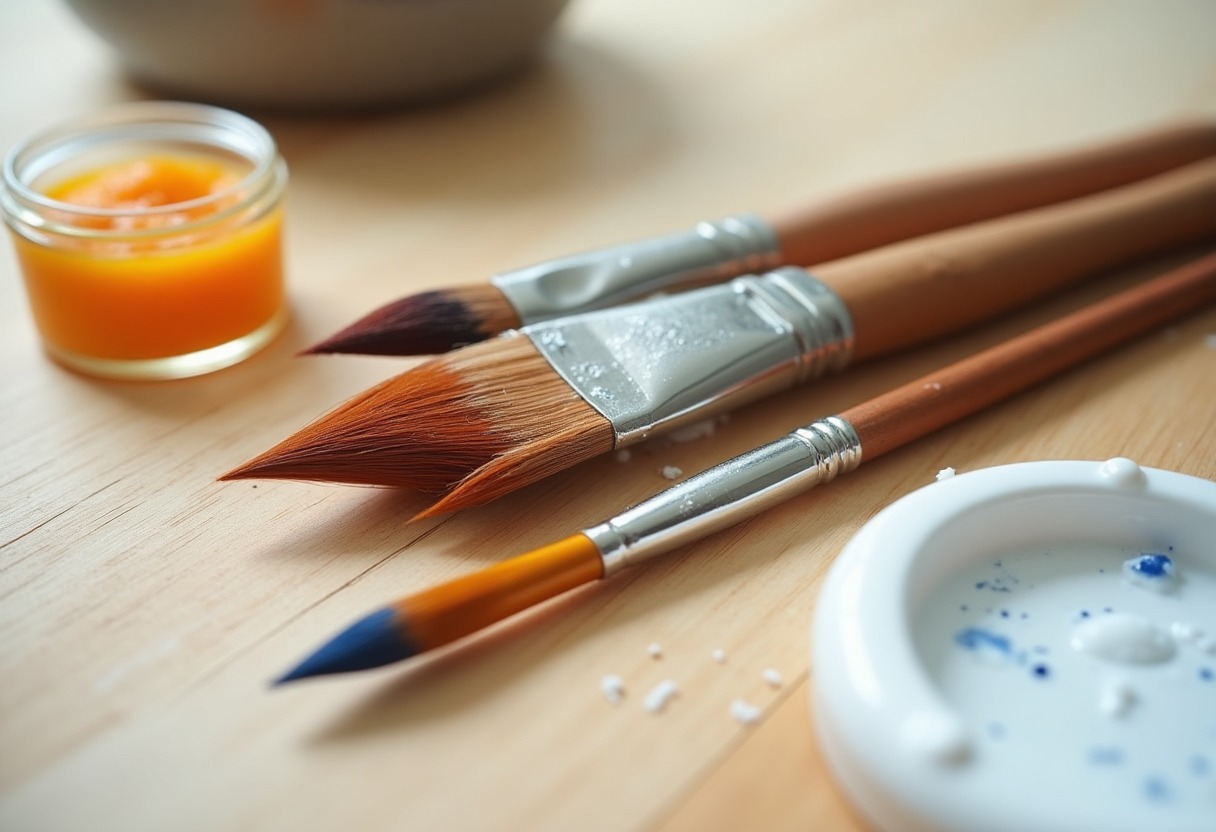
Your favorite size 2 round just splayed out mid-stroke, your kolinsky sable feels like a wire brush, and that flat you "soaked for later" has turned into a crusty paint popsicle. These problems wreck paintings and waste money, but most damaged brushes can be saved if you catch them early and use the right techniques.
Why Brushes Fail (And Why Most Fixes Don't Work)
Brush damage follows predictable patterns. Splayed bristles happen when the ferrule adhesive loosens or when individual hairs lose their natural alignment from improper cleaning. Stiffness develops when paint residue accumulates at the ferrule base, coating individual bristles and preventing natural movement. Paint buildup creates physical barriers that prevent proper brush shape.
The problem with most fix-it advice: it treats symptoms instead of causes. Soaking a stiff brush in water softens surface paint but leaves the ferrule packed with dried pigment. Reshaping splayed bristles without addressing ferrule contamination just delays the next splay-out. According to Golden's brush care research, 80% of "ruined" brushes still have salvageable bristles if you remove the actual paint deposits causing the problem.
Natural hair brushes (sable, mongoose, squirrel) respond differently than synthetics to restoration techniques. Natural hair contains oils and microscopic scales that help bristles cling together—these can be restored. Synthetics rely entirely on mechanical shape and ferrule adhesive. The Natural Vs Synthetic Brushes Guide explains these structural differences in detail, which matters when choosing repair methods.
Fixing Splayed Bristles: The Ferrule-First Method
Splayed bristles radiate outward instead of forming a unified point or edge. This happens when paint accumulates inside the ferrule, physically pushing bristles apart, or when ferrule adhesive breaks down from aggressive cleaning.
Start by identifying the splay location. If bristles spread at the tips only, you're dealing with shape memory loss. If they splay from the ferrule outward, paint contamination is your culprit.
For tip-only splaying on natural hair brushes:
Mix one tablespoon of hair conditioner (the cheap stuff works fine) with warm water. Swirl the brush until bristles are saturated. Shape the brush to a point using your fingers, working from ferrule to tip. Wrap tightly with a scrap of paper towel, creating a cone shape that holds bristles in alignment. Secure with a rubber band and let dry completely—12 hours minimum. The conditioner's emollients restore the natural coating that helps hair bristles grip together.
For synthetic brushes, skip the conditioner—it doesn't adhere to plastic fibers. Instead, use hot water (not boiling, around 140°F) to soften the bristles' shape memory. Form the point, then immediately plunge into ice water to set the new shape. This thermal shock resets the polymer structure.
When splaying originates at the ferrule, you need → Shop brush cleaner soap on Amazon. The Master's Brush Cleaner works through mechanical scrubbing plus surfactants that penetrate packed paint. Work the soap directly into the ferrule base using circular motions against your palm. You'll feel gritty resistance as dried paint breaks loose. Rinse, repeat, and check if bristles naturally draw together when wet. If they do, the ferrule is clean—now reshape and dry as described above.
For stubborn ferrule contamination, you need solvent intervention. Oil painters should use odorless mineral spirits. Acrylic painters can use isopropyl alcohol (70% or higher). Dip only the ferrule portion—never soak the entire brush—and work the bristles against a textured surface like a silicone mat. The solvent dissolves ferrule-trapped paint that water-based cleaners can't touch. Follow with soap cleaning to remove solvent residue.
Severe ferrule damage (visible adhesive breakdown, loose bristles falling out) usually can't be fixed. The Best Brushes Miniature Painting 2026 reviews affordable replacement options that cost less than professional re-ferrulling services.
Restoring Stiff Dried Brushes: Staged Softening Protocol
A brush that dried with paint in it isn't automatically trash. The success of restoration depends on three factors: paint type, how long it's been dried, and whether the ferrule is compromised.
Here's the staged approach that actually works:
Stage 1: Initial Assessment (5 minutes) Flex the bristles gently. If they move at all, even slightly, restoration is possible. If they're completely rigid like a stick, success drops to about 30%—but still worth trying for expensive brushes.
Stage 2: Solvent Soak (30 minutes to 24 hours) Match your solvent to the paint. Acrylic: use isopropyl alcohol or dedicated acrylic brush cleaner. Oil: use odorless mineral spirits or turpentine substitute. Watercolor: warm water with a drop of dish soap usually suffices—watercolor rarely creates irreversible stiffness.
Pour solvent into a shallow container so bristles are submerged but the ferrule stays above liquid level. Letting solvent reach the ferrule glue joint causes wooden handles to loosen and ferrules to separate. Check every 30 minutes for acrylic, every 2 hours for oil paint. When bristles start flexing, move to Stage 3.
Stage 3: Mechanical Removal (10-20 minutes) Work → Shop brush conditioner oil on Amazon or The Master's Brush Cleaner into the bristles using firm circular motions. You're physically scrubbing away softened paint particles. A silicone cleaning mat with texture ribs accelerates this—the ridges catch paint chunks as you drag bristles across.
Rinse thoroughly. If stiffness remains, repeat Stage 2 and 3. Most brushes need 2-3 cycles for complete paint removal.
Stage 4: Conditioning and Reshape Once bristles move freely, apply brush conditioner (for natural hair) or a light coating of hair conditioner (works on both natural and synthetic). Shape to the proper point or edge, then use → Shop silicone brush guards on Amazon to hold the shape during drying. These mesh tubes maintain proper bristle alignment without the paper towel wrap method.
| Brush Condition | Restoration Success Rate | Time Investment | Key Technique | |----------------|-------------------------|-----------------|---------------| | Splayed tips (natural hair) | 85-90% | 15 min + dry time | Conditioner reshape with paper wrap | | Splayed from ferrule | 60-70% | 30 min + dry time | Soap deep-clean plus thermal reset | | Stiff with dried acrylic (under 1 week) | 75-80% | 1-2 hours total | Alcohol soak + mechanical scrubbing | | Stiff with dried oil paint | 80-85% | 2-4 hours total | Mineral spirits soak + conditioner | | Ferrule paint buildup | 70-75% | 45 min | Solvent penetration + soap cleaning | | Bristles falling out | 10-20% | Not worth it | Replace brush |
Removing Stubborn Paint Buildup: The Three-Layer Problem
Paint buildup happens in layers: surface paint (easy to remove), ferrule-packed paint (requires solvent), and polymerized paint (chemically bonded to bristles). Each layer needs a different removal strategy.
Surface buildup wipes away with soap and water during normal cleaning—if you're dealing with this, your Brush Care Maintenance Guide needs work. The real problems live deeper.
Ferrule-packed paint sits where bristles enter the metal crimp. This paint never fully dries because it's oxygen-deprived, creating a sticky tar-like substance that stiffens bristles and causes splaying. You'll recognize this by feeling a hard lump at the ferrule base when you press bristles. Remove it with the solvent soak method from the stiffness section, but extend soak time to 2-3 hours. The ferrule acts as a sealed container—paint removal takes longer here than on exposed bristle surfaces.
Polymerized paint has chemically bonded to bristle surfaces through oxidation (oil paint) or evaporation (acrylic). This looks like a thin coating that doesn't scrub off with soap. For acrylics, use dedicated brush restorer solutions containing ammonia or ethyl acetate—these break chemical bonds without destroying bristles. For oil paint polymerization, you need actual paint stripper, but this is a last resort that usually damages natural hair irreparably. Test on a cheap brush first.
Professional painters use ultrasonic cleaners for valuable brushes with extreme buildup. The vibration physically shakes loose embedded paint particles that hand scrubbing can't reach. These devices cost $30-80 and work brilliantly, but only justify the expense if you maintain expensive sable or mongoose brushes. → Shop artist brush soap on Amazon and manual methods handle 95% of buildup situations.
Prevention beats restoration every time: rinse brushes every 15-20 minutes during painting sessions, never let paint dry in the ferrule, and store with → Shop brush reshaping tools on Amazon or brush guards to maintain proper shape. A $6 silicone mat saves hundreds in replacement brushes.
What Restoration Guides Don't Tell You
Most brush fix-it advice skips the economics. A $4 synthetic flat isn't worth 45 minutes of restoration work. A $35 kolinsky sable absolutely is. Calculate your time value: if restoration takes an hour and the brush costs $15 to replace, you're earning $15/hour for that repair work. For hobby painters, this makes sense for brushes over $20. Below that, buy new and spend your time painting instead.
Temperature matters more than most painters realize. Cold water tightens natural bristles and sets their shape—useful for final reshaping. Hot water (110-140°F) opens bristle scales on natural hair, allowing deeper cleaning but also washing away protective oils faster. Always finish natural hair cleaning with cool water to re-seal those microscopic scales. Synthetics don't have scales, so temperature mainly affects paint viscosity and removal speed.
The ferrule-handle joint fails before bristles on quality brushes. If your wooden handle feels loose in the ferrule, two-part epoxy can reattach it—but only if the ferrule interior is clean. Wipe both surfaces with alcohol, mix fast-setting epoxy, apply a thin layer inside the ferrule, and press the handle back in with a twisting motion. Clamp or rubber band it tight and wait 24 hours. This repair adds years to expensive brushes, especially if you caught the loosening early.
Your water matters. Hard water deposits minerals in bristles over time, creating stiffness that mimics paint buildup. If you live in a hard water area and notice all your brushes gradually stiffening despite proper cleaning, switch to distilled water for final rinses. The mineral coating is especially damaging to natural hair. The How To Thin Acrylic Paint Viscosity Thinning Ratios guide discusses water chemistry effects on paint behavior—similar principles apply to bristle contamination.
Some brushes aren't meant to last. Student-grade synthetics use cheaper polymers that lose shape memory after 20-30 uses regardless of care. When a $2 brush splays, that's designed obsolescence, not maintenance failure. Focus restoration efforts on mid-range and professional brushes where material quality justifies the time investment.
FAQ
Can you save a brush that dried with acrylic paint in the ferrule? Yes, if caught within 2-3 weeks. Soak the ferrule (not the handle) in isopropyl alcohol for 1-2 hours, then work brush soap into the ferrule base with vigorous scrubbing motions. Most acrylic paint breaks down under this treatment. After 3 weeks, the paint fully polymerizes and becomes nearly impossible to remove without damaging bristles.
Why do my natural hair brushes splay after cleaning but synthetics don't? Natural hair bristles have microscopic scales and contain oils that help them cling together. Aggressive cleaning strips these oils, causing individual hairs to separate. Synthetics are solid polymer fibers without scales or oils—they rely entirely on mechanical shape and ferrule alignment. Always condition natural hair brushes after cleaning to restore protective coatings.
What's the fastest way to reshape a brush that lost its point? For natural hair: apply hair conditioner, shape to a point with your fingers, wrap tightly in paper towel to hold the shape, and let dry for 12 hours. For synthetic: reshape while bristles are warm (run under hot tap water), then immediately dunk in ice water to set the shape through thermal shock.
Should I use boiling water to clean brushes faster? Never. Boiling water (212°F) melts ferrule adhesive, loosens handles, and damages natural hair proteins. Use warm water (100-110°F) for cleaning—hot enough to soften paint but cool enough to preserve brush construction. The temperature difference between 110°F and boiling saves maybe 2 minutes while risking permanent brush damage.
How do you know when a brush is beyond saving? Three signs indicate replacement time: bristles falling out in clumps (ferrule adhesive failure), bristles that won't hold any shape even after conditioning (permanent mechanical damage), or a loose ferrule that spins on the handle (structural failure). Individual bristle loss is normal—losing 5-10% over a brush's lifetime is expected. Losing more than that means the ferrule has failed.
Save Your Tools, Improve Your Painting
A stiff or splayed brush forces you to fight your tools instead of focusing on technique, turning every brushstroke into an exercise in frustration rather than an expression of skill.
Some links on this page are affiliate links. We may earn a small commission if you purchase through them, at no extra cost to you.
As an Amazon Associate we earn from qualifying purchases. This article contains affiliate links; if you buy through them we may earn a small commission at no additional cost to you.