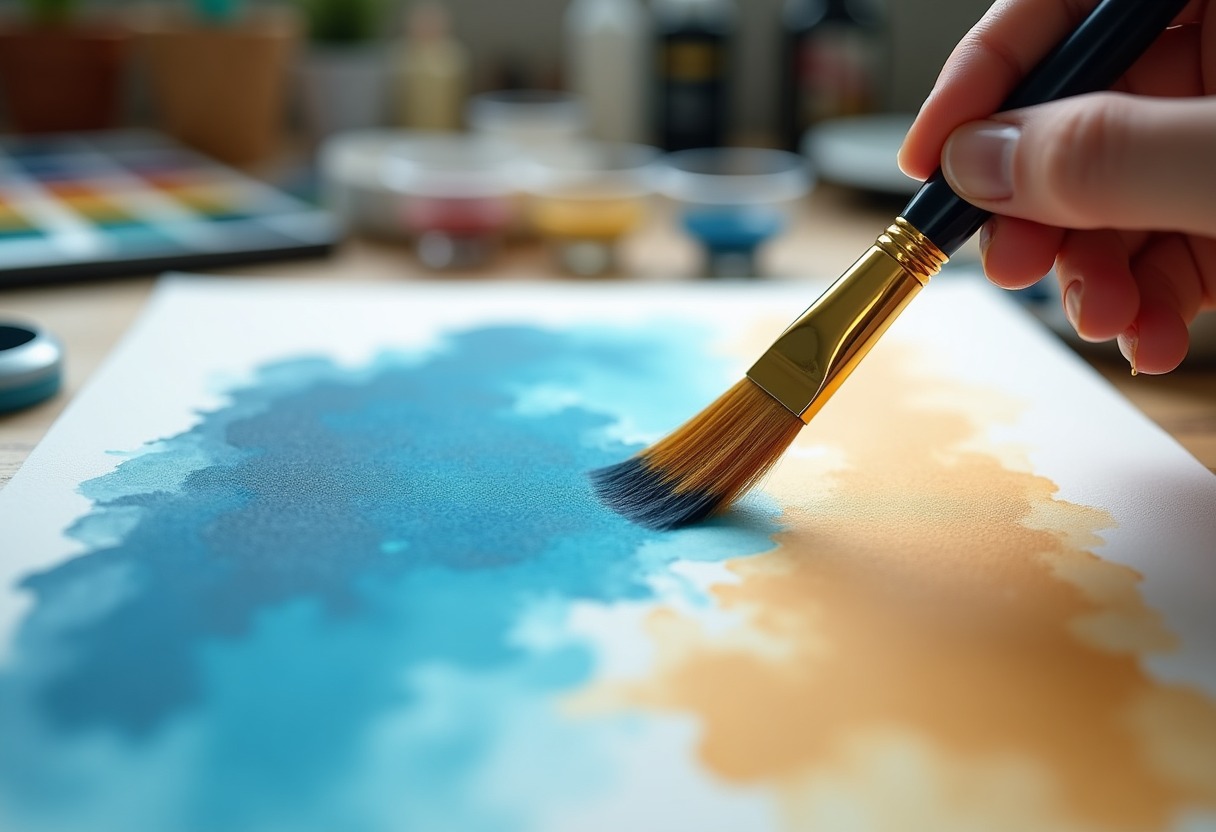
Glazing requires brushes that hold diluted paint without flooding the surface, maintain consistent pressure across long strokes, and leave zero brushmarks in transparent layers. The wrong brush creates streaks, disturbs underlying layers, or can't carry enough thinned medium to complete a stroke — which means you're fighting your tools instead of building luminous depth.
Why Brush Hair Type Controls Glazing Quality
The fundamental difference between soft synthetic and natural hair brushes comes down to spring versus absorbency. Natural hair — particularly squirrel, goat, and lower-grade sable — absorbs water and medium readily, holds substantial volumes of diluted paint, and releases it gradually. Soft synthetics like Taklon or golden synthetic fibers have consistent spring, resist splaying under light pressure, and release paint more predictably because the filaments themselves don't absorb liquid.
Golden Taklon became the standard soft synthetic for watercolor and glazing work because manufacturers engineered the filament diameter and taper to mimic natural squirrel hair's softness while maintaining dimensional stability. The bristles don't swell with water, so a size 8 flat behaves like a size 8 whether dry or loaded with medium.
Natural sable — red sable specifically, from the kolinsky weasel — sits in a separate category. Kolinsky sable combines absorbency with snap, creating a brush that holds diluted paint like squirrel but returns to point like a synthetic. This dual characteristic makes quality sable expensive and genuinely superior for controlled glazing where you need both paint capacity and precision. The catch: real kolinsky costs $40-200+ per brush, and the market floods with "sable blend" or "red sable" brushes using cheaper weasel or pony hair that lacks the performance.
If you're working with acrylics for glazing, soft synthetics win on durability alone. Acrylic medium dries into natural hair more aggressively than into synthetics, shortening brush life even with diligent cleaning covered in our Brush Care Maintenance Guide.
Best Brush Shapes for Glazing and Layering
Flat wash brushes dominate glazing work for one reason: edge control. A 1-inch flat loaded with diluted paint lays down an even film across broad areas while the thin profile lets you feather edges by rotating the brush 90 degrees and using the chisel edge. Soft synthetic flat wash brushes in 3/4-inch to 1-inch widths handle most glazing scenarios from canvas panels to 24×30-inch work.
Mop brushes — round brushes with long, soft bristles and massive paint capacity — excel at veil glazes where you want to float color over large areas without distinct edges. Natural squirrel hair mops remain the standard here because synthetic alternatives haven't matched the combination of liquid capacity and delicate tip feel. A size 6-10 squirrel mop holds enough diluted medium to glaze a 9×12-inch area in one loading.
Filbert brushes split the difference: the oval shape provides more control than a round for detailed glazing but more coverage than a flat. Soft synthetic filberts work particularly well for figure painting where you're glazing anatomical forms — the curved edge follows contours naturally while maintaining enough spring to prevent accidental pooling in recesses.
For miniature work or detailed layering, small sable brushes between size 0-2 give you the precision needed for glazing individual features without disturbing adjacent areas. The techniques translate directly from what's covered in Best Brushes Miniature Painting 2026, though you'll thin your paint more aggressively for glazing than for base coating.
Performance Comparison: Synthetics vs Natural Hair
| Characteristic | Soft Synthetic | Natural Hair (Squirrel/Goat) | Kolinsky Sable | |---------------|----------------|------------------------------|----------------| | Paint Capacity | Moderate — 2-3 reloads per 8×10" area | High — single load covers 10×12" | High with control — covers 8×10" with precision | | Edge Control | Excellent — maintains chisel edge consistently | Good — softens over time, requires more pressure awareness | Excellent — snaps back to form, crisp edges | | Durability (Acrylics) | 2-3 years with proper care | 6-12 months before bristle damage shows | 3-5 years, but requires immediate cleaning | | Price Range | $8-25 for quality | $12-30 for genuine squirrel | $40-200+ for authentic kolinsky |
The capacity difference matters more than most painters realize. A synthetic flat that requires four reloads versus a squirrel mop needing one creates four opportunities for lap marks where wet paint meets drying edges. If you're glazing large canvases, natural hair's absorbency becomes a practical advantage worth the care requirements.
Synthetics shine in scenarios requiring consistency across multiple sessions. Because they don't absorb medium, they perform identically whether you're starting fresh or picking up a brush that's been sitting for twenty minutes. Natural hair changes behavior as it dries — a consideration when building up six or eight transparent layers where each needs to match the previous application pressure.
Specific Brush Recommendations for Glazing Work
For acrylic glazing on canvas (any size): Start with a → Shop glazing brushes acrylic on Amazon search focusing on soft synthetic flats in 3/4-inch and 1-inch widths. Look for brushes labeled specifically for watercolor or wash applications — these use softer synthetic filaments than standard acrylic brushes. Princeton Aqua Elite and Silver Black Velvet lines both use appropriate softness levels for transparent work.
For oil glazing: Natural bristle becomes viable because oil medium doesn't damage natural hair the way acrylic does. A combination approach works well: soft synthetic flats for initial glazes where you want control, then natural squirrel or badger mops for final veiling layers where you're unifying areas rather than defining them. The natural hair's absorbency helps blend and soften edges in oil in ways synthetics struggle to match.
For watercolor-style glazing or miniatures: Invest in at least one quality kolinsky sable round in size 1 or 2. The precision and snap justify the cost when you're working at scales where brush control determines whether a glaze enhances or obscures detail. This connects directly to techniques in How To Paint Eyes, where transparent layers build depth in tiny areas.
For large format or murals: → Shop flat wash brushes on Amazon in 2-inch or wider natural hair varieties. At mural scale, the labor savings from natural hair's capacity outweigh the maintenance burden. Princeton's Neptune synthetic squirrel-alternative line also merits consideration here — they've engineered synthetic filaments that genuinely approach natural squirrel's softness and capacity.
Advanced Glazing Brush Techniques Most Posts Skip
Load glazing brushes differently than standard painting brushes. Instead of jabbing into paint, lay the brush flat against your palette and drag it through a puddle of diluted medium. This loads paint evenly throughout the bristle bundle rather than concentrating it at the tip. A properly loaded glazing brush should feel heavy with liquid but not drip when held horizontally.
The application angle controls transparency and blending. Hold the brush at 30-40 degrees to the surface for maximum paint release and coverage. As the glaze dries to your desired value, gradually lower the angle to 15-20 degrees and use progressively lighter pressure to feather edges. This technique — sliding from steep to shallow angle within a single glaze layer — prevents the harsh demarcation lines that ruin transparent layering.
Clean between colors more thoroughly than you think necessary. Even trace amounts of previous pigment contaminate glazes because you're working with such thin paint films. Keep two water containers when glazing: first for initial rinse, second for final cleaning. The second container staying clear confirms you're not carrying contamination into subsequent layers.
Temperature and humidity affect glazing brushes more than standard painting. Natural hair becomes softer and holds more liquid in humid conditions, requiring pressure adjustments. Synthetics maintain consistency but paint flows differently — thinner applications in humidity, thicker in dry conditions. This connects to environmental factors discussed in Hobby Space On A Budget, where workspace conditions affect technique execution.
Consider maintaining dedicated glazing brushes that never touch thick paint. Once a brush has been used for heavy-bodied applications, cleaning never fully restores the pristine tip and spring needed for transparent work. A $15 synthetic flat used only for glazing will outperform a $40 brush that's seen duty as a general-purpose tool. The techniques for preserving brush quality appear in How To Fix Paint Brushes Splayed Bristles Stiff Brush Solutions, but prevention beats repair for glazing brushes.
FAQ
What's the minimum number of brushes needed to start glazing? You need exactly two: a 3/4-inch soft synthetic flat for broad areas and a size 2 round (synthetic or sable) for edges and details. This combination handles 90% of glazing scenarios across any subject matter.
Can you glaze effectively with cheap synthetic brushes? Cheap synthetics work for practice but fail at feathering edges because stiff bristles leave visible brushmarks in thin paint. Spending $12-18 on a quality soft synthetic delivers genuinely better results than $4 craft store brushes that fight you on every stroke.
How thin should paint be for glazing with different brush types? Natural hair brushes handle paint thinned to a 10:1 medium-to-paint ratio without dripping. Synthetics work best at 6-8:1 ratios because they hold less liquid — thinner than that and you'll need multiple reloads per stroke, creating lap marks.
Do you need different brushes for acrylic versus oil glazing? The same soft synthetic brushes work for both, but natural hair lasts longer in oil because oil medium doesn't dry into bristles the way acrylic does. If you glaze primarily in oils, natural hair becomes cost-effective despite higher initial price.
How do you prevent streaks when glazing with synthetic brushes? Load the brush completely, use consistent pressure across each stroke, and work wet-into-wet within each section — never let an edge dry before completing adjacent areas. Streaks come from uneven loading or attempting to work over partially dry glaze layers.
The Brush Makes the Glaze
Transparent layering demands brushes that release paint gradually and maintain contact pressure across long strokes — qualities that emerge from specific combinations of hair type, shape, and size rather than from price tags or brand names.
Some links on this page are affiliate links. We may earn a small commission if you purchase through them, at no extra cost to you.
As an Amazon Associate we earn from qualifying purchases. This article contains affiliate links; if you buy through them we may earn a small commission at no additional cost to you.