Games Workshop did two big things at once this summer, and if you're about to start painting for the first time, both land squarely in your lap. First, the paint range that's carried the Citadel Colour name for roughly forty years is now called Warhammer Colour — the rebrand was announced March 6, 2026. Second, riding the launch of Warhammer 40,000's 11th edition (pre-orders July 11, general release July 25, 2026), GW pushed out a fresh wave of beginner-focused paint bundles under that new banner.
For anyone stepping into the hobby with 11th edition, this is the clearest on-ramp Games Workshop has ever built: curated palettes matched to specific models, real hobby tools in the box, and price points aimed at people who've never held a pot of paint. Here's exactly what's on the shelves, how the sets differ, and whether they beat the two alternatives every new painter eventually weighs — buying pots individually, or going third-party.
As an Amazon Associate we earn from qualifying purchases. Prices below come from secondary launch coverage and can shift, so treat every figure as "around $X — verify current price" before you buy.
Citadel Colour Is Now Warhammer Colour — What Actually Changed
Let's clear up the rebrand first, because it's causing confusion in every hobby group right now. According to Games Workshop's own announcement, Citadel Colour is becoming Warhammer Colour, and the change is almost entirely cosmetic where it counts.
The formulations are the same. Base, Layer, Shade, Technical, and Contrast paints all keep their existing recipes. A pot of what used to be a Citadel Base paint is the same paint inside a Warhammer Colour Base pot — new label, new logo, same acrylic. The ranges (Base, Layer, Shade, Technical, Contrast) are unchanged in structure too. So every tutorial, recipe, and painting guide written for Citadel Colour still applies. You do not need to re-learn anything or re-buy your collection.
What changed is the branding on the box and pot, and the marketing push behind it. GW is using the Warhammer Colour name to unify its paint identity with the wider Warhammer brand, and the 40k 11th edition launch is the first major retail moment where the new labels hit shelves in force. If you see "Citadel Colour" on older stock, it's the same product — don't pay a premium or a penalty for either label.
The Headliner: Warhammer Colour Paints + Tools Set
The single most interesting release for a new painter is the standalone Paints + Tools Set, priced at around $45 (verify current price). It's the closest GW has come to a genuine "everything you need to start" box that isn't tied to a specific army.
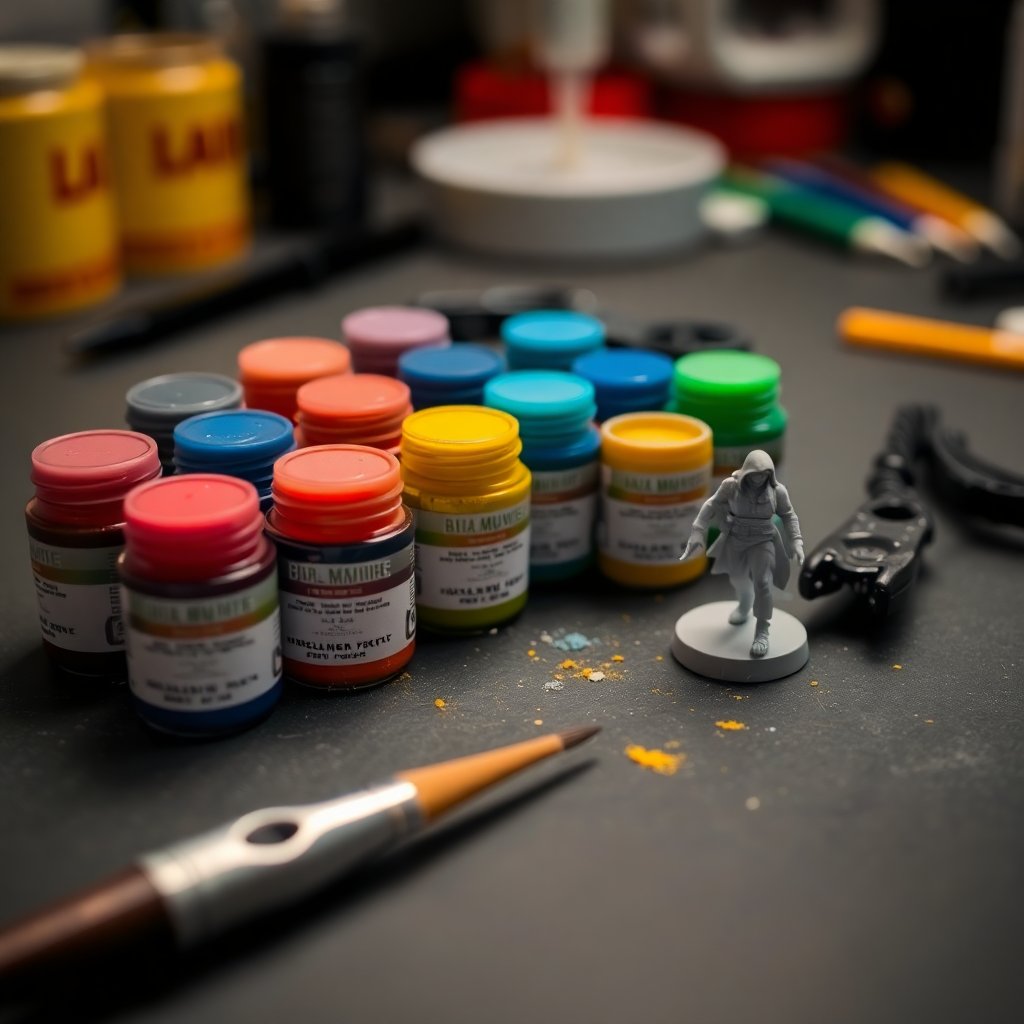
Inside you get 13 Warhammer Colour pots spanning the core paint types a beginner actually uses, plus a real starter kit of tools: a starter brush, a pair of clippers for removing parts from the sprue, and a mould-line scraper for cleaning the seams left over from casting. That tool trio matters more than beginners expect. Clippers and a scraper are the difference between a clean model and a fuzzy, seam-lined one, and most people who buy paints alone forget them entirely.
Thirteen pots is a sensible working palette — enough to base-coat, shade, and highlight a squad without the paralysis of a 50-pot wall. If you want to compare a curated palette like this against building your own from scratch, our contrast paints review breaks down where the single-coat approach saves time and where it falls short.
→ Shop Warhammer paint set on Amazon
The Faction Paint Sets: Space Marine and Ork
If you already know which army you want to paint, GW's two faction paint sets are built for you. Each pairs a single miniature with six curated paints chosen to match that model's official scheme:
- Space Marine Intercessors set — a classic starter marine plus the six paints to render its armour and details.
- Ork Boyz set — a greenskin plus the six paints matched to the Ork scheme.
Each runs around $35 (verify current price). The appeal is obvious: no guesswork about which greens, browns, or blues you need, because GW picked them for you and matched them to the box art. For a brand-new painter, "which six paints do I buy for this model" is a genuinely hard question, and these sets answer it.
The trade-off is scope. Six paints matched to one scheme is a narrow toolkit — great for painting that faction, less useful if you branch out. I'd treat a faction set as a focused first purchase, not your whole paint collection. You'll want a primer underneath everything too; our best primer for miniature painting guide covers why that base layer is the one thing you shouldn't skip.
→ Shop citadel paint brush on Amazon
The Bigger Boxes: Getting Started and the Introductory Set
Two larger boxes round out the range for people who want model and paints in one purchase.
The Getting Started box is the heavyweight, at around $170 RRP (verify current price). It bundles a full Combat Patrol (a playable starter army of multiple units), 11 faction paints, and a set of tools. This is aimed at someone who wants to both play and paint 40k 11th edition out of one box — you get enough models for the tabletop and enough paint to finish them. On a per-model basis it's reasonable value, but $170 is a real commitment for a first-timer testing whether the hobby sticks.
The Introductory Set is the gentler entry, at around $77 RRP (verify current price). It includes 6 paints, a brush, a painting guide book, and card terrain to give you something to paint and play on. The book is the standout here — a guided, step-by-step intro is exactly what most beginners are missing, and card terrain means you get a tabletop scene without extra spend. It's a softer, cheaper landing than the Combat Patrol box.
Between the two, the Introductory Set is the better pure-beginner buy; the Getting Started box makes more sense if you already know you want to play games, not just paint.
→ Shop miniature painting palette on Amazon
Are They Worth It? Curated Sets vs. Buying Pots Individually
Here's the honest math. A curated set's value isn't the paint — it's the curation and the tools.
If you buy the Paints + Tools Set at around $45, you're getting 13 pots plus clippers, a scraper, and a brush. Buying 13 pots individually would land in a similar ballpark on paint alone, and then you'd still need to source the tools separately. The set removes the "which 13 do I buy" decision and throws in the hardware. For a beginner, that convenience is worth real money.
Where individual pots win is precision. Once you know your style, you'll want specific colours the curated sets don't include, and you'll skip pots you never use. Experienced painters almost always buy à la carte. But "experienced" is the operative word — the curated sets exist precisely because new painters don't yet know what they need.
The faction sets are the strongest value-per-decision here: six scheme-matched paints and a model for around $35 answers the hardest beginner question outright.
The Third-Party Question: Army Painter and Vallejo
No honest buyer's guide skips the alternatives, because Warhammer Colour isn't the only game in town.
The Army Painter Speedpaint is the direct rival to GW's single-coat Contrast paints — thin, high-pigment paints that shade and base in one pass over a light primer. Speedpaint sets are often priced aggressively and come in generous starter collections, and for a beginner chasing fast, decent-looking results, they're a serious option. GW's Contrast (now Warhammer Colour Contrast) does the same job with a slightly different feel; which you prefer is genuinely down to taste.
Vallejo is the other giant — dropper-bottle paints (less waste, better for airbrushing and mixing) with an enormous range and a loyal following. Vallejo's Game Color line maps closely to the colours you'd use on fantasy and sci-fi miniatures, and dropper bottles are a real quality-of-life upgrade over pots for many painters.
The catch for a total beginner: neither Army Painter nor Vallejo gives you GW's model-matched curation out of the box. You save money and gain range, but you take back the "which colours do I need" problem the faction sets were designed to solve. If your first goal is painting a specific 40k army to match the box, GW's curated route is the path of least resistance. If you want breadth and are happy to research, third-party wins on flexibility and often price.
→ Shop army painter speedpaint on Amazon
Quick Buyer's Verdict
- Just want to start painting, no army in mind? The Paints + Tools Set (around $45) — 13 pots and the tools you'd otherwise forget.
- Know your faction? The matching faction set (around $35) — six scheme-matched paints and a model, zero guesswork.
- Want a guided first project? The Introductory Set (around $77 RRP) — paints, brush, a real book, and card terrain to play on.
- Want to play games too? The Getting Started box (around $170 RRP) — a full Combat Patrol plus 11 paints and tools.
- Budget-minded or planning to branch out? Look hard at Army Painter Speedpaint or Vallejo — more range, often cheaper, but you lose the curation.
For deeper coverage of the full 11th edition starter line-up, the unboxing at Tale of Painters is worth reading before you commit.
The Bottom Line
The rebrand from Citadel Colour to Warhammer Colour is a label change, not a formula change — your paints, recipes, and tutorials all carry over untouched. What genuinely matters for new painters is the beginner set line-up GW built around it: curated palettes, matched to models, with real tools in the box, at prices that don't demand a huge upfront gamble.
If you're starting 40k 11th edition, the Paints + Tools Set or a faction set is the fastest way from "I want to paint" to "I've painted something." And if you'd rather chase range and value, Army Painter Speedpaint and Vallejo are still very much worth a look. Before you buy anything, verify current pricing — the figures here come from launch coverage and are subject to change. Once your paints arrive, the next thing to sort out is your desk: good painting lamps and lighting will do more for your results than any single pot of paint.
As an Amazon Associate we earn from qualifying purchases. This article contains affiliate links; if you buy through them we may earn a small commission at no additional cost to you.