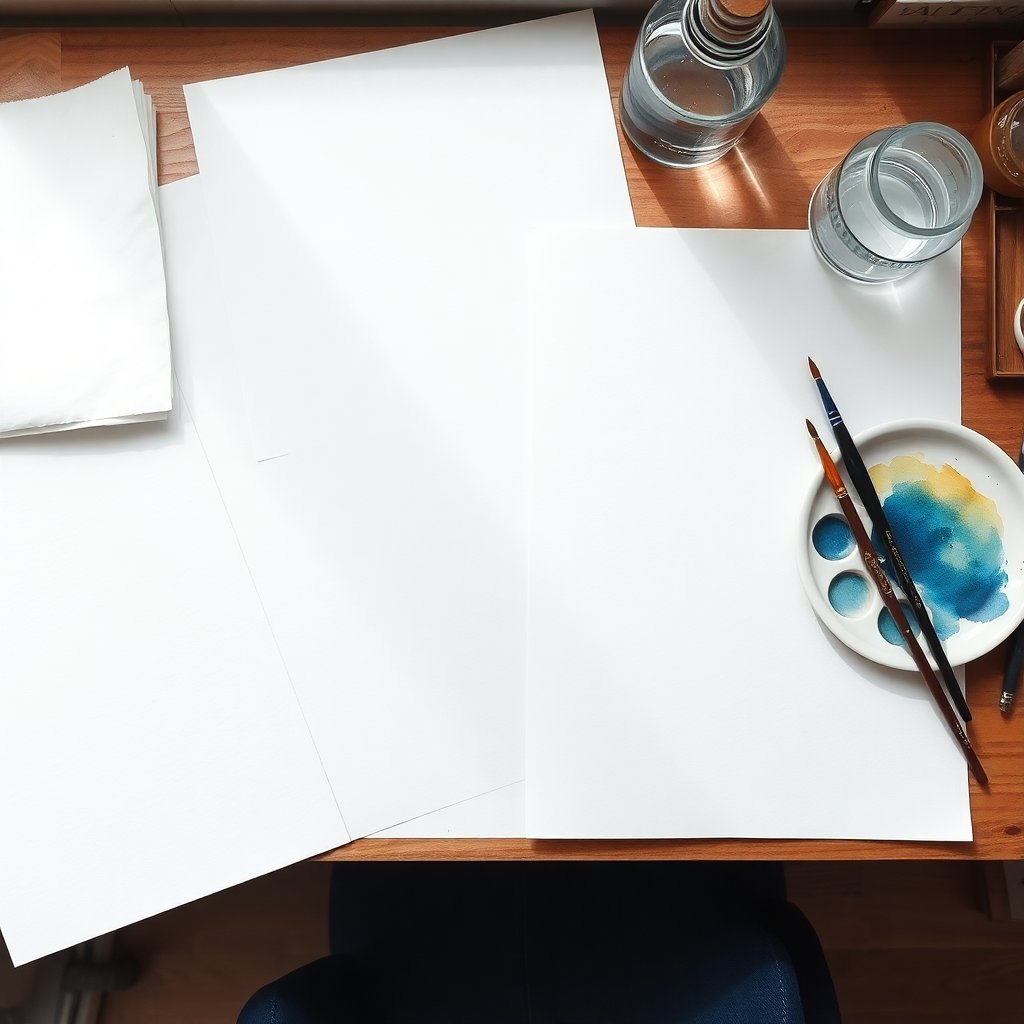
Ask a room full of watercolorists what single supply upgrade made the biggest difference to their work, and a surprising number will skip right past brushes and paints and say the same thing: paper. In acrylics and oils, the surface is mostly a stage for the paint. In watercolor, the paper is an active participant. It decides how far a wash spreads, how long you can work wet-into-wet, whether you can lift a highlight back out, and whether your sky dries smooth or full of hard-edged blooms.
That is good news, because it means many frustrations painters blame on their own technique are really paper problems. This guide breaks down the specs printed on every pad — fiber, weight, texture, and sizing — so you can pick the right paper for practice, for finished pieces, and for gifting to the painter in your life this season.
Disclosure: Brush Slinger participates in the Amazon Associates program. Some links below are affiliate links, and we may earn a small commission if you buy through them at no extra cost to you.
Why Watercolor Paper Behaves So Differently
Watercolor is transparent and water-driven. Pigment travels with water across and into the paper fibers, then settles as the water evaporates or soaks in. Anything that changes how the paper absorbs and holds water changes how the paint behaves.
Three properties do most of the work:
- Fiber content controls absorbency, strength, and how evenly washes dry.
- Weight (thickness) controls how much water the sheet can take before it buckles.
- Surface texture controls granulation, dry-brush effects, and fine detail.
A fourth, less visible property — sizing — determines how quickly water sinks in versus sitting on the surface. Manufacturers add sizing, often gelatin or a synthetic equivalent, inside and on the surface of the sheet. The Wikipedia entry on watercolor paper gives a good overview of how these papers are made and why sizing matters.
Cotton vs. Cellulose: The Biggest Decision
100% Cotton Paper
Cotton paper is made from cotton fibers (often cotton linters, the short fibers left after ginning). It is the traditional choice for professional watercolor work, and for good reason.
Strengths:
- Holds water longer, giving you more time for wet-into-wet blending and soft edges
- Washes dry evenly, with fewer streaks and blooms in large flat areas
- Takes abuse — scrubbing, lifting, masking fluid removal, and multiple glazes without pilling
- Archival when acid-free, so finished work holds up over time
Trade-offs:
- More expensive, sometimes several times the price of student paper per sheet
- Because it stays wet longer, fast painters may need to adjust their timing
Cellulose (Wood Pulp) Paper
Most student-grade watercolor paper is made from wood pulp cellulose, sometimes blended with a small percentage of cotton.
Strengths:
- Much cheaper, which makes it ideal for exercises, color charts, and loose sketching
- Dries faster, which some painters like for quick studies
- Widely available in pads and spiral sketchbooks
Trade-offs:
- Washes tend to dry streaky or with hard edges, especially in large areas
- The surface can pill or tear when scrubbed or lifted
- Less forgiving with layering; colors can look duller after several glazes
The Honest Recommendation
Here is the approach many teachers suggest: practice on cellulose, but do at least some of your painting on cotton early on. Painters often get discouraged because their washes look blotchy, assume they lack talent, and never realize the paper was fighting them. Painting the same exercise on both papers side by side is one of the most eye-opening lessons in the medium.
→ Shop 100% cotton watercolor paper on Amazon
Paper Weight: What 140 lb and 300 lb Mean
Watercolor paper weight is listed two ways: pounds (lb) and grams per square meter (gsm). The pound figure refers to the weight of a ream of full-size sheets, which is why the numbers sound oddly large. The gsm figure is the more direct measure; see the paper density reference if you are curious about the math.
The common weights:
- 90 lb (about 190 gsm): Thin. Buckles easily with wet washes. Fine for sketchbooks and very light work.
- 140 lb (about 300 gsm): The workhorse. Handles most washes well, especially if taped down or stretched. This is the default for most painters.
- 300 lb (about 640 gsm): Thick, almost board-like. Barely buckles even with heavy washes, no stretching needed. More expensive per sheet.
Our take: start with 140 lb. It is the best balance of cost and performance. Tape it to a board on all four sides with painter's tape or gummed tape and it will stay reasonably flat through most washes. Move to 300 lb when you want to paint big, wet, and loose without fussing over buckling.
Cold Press vs. Hot Press vs. Rough
Texture is the most visible difference between papers and has a big effect on style.
Cold Press (NOT)
Cold press has a moderate tooth — a slightly bumpy surface. It is the most popular texture by far, and for good reason. It handles washes, granulation, dry-brush, and reasonable detail. If you only buy one texture, make it cold press.
Hot Press
Hot press is pressed through heated rollers to create a smooth surface. It is excellent for fine detail, botanical illustration, ink and wash, and scanning artwork for prints. The trade-off is that washes can be less forgiving, since water and pigment sit on the surface and move more easily, which can make even washes trickier.
Rough
Rough paper has a pronounced texture. It is great for expressive landscapes, sparkling dry-brush effects on water, and pigments that granulate beautifully. It is harder to get crisp detail on, so it rewards a looser style.
Try a sampler: many brands sell variety packs or small blocks with multiple textures. Painting the same small scene on all three is an inexpensive way to discover your preference.
→ Shop watercolor paper sampler packs on Amazon
Pads, Blocks, Sheets, and Sketchbooks
The same paper comes in several formats, and each fits a different way of working.
Pads are glued or spiral-bound at one edge. Easy to tear out sheets, portable, and economical. You will usually want to tape sheets down before wet work.
Blocks are glued on all four sides (often with a small gap to insert a palette knife). The sheet stays flat while you paint, and you separate it once dry. Blocks are a favorite for plein air and travel, since there is no taping required. They cost more per sheet.
Full sheets (commonly 22 x 30 inches) are the most economical way to buy quality cotton paper. Cut them into halves, quarters, or eighths for practice and finished work.
Watercolor sketchbooks are great for daily practice, travel journaling, and studies. Check the paper weight and fiber — many are cellulose, but cotton-paper sketchbooks exist for painters who want both convenience and performance.
→ Shop watercolor blocks on Amazon
Choosing Paper by Painting Style
- Loose landscapes and skies: Cotton cold press or rough, 140 lb taped or 300 lb
- Botanical and detailed illustration: Cotton hot press, 140 lb or heavier
- Daily practice and color charts: Cellulose cold press pads
- Urban sketching and travel: Watercolor sketchbook or a small block
- Mixed media with ink: Hot press, which handles pen lines cleanly
- Heavy layering and lifting: Cotton, since cellulose surfaces tend to break down
Common Watercolor Paper Problems (and Fixes)
Buckling and puddling. Tape all four edges to a rigid board, use heavier paper, or stretch your paper by wetting it and taping it with gummed tape to dry flat.
Washes dry blotchy. Often a fiber issue — try cotton paper. Also check that you are mixing enough paint for the entire wash before you start.
Paint beads up or resists. Some papers have strong surface sizing or oils from handling. Lightly wetting the sheet first with clean water and letting it dry, or handling paper by the edges, often helps.
Surface pilling when lifting. Cellulose paper often cannot handle scrubbing. Use cotton paper for techniques that involve lifting or masking fluid.
Hard edges where you wanted soft ones. Your paper may be drying too fast. Cotton paper, a slightly wetter approach, or working in a cooler, less dry room can buy more time.
Paper Is Only One Part of the Kit
Good paper makes good brushes and palettes even better. If you are building out a watercolor setup, our guide to natural vs. synthetic brushes covers which brushes hold the most water, and our paint palette comparison explains which palettes suit watercolor mixing. If you also work in acrylic or oil, our canvas size and texture guide covers the equivalent decisions on that side of the studio.
A Great Gift for Painters
With the holiday season approaching, quality watercolor paper is one of the most practical and appreciated gifts for a painter. Many painters will happily spend on paints but hesitate to buy the good paper for themselves, so a block of 100% cotton cold press or a pack of full sheets is a gift that gets used and makes a visible difference in their work.
The Bottom Line
If your watercolors look streaky, muddy, or overworked, try a sheet of 140 lb, 100% cotton, cold press paper before you change anything else. Keep inexpensive cellulose pads around for practice and color tests, and save the cotton for work you care about. Once you feel how long a wash stays alive on good paper, it is hard to go back — and your paintings will show it.
As an Amazon Associate we earn from qualifying purchases. This article contains affiliate links; if you buy through them we may earn a small commission at no additional cost to you.