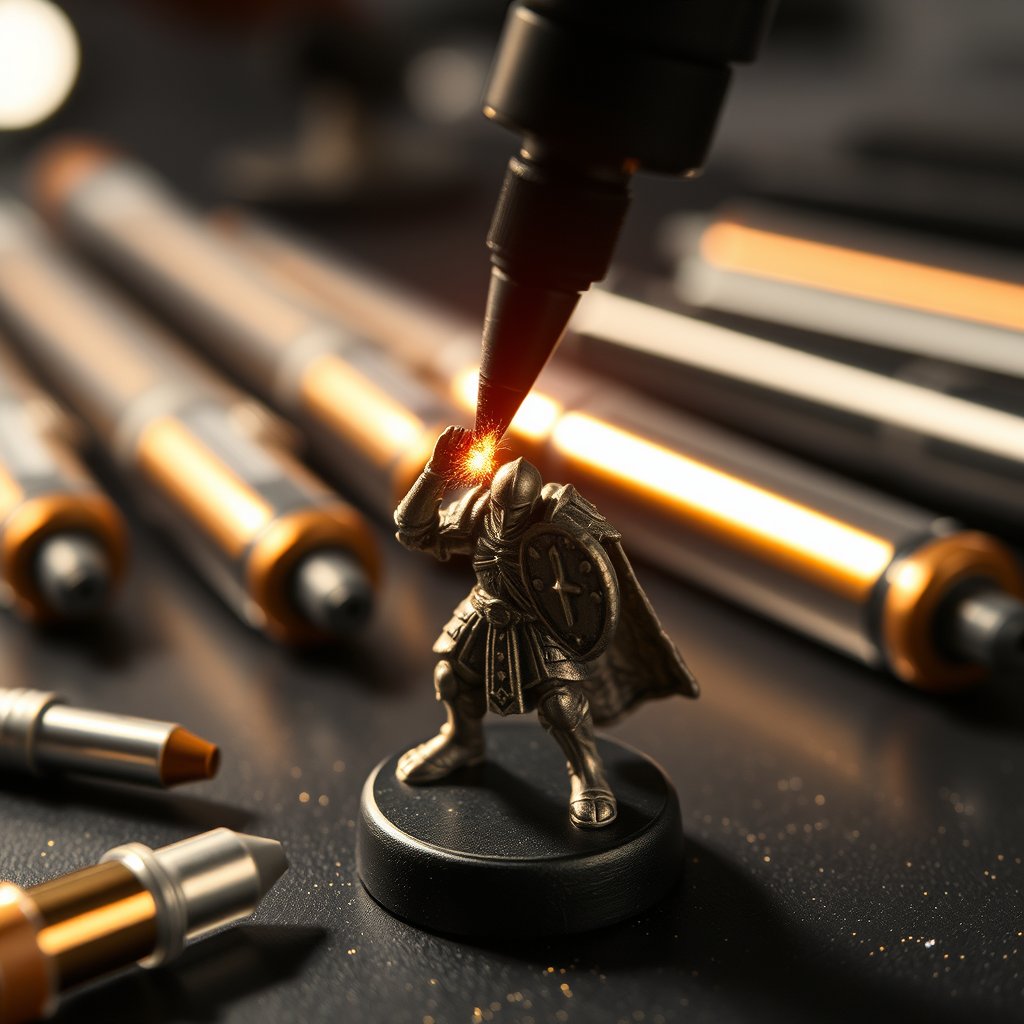
Metallics are the one category every fast-painting shortcut quietly refuses to touch. Washes streak on them, contrast paints pool weirdly over silver, and airbrushing metal is a masking headache. So when The Army Painter announced ten all-new Speedpaint Metallic Markers landing August 15, 2026, the hobby's first reaction wasn't excitement — it was suspicion. Metallic pigment is heavy, it settles fast, and it hates being pushed through anything narrow. Can a felt tip really lay down gold and steel that looks like miniature metal and not a smeared marker doodle?
That's the question worth answering at launch, because "does it actually work?" is exactly what everyone typing the product name into a search bar wants to know. Here's what these markers are, how the Felt-Tech tip is supposed to solve the metallic problem, and an honest read on where a marker can and can't replace your pots and airbrush.
As an Amazon Associate we earn from qualifying purchases. Prices below come from launch and pre-order listings and can shift, so treat every figure as "around $X — verify current price" before you buy.
What Army Painter Actually Released
Two products dropped together, both dated for an August 15, 2026 release.
The headline is the Speedpaint Marker: Metallics Set — ten markers, each loaded with a Speedpaint 2.0 metallic, priced at around $63.71 per the official Army Painter product listing. The ten colors are Hoplite Gold, Talos Bronze, Broadsword Silver, Golden Armour, Glittering Loot, Polished Silver, Enchanted Steel, Brazen Copper, Hoard Bronze, and Aztec Gold. That's a spread covering the three metals most armies live on — gold, silver, and the brass/bronze/copper family — with a couple of duller "steel" and "loot" tones for weathered or aged metal. The box also includes ten replacement Felt-Tech tips and a printed Speedpaint Marker painting guide.
Alongside it sits the Speedpaint Marker Mega Set: 60 markers for around $356.40, bundling 50 standard Speedpaint 2.0 colors with the 10 new metallics, plus ten spare tips. That's the "buy the whole marker line in one box" option, and the per-marker math works out a little cheaper than buying sets piecemeal. Both prices are pre-order figures pulled from secondary coverage, so verify current pricing at checkout — metallic pigment costs more to make, and that's reflected in the metallics set commanding a premium over the standard color sets.
If you already run pots, you can grab comparable Army Painter Speedpaint on Amazon to compare the same formula in bottle form before committing to markers.
How the Felt-Tech Tip Is Supposed to Solve Metallics
Here's the engineering problem. Metallic paint isn't really "colored" — it's a clear-ish medium carrying tiny flakes of mica or metal. Those flakes are what catch light and read as shine. Push that suspension through a felt tip and two things can go wrong: the flakes clog the tip, or they separate from the carrier so you get a wet streak now and a dry sparkle-free patch two strokes later.
Army Painter's answer is what they call the Precision Flow Felt-Tech Tip, described in their marketing as delivering streak-free metallic application "at any scale" with no brush, palette, or cleanup. Mechanically, a marker like this works like a paint pen with an internal valve or reservoir feed — the tip stays saturated so the metallic flakes ride out evenly instead of settling in the barrel. The Speedpaint 2.0 formula underneath is the same contrast-style medium that flows into recesses and shades itself in one pass, so the metallic markers behave like a one-stroke wash-and-shade in metal rather than a flat-coverage silver.
That's the theory, and it's a genuinely clever bit of product design. Metallics are the hardest thing to make behave in a marker, so if the Felt-Tech tip holds up, it's the most technically impressive thing in the whole Speedpaint marker line. The honest caveat: no felt tip lays metal down quite as dense or as controlled as a loaded brush at full pigment. Expect these to read as very good tabletop metal, not display-cabinet non-metallic metal.
Where Marker Metallics Genuinely Shine
Basecoating metal fast. This is the obvious win. A model with a lot of metal — a knight, a mech, a chaos warrior draped in trim — normally means loading a brush, thinning silver, painting every plate, then going back with a wash. A metallic marker collapses that into one pass: the Speedpaint medium tints and shades as it flows, so a gold marker over a light basecoat gives you shaded gold immediately. For batch-painting a unit's weapons and armor before detail work, that's a real time saver.
Edge highlights and quick trim. A felt tip has something a brush doesn't: a hard, consistent edge you can drag. Running a silver or gold marker along a sharp armor edge or a sword's cutting edge is faster and steadier than freehanding a thin line, especially for newer painters whose brush control isn't there yet. If edge highlighting intimidates you, this is a legitimately easier on-ramp — the marker does the fine-line work your hand hasn't learned yet.
Loot, coins, and clutter. The "Glittering Loot" and bronze tones are built for exactly the small chaotic metal bits — treasure piles, ammo, buckles, chains — that aren't worth setting up a full metallic palette for. Dab, done.
Grab a decent set of brushes anyway for the fine detail these markers can't reach — a good Citadel paint brush on Amazon still earns its place next to the markers, not in place of them.
Where They Won't Replace Pots or Airbrush
Being straight about limits is the whole point of a launch review.
Large flat panels will show streaking. The bigger the metal surface, the more any marker's overlapping strokes fight you. A vehicle hull, a large shield, or a big shoulder plate is where a loaded brush or an airbrushed metallic basecoat still wins on smoothness. Felt-Tech helps, but physics is physics — a wide flat expanse is the hardest thing for any felt applicator.
Non-metallic metal (NMM) is untouched. These markers are actual metallic paint, so they're the opposite of the NMM technique, which fakes metal with matte colors and hand-placed highlights. If you're chasing that painted-metal-look-without-real-metallics style, a marker doesn't apply — start with our beginner's guide to NMM instead.
Deep pigment control is still a brush job. Layering a bright edge over a darker metal, glazing a tint of gold over silver, stippling battle damage — anything that needs varied pigment density in one spot is a brush's territory. A marker gives you one consistent metal tone; artistry lives in varying it.
Palette work still matters for mixing. You can't mix a custom metal shade on a marker. If you want a specific bronze between two colors, you're back to a brush and a wet palette. Keep a miniature painting palette on Amazon in the kit — markers reduce how often you reach for it, they don't retire it.
How They Fit Alongside Speedpaint and Contrast
The smartest way to read these markers is as an extension of the Speedpaint and contrast workflow, not a replacement for your paint station. The whole pitch of contrast-style paints is one-coat coverage that shades itself, and metallic markers bring that same speed to the one category contrast paints have always struggled with. If you already lean on the Speedpaint and contrast approach, the metallics slot in as the missing piece — the metal step you used to do the slow way.
A realistic pipeline for a tabletop army looks like this: Speedpaint the cloth, skin, and leather in contrast; hit the armor, weapons, and trim with the metallic markers; then go back with a brush only for the handful of highlights and detail spots that actually get seen at arm's length. That gets a fully painted unit to the table dramatically faster than a traditional base-shade-highlight routine, and it's forgiving enough that a newcomer can get a respectable result on their first squad.
For anyone still assembling a first paint kit, markers change the math on what to buy. The classic advice is a small pot range plus brushes, but a beginner might now start with a marker set for speed and add pots as their skills grow. If you're at that stage, our roundup of the best beginner miniature paints for 2026 walks through how markers, Speedpaint, and pots trade off for someone just starting out.
Should You Buy the Metallics Set?
For most painters, the ten-marker Metallics Set at around $64 is the sensible entry point — it covers gold, silver, and the bronze family, which is the metal spread the vast majority of armies actually use. The Mega Set at around $356 only makes sense if you're buying into the entire Speedpaint marker line at once or kitting out a group; for one painter adding metals to an existing collection, the standalone metallics set is the better value.
The honest verdict: these won't replace your metallic pots or airbrush for showcase pieces, and they were never going to. What they do is knock the single most annoying, time-consuming step of tabletop painting down to a few one-stroke passes. For basecoating metal fast, cleaning up edges, and getting a unit table-ready, marker metallics are the real deal — with a ceiling you'll hit the moment you care about the finish more than the speed. If you paint to game rather than to display, that's a trade worth making.
Round out the metal side of your shelf with a few metallic model paints on Amazon so you've got both the fast marker and the brush-loaded pot for the spots that need it — and verify all prices at checkout, since launch pricing on the markers is still settling.
As an Amazon Associate we earn from qualifying purchases. This article contains affiliate links; if you buy through them we may earn a small commission at no additional cost to you.