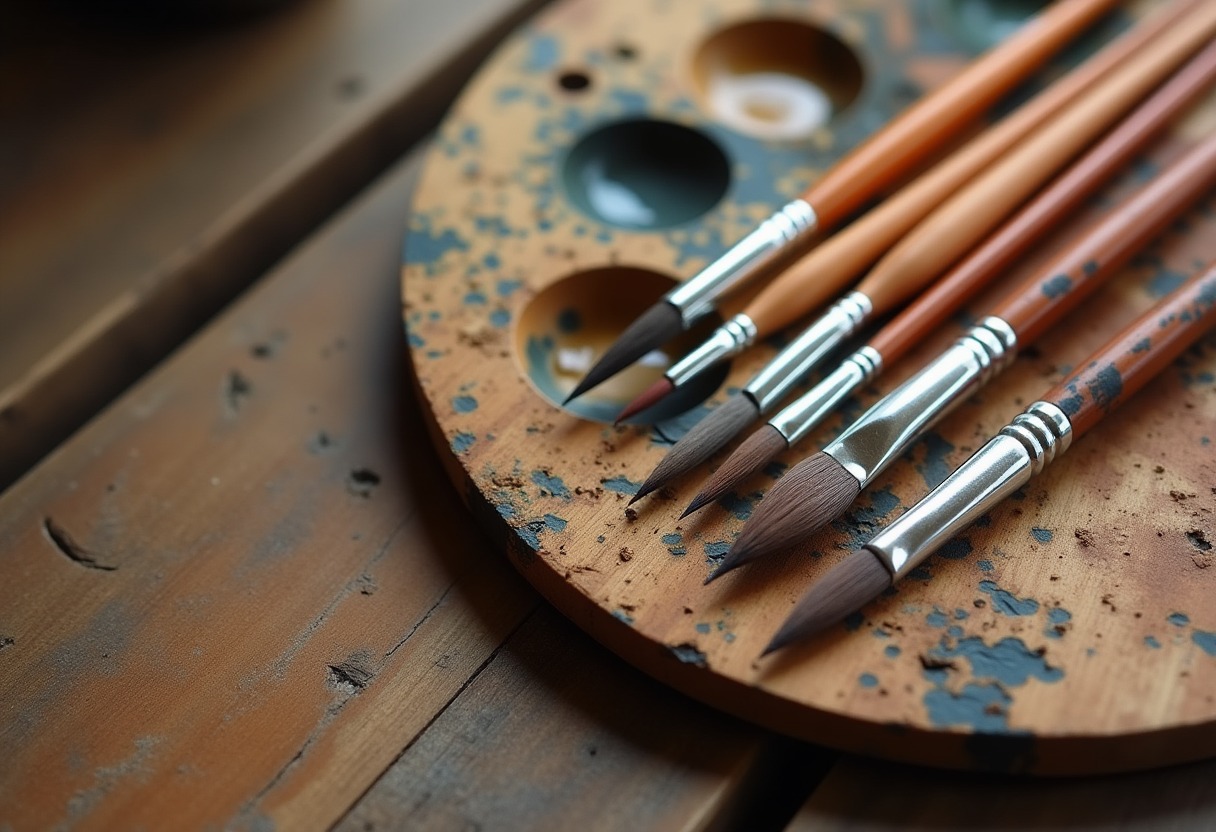
Most painters grab whatever brush feels right, but choosing between round and flat shapes changes everything about how paint flows and lands. Round brushes excel at detail work and organic forms, while flat brushes dominate coverage and clean edges—but the devil's in knowing which technique demands which shape.
Why Brush Shape Trumps Size Every Time
Paint behaves differently depending on how many bristles contact your surface and how they're arranged. According to Winsor & Newton's brush anatomy research, round brushes concentrate paint flow through a pointed tip, creating variable line weights and precise control. Flat brushes distribute paint across a wide edge, perfect for covering areas efficiently and creating sharp, defined marks.
The ferrule (metal band) shape determines how bristles group together. Round ferrules maintain the natural bundle formation of bristles, while flat ferrules compress them into a chisel-like edge. This fundamental difference affects paint capacity, stroke variety, and the types of marks each brush can produce.
Your medium also influences which shape works better. Watercolor's transparency benefits from round brushes that can hold substantial water while maintaining fine points. Oil paint's thick consistency works well with flat brushes that can push and manipulate heavy pigment. Acrylics sit between these extremes, responding well to both shapes depending on your technique goals.
When Round Brushes Rule Your Palette
Round brushes shine for detail work, organic shapes, and controlled paint application. Their pointed tips allow precision that flat brushes simply can't match. The round ferrule holds bristles in their natural formation, creating maximum paint capacity for the brush's size.
For portraiture, round brushes handle facial features better than any other shape. Eyes, nostrils, lip edges, and hair strands all benefit from the variable line weights that round brushes produce naturally. Press harder for thick strokes, lighter for thin ones—the pointed tip responds to pressure changes instantly.
Landscape painters reach for rounds when depicting tree foliage, cloud formations, or water ripples. The organic, irregular marks that rounds create mirror natural textures perfectly. → Shop round paintbrushes on Amazon to build your collection systematically.
Watercolor painters especially love rounds because they hold substantial water while maintaining sharp points when properly loaded. A good round watercolor brush can lay down broad washes and fine details without switching tools. The pointed tip lets you start strokes thin and apply pressure for wider marks—perfect for botanical illustrations or loose impressionistic work.
Round brushes also excel at glazing techniques where you need controlled, transparent layers. The round shape distributes thin paint evenly without creating hard edges that flat brushes often leave behind.
Flat Brush Advantages for Bold Painting
Flat brushes deliver efficiency and precision that rounds can't touch for coverage work and architectural subjects. The wide, flat edge covers areas quickly while maintaining clean, straight lines. Professional painters choose flats for backgrounds, skies, and any time they need consistent coverage without visible brush marks.
The chisel edge of a flat brush creates multiple stroke possibilities. Use the full width for broad coverage, the edge for thin lines, or drag the corner for medium-width marks. This versatility makes flats incredibly efficient—one brush handles multiple line weights and coverage needs.
Acrylic painters particularly benefit from flats because acrylic's quick-drying nature demands efficient application. → Shop flat paintbrushes on Amazon for reliable coverage brushes that won't let acrylic dry on the bristles.
For architectural subjects, flat brushes reign supreme. Building edges, window frames, and geometric shapes all benefit from the clean, straight lines that flats produce. The wide edge also excels at creating texture effects—dragging a barely-loaded flat across rough canvas produces broken color effects that rounds struggle to achieve.
Oil painters use flats for alla prima techniques where they need to push thick paint around the canvas. The flat edge moves heavy impasto effectively, while the firm bristle arrangement maintains control even with stiff paint consistency.
Round vs Flat Brush Comparison
| Aspect | Round Brushes | Flat Brushes | |--------|---------------|--------------| | Best Techniques | Details, organic shapes, glazing, blending | Coverage, edges, geometric shapes, texture effects | | Paint Capacity | High water/medium capacity, gradual release | Moderate capacity, even distribution | | Stroke Variety | Variable width from pressure, curved lines | Multiple widths from edge orientation, straight lines | | Ideal Subjects | Portraits, botanicals, loose impressions | Architecture, landscapes, abstract backgrounds | | Learning Curve | Moderate—pressure control takes practice | Easier—straightforward application methods |
Product Recommendations for Both Brush Types
Quality brush construction makes the difference between frustration and flow. Natural bristles hold more paint and spring back to their original shape, while synthetic bristles resist wear and work well with all paint types.
For round brushes, look for ones that maintain sharp points when loaded with paint. → Shop detail painting brushes on Amazon to find precision tools that won't let you down during fine work.
Kolinsky sable remains the gold standard for watercolor rounds—the natural bristles hold tremendous amounts of water while snapping back to perfect points. However, high-quality synthetic rounds now perform nearly as well at a fraction of the cost.
For flat brushes, bristle stiffness matters more than material. Choose stiffer bristles for heavy-bodied paints and softer ones for thin applications. → Shop acrylic brush sets on Amazon that include both shapes to cover all your painting needs.
Professional painters often maintain separate brush sets for each medium. Watercolor brushes stay softer longer when not exposed to heavy paints, while oil painting brushes develop better working characteristics when dedicated to oils only. → Shop watercolor brush sets on Amazon for medium-specific performance.
Advanced Techniques Most Painters Miss
Combining round and flat brushes in single paintings creates depth and visual interest that single-brush approaches can't achieve. Professional painters switch between shapes strategically—flats for initial coverage and blocking, rounds for refinement and details.
The "lost and found" edge technique relies on this brush combination. Use flats to establish hard, architectural edges where you want viewer attention. Follow with rounds to soften transitional areas where forms merge into backgrounds. This contrast guides the eye through your composition naturally.
For alla prima oil painting, start with flat brushes to establish major color areas quickly. The efficient coverage prevents lower layers from drying before you can blend them. Switch to rounds for final details when the painting reaches the refinement stage.
Watercolor painters can exploit the water capacity differences between shapes. Load a large round with clear water, then use smaller flats to drop pigment into the wet area. The flat's controlled pigment release creates interesting color mixing effects that wouldn't happen with round-to-round techniques.
Understanding ferrule pressure also elevates your technique. Round ferrules can be twisted during strokes to create spiral effects. Flat ferrules can be rocked side-to-side for broken color applications. These subtle manipulations add texture variety without switching brushes.
Temperature also affects brush performance differently by shape. Cold studios make watercolor rounds hold more water but flatten flat brushes slightly. Warm studios cause natural rounds to become more flexible while synthetic flats maintain their edge better.
Check out our Brush Care Maintenance Guide for keeping both brush types in peak condition, and our Natural Vs Synthetic Brushes Guide for deeper material comparisons.
FAQ
Which brush shape should beginners start with for acrylic painting?
Start with flat brushes for acrylic painting because they're more forgiving and efficient for beginners. Flats help you establish color areas quickly without worrying about fine details initially, and acrylic's quick-drying nature benefits from the coverage efficiency that flats provide. Once you're comfortable with basic color placement and mixing, add rounds to your toolkit for detail work and organic shapes.
Can I use the same brushes for watercolor and acrylic paint?
While possible, dedicated brushes perform better for each medium. Watercolor requires brushes that hold substantial water and maintain fine points, while acrylic benefits from brushes that resist stiffening from dried paint. If you must share brushes, choose high-quality synthetics and clean them immediately after each session. However, budget-friendly dedicated sets usually outperform expensive shared brushes for both mediums.
How do I know when my round brush has lost its point permanently?
A round brush has lost its effectiveness when it won't form a sharp point even when wet and properly loaded with paint. Test by wetting the brush thoroughly, then gently pressing and lifting it on paper—it should create a fine line that starts thin and can widen with pressure. If the brush splays into multiple lines or creates only thick, uncontrolled marks, the point structure is damaged beyond normal use.
What's the difference between bright and flat brush shapes?
Bright brushes are essentially flat brushes with shorter bristle length, making them stiffer and better for pushing thick paint or creating textured effects. Standard flats have longer bristles that hold more paint and create smoother coverage. Brights excel at impasto techniques and bold, direct painting methods, while regular flats work better for smooth coverage and blending applications.
Should I clean round and flat brushes differently?
Both shapes need thorough cleaning, but rounds require extra attention to the point area where paint tends to accumulate near the ferrule. Work cleaning solution into the center of round brushes by gently pressing the tip and rolling it on your palm. Flats clean more easily because their shape naturally prevents paint buildup, but check both corners where the flat edge meets the ferrule for stubborn pigment deposits.
The right brush shape transforms good technique into exceptional results—choose deliberately, and your paintings will show the difference immediately.
Some links on this page are affiliate links. We may earn a small commission if you purchase through them, at no extra cost to you.
As an Amazon Associate we earn from qualifying purchases. This article contains affiliate links; if you buy through them we may earn a small commission at no additional cost to you.