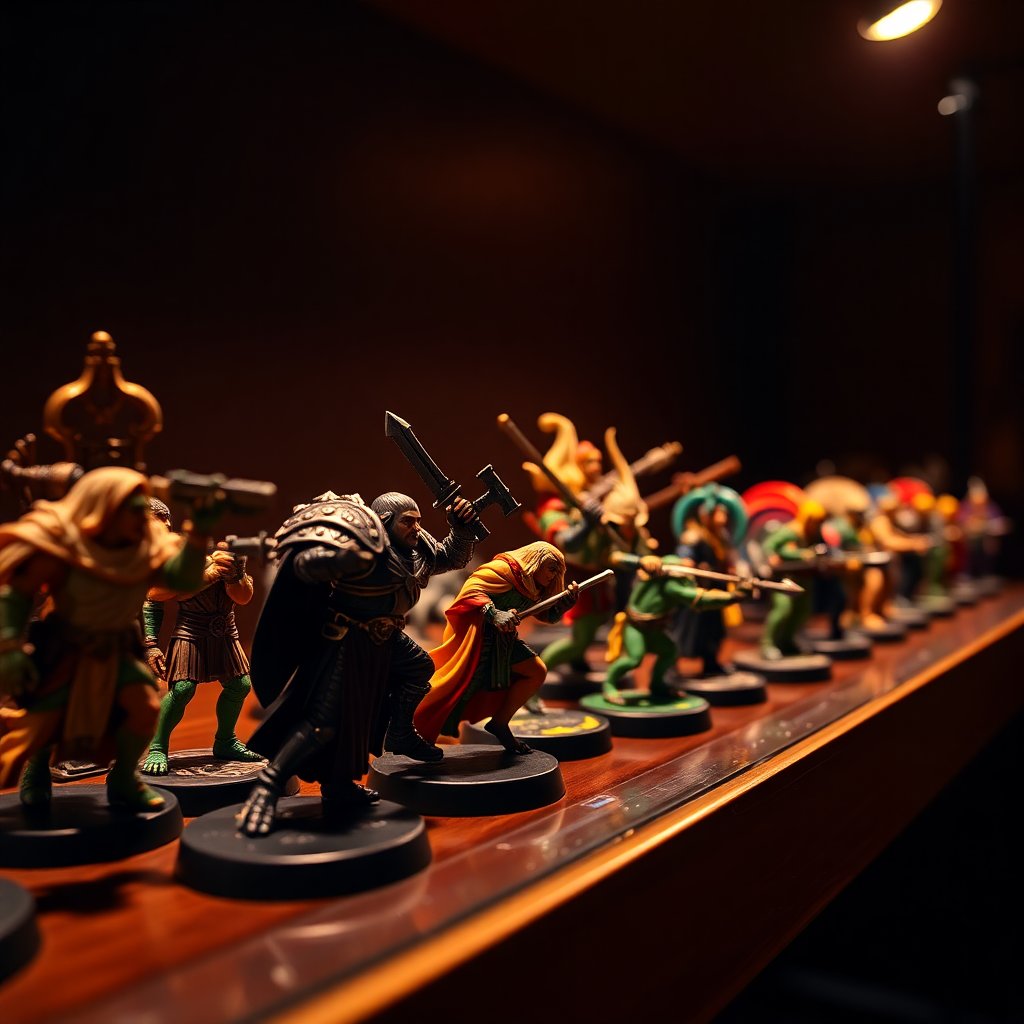
There's a moment most miniature painters know. You've finished a model — or an army, or a unit — and you hold it at arm's length and think: it's not quite good enough to share. The eyes could be better. The highlights aren't as smooth as you wanted. The basing looks amateurish compared to the work you see online.
So you don't post it. You put it on the shelf and start the next one.
This is almost certainly the wrong call.
Why Sharing Matters
The miniature painting community is, by any honest assessment, unusually supportive. The ratio of genuine encouragement to harsh criticism on Reddit's r/minipainting, on Instagram hobby accounts, on dedicated Discord servers, is heavily weighted toward the former.
This matters because feedback — even positive, generalist feedback — accelerates skill development in ways that solo practice doesn't.
When someone says "this looks great, I love the OSL on the torch," you find yourself looking harder at how you painted the OSL. When someone asks how you achieved the skin tone, you articulate your process to yourself more clearly than you would without the question. When you post something and get ten times more engagement on the basing than on the armour, you learn where your actual strengths are.
The act of sharing forces you to see your own work as a viewer rather than as the person who painted it.
The Comparison Trap
The reason people don't share is usually comparison. The miniature painting accounts that are most visible online are almost always at the top of the skill range — years of experience, professional-level results. If that's your benchmark, almost nobody's work is worth sharing.
But those painters posted their early work too. The archives are still there. The same person who now posts incredible blending once posted first attempts at contrast paints that looked almost identical to yours.
The skill range in the hobby is enormous. On any given day, someone is painting their first model and someone else is preparing competition entries. The community has space for both — and needs both, because the advanced painters genuinely remember what it was like to start.
What Actually Happens When You Post
The most common experience: you post a photo you're uncertain about, you get more engagement and more positive response than you expected, and you feel motivated to paint the next model.
The occasional experience: you get useful, specific feedback that tells you something actionable — a technique you haven't tried, a product that would help with a specific problem.
The rare experience: a negative response. These happen but they're the exception, and even on the internet, miniature painting communities tend to enforce norms of encouragement more consistently than most.
Gear That Makes Showcasing Easier
Good showcase photos require almost nothing beyond proper lighting and a neutral background. The community has settled on a few reliable setups.
A daylight LED lamp with a 6500K color temperature is the single most important piece of photo gear you can buy. Warm household lighting washes out colors and kills contrast. A daylight lamp costs under $30 and transforms your photos immediately.
→ Shop daylight LED desk lamps for miniature photography on Amazon
A lightbox or photo tent takes photos to the next level. Diffused light from multiple directions eliminates harsh shadows and makes even average paintwork look intentional. Small lightboxes (30cm cube) are inexpensive and fold flat.
→ Shop photo lightboxes for miniature photography on Amazon
Neutral backdrop cards in white, grey, and black cost almost nothing and keep the focus on the model. You can use card stock, felt, or craft foam sheets.
Your phone camera is good enough. You don't need a DSLR. Modern phone cameras with a bit of natural or daylight-balanced light produce excellent results. The limiting factor is always lighting, not the camera.
Building Your Showcase Habit
Posting consistently is more valuable than posting occasionally. Here's a sustainable system:
Take photos during and after each session. WIP (Work In Progress) photos get strong engagement and are lower stakes than finished photos. If the final model isn't ready, a photo of a half-finished unit getting its basecoats still gets interactions.
Create a dedicated photography spot. A small area with consistent lighting that you can set up in 60 seconds is more likely to get used than an elaborate studio you have to construct every time.
Pick one or two platforms and commit to them. Instagram and Reddit (r/minipainting) are the two highest-traffic communities. Twitter/X has a smaller but engaged hobby community. Spreading across too many platforms is exhausting — pick where your audience is.
Use hashtags on Instagram. Tags like #miniaturepainting, #warhammer, #warhammer40k, #paintingminiatures, and niche tags for your specific army drive organic discovery.
The Photography Comparison Table
| Approach | Cost | Quality | Effort | |---|---|---|---| | Phone, household lighting | $0 | Poor | Very low | | Phone, daylight lamp | ~$25 | Good | Low | | Phone, daylight lamp + backdrop | ~$30 | Very good | Low | | Phone, lightbox setup | ~$50 | Excellent | Medium | | DSLR, full setup | $300+ | Professional | High |
The phone + daylight lamp combination is the sweet spot. It's the setup that 90% of well-photographed miniature posts actually use.
What Communities to Join
Reddit: r/minipainting is the largest general miniature painting community. Strong culture of encouragement. Post rules vary — read them before posting. For specific armies, subreddits like r/Warhammer40k, r/ageofsigmar, and r/killteam have dedicated painting threads.
Instagram: The visual format is ideal for miniatures. The hobby community is active and engaged. Stories and Reels featuring process videos get significantly more reach than static posts.
Discord: Most hobby brands, game systems, and content creators maintain active Discord servers. The Citadel Colour Discord, the Contrast Painters server, and game-specific servers offer fast feedback from experienced painters.
YouTube: Not a posting platform for most hobbyists, but an extraordinary learning resource. Channels like Goobertown Hobbies, Vince Venturella, and Snazzy Painting have thousands of hours of technique instruction.
Tracking Your Progress
One of the most rewarding aspects of consistent sharing is the archive you accumulate. Six months of posted work gives you a visible, concrete record of your improvement.
This matters more than it sounds. Skill development in miniature painting is gradual enough that you often can't feel yourself improving from session to session. Looking back at photos from six months ago — when you can clearly see what you couldn't do then — is one of the most motivating experiences in the hobby.
Keep a folder of your best photos from each month. Review it occasionally. The growth is real even when it doesn't feel real.
How to Share
Don't over-explain your limitations. "Sorry for the bad photos, the eyes are a mess, I know the highlighting is inconsistent" in the caption trains people to look for the flaws. Post it and let people respond to what they actually see.
Good lighting matters more than you think. A model painted to a tabletop standard under good natural or daylight-balanced lighting photographs better than an excellent model photographed under warm yellow light. Your photos are not a fair representation of your work under kitchen lights.
Engage with other people's work. The hobby community is reciprocal. Commenting genuinely on other people's posts builds relationships and improves your own critical eye.
FAQ: Army Showcase and the Hobby Community
Do I need a perfect paint job to share? No. The community welcomes every skill level. Most posts on r/minipainting are intermediate-level work, and they get positive engagement. "Good enough to play with" is good enough to post.
How should I photograph shininess or metallic paints? Metallic paints photograph poorly under direct flash or harsh light. Diffused light from a lightbox or a daylight lamp positioned at 45° reduces hotspots and captures the metallic effect more accurately.
What if I only have time to paint one model a month? Post it. Consistency matters more than frequency. One well-photographed, thoughtfully presented model per month builds a better profile than sporadic bulk posts.
Are there competitions I can enter as a beginner? Yes. Local game store painting competitions are often open-entry. Online competitions run by brands like Citadel and Army Painter frequently have beginner categories. The Games Workshop community site runs regular community showcase features.
What makes a great showcase caption? Include: army/faction, paint scheme name or colors used for the main elements, and any technique you're particularly proud of. "Nurgle Death Guard — Typhus Corrosion over Militarum Green base, edge highlighted with Ogryn Camo. First time attempting OSL on the lamp" is infinitely more engaging than "finally finished this unit."
The Shelf vs. the Community
A finished model sitting on a shelf gets appreciated by you and whoever visits your house. The same model posted online gets appreciated by thousands of people who genuinely care about the hobby — some of whom will learn from seeing how you painted it.
Post the imperfect model. The community will tell you what works. You'll paint the next one better for having shared.
One thing that makes sharing more practical: having a proper hobby space. Our hobby space on a budget guide shows how to set up a dedicated area that makes painting consistently — and photographing your results — much easier.
New to the hobby? Start with our best beginner miniature paints guide — the foundation everything else builds on.
As an Amazon Associate we earn from qualifying purchases. This article contains affiliate links; if you buy through them we may earn a small commission at no additional cost to you.